Across Kenya, County Governments are developing solutions in healthcare, agriculture, infrastructure, climate action and water and sanitation.
Yet, too many of these experiences remain buried in reports, confined to individual departments or held in institutional memory. As a result, citizens may not know what their Counties are achieving, while other Counties miss opportunities to learn from solutions that have already been tested.
This is one of the biggest missed opportunities in devolution. Public conversations can quickly become dominated by what Counties are not doing, partly because evidence of what is working is not always available. Indeed, where governments fall short, those gaps deserve scrutiny.
But failure should not become the only story we tell. More importantly, when County experiences are not captured and shared, the devolved system loses knowledge that could improve service delivery elsewhere. Information sharing is therefore not simply about visibility; it is about ensuring that knowledge generated in one County can strengthen governance across all 47 Counties.
For County Governments, this means deliberately documenting the problem being addressed, the intervention introduced, the results achieved and the lessons that others can draw from their experiences. The value of such knowledge exchange can already be seen in the growing body of documented County practices that make tested approaches visible beyond where they are implemented.
Meru County’s use of Do-nou Technology in road works provides one such example. Do-nou is a labour-based road maintenance technique that uses locally available materials packed in gunny bags, which are laid, compacted and covered to strengthen damaged or impassable road sections.
The approach has been used to rehabilitate access roads in underserved communities while also building local skills and livelihood opportunities. By the end of the project, 27.15 kilometres of roads had been rehabilitated, 1,250 community members trained and 50 youth-led SMEs supported.
The technology has also been applied in Murang’a and other Counties, showing how a practical approach can be adapted to different local contexts.
Information sharing is more than a communication function; it is a governance tool. It enables citizens to understand what their governments are doing, gives researchers and policymakers access to evidence, and creates opportunities for peer learning.
One of the most visible places for Counties to strengthen this practice is through the websites and digital platforms. A County website should not simply be a noticeboard for events but a living repository where citizens and other users can access current accurate and up-to-date information as well as critical public documents such as County plans, budgets and policies. But information sharing must go beyond uploading documents. Counties can use stories, data, photographs, videos and citizen experiences to show what an intervention has achieved and why it matters. Digital platforms can also create space for citizens to ask questions and provide feedback, giving Counties a clearer picture of whether interventions are achieving their intended purpose.
This thinking is at the heart of the Maarifa Centre, established by the Council of Governors in 2016 and launched in 2017 as a knowledge hub for sharing information on County performance, promoting learning, best practices and supporting corrective action. Its digital repository brings together various knowledge products, hosting over 300 success stories alongside editions of the Compendium of County Innovations and Best Practices and other County resources. The Maarifa Centre depicts the real value of knowledge management: turning experience into knowledge and knowledge into action.
Devolution is generating solutions every day. Information sharing must therefore become part of how Counties govern, not something done after the work is complete. Ultimately, the question is not whether Counties have stories worth telling. It is what happens to the knowledge when solutions remain isolated within 47 separate systems, as opposed to being captured, shared, adapted and improved.
The true value of a good County practice lies not only in the difference it makes where it begins, but in how far its lessons can travel.
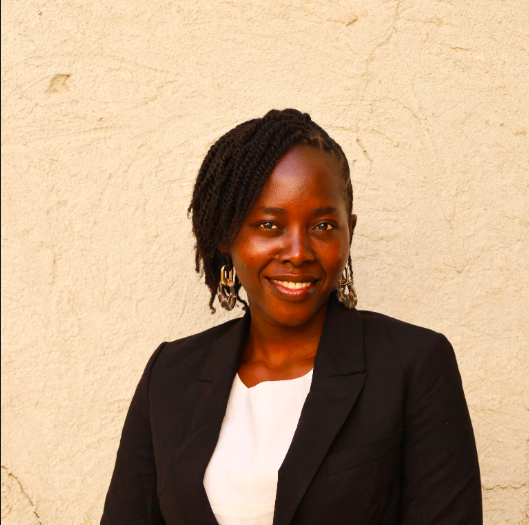
Written by Mary Mwiti, EBS - Chief Executive Officer, Council of Governors