

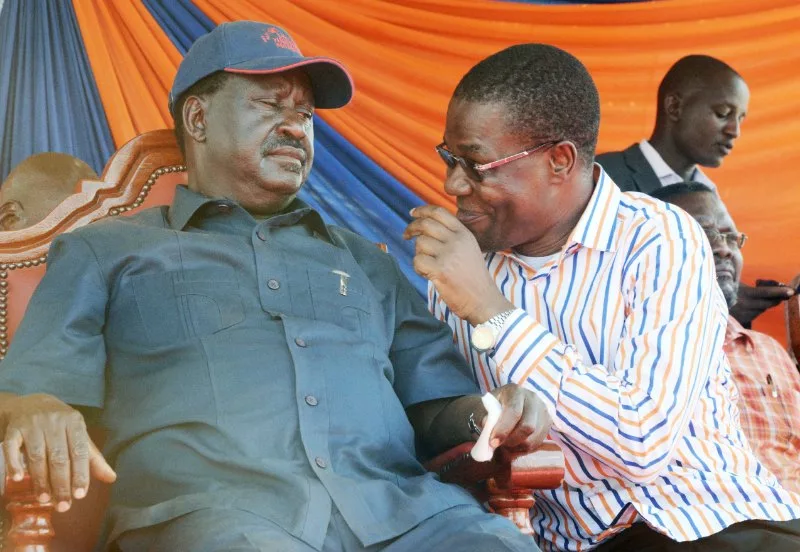
I received the news of Raila Odinga’s death with utter disbelief. I was airborne, travelling to Kitui to join the President on a development tour, when a mutual contact called early in the morning. Immediately we landed, Senator Oburu Oginga phoned to confirm the terrible news.
The tour ended before it could begin. I rushed back to Nairobi, struggling to accept that I had lost someone special: not just my party leader, but a friend, mentor and political compass.
I had walked with Baba for many years. Our conversations revolved around Kenya, Africa, politics, the universe and sometimes simply what was happening around us. With him, there was never really a last conversation. Every interaction was unique and there was always something more to discuss.
Raila’s absence has changed Kenya’s political landscape. A party can replace an office holder, but it cannot replace a phenomenon overnight. Yet ODM is not a funeral committee. Baba built institutions, structures and a political tradition that must survive his physical absence.
He also left us in the broad-based government under President William Ruto. This was a political decision made in Kenya’s interest, and Raila was involved from beginning to end. Those who suggest some of us joined the Cabinet without his blessing are rewriting history. As ODM MP and Azimio’s leader in the National Assembly, I would not have made such a momentous move without his support.
I have no regrets about leaving the Minority leader’s position to join Cabinet. Leadership is not about titles; it is about making an honest contribution wherever one serves and improving people’s lives.
The broad-based government was intended to build bridges, widen national participation and focus on issues affecting Kenyans. Work remains, but there have been achievements in areas including infrastructure, energy, food security and healthcare. Ultimately, the test is whether ordinary Kenyans’ lives are improving.
Raila’s legacy, however, goes far beyond ODM and electoral politics. His life was intertwined with Kenya’s struggle for multiparty democracy, constitutional reform, devolution and greater political freedoms. The 2010 constitution emerged from decades of struggle and sacrifice. His contribution helped change the rules of the political game.
You could deny Raila an electoral victory, imprison him or ostracise him, but you could never convince him to stop believing in Kenya. He taught generations of politicians not to fear adversity.
ODM must now confront its greatest challenge: succession without fragmentation. Baba was an umbrella under which people with different ambitions and opinions stood together. Our responsibility is to institutionalise the party, respect divergent views and prevent personal ambition from undermining its growth. We must not fight over the driver’s seat; we must keep the vehicle moving.
Nor should we preserve his photographs and speeches while refusing to engage with present-day Kenya. Honouring Baba means defending the principles he stood for, including accountability, human rights, constitutionalism and zero tolerance for corruption.
Raila Odinga may have left the political stage, but he has not left Kenya’s political psyche. Our generation will be judged by what we do with the space he helped create.







