

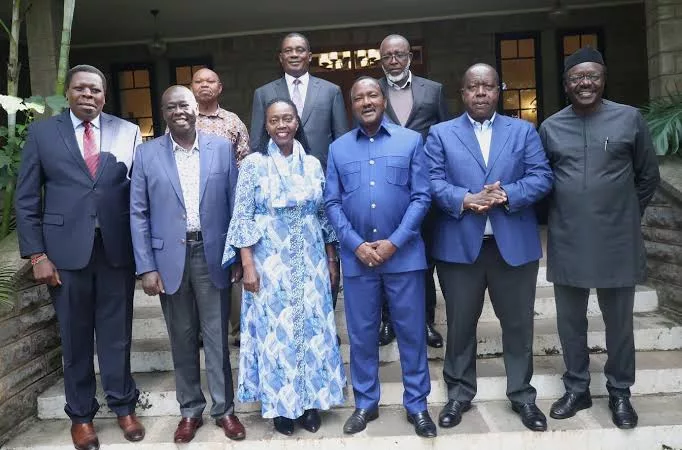
 The Opposition team during a past meeting in Nairobi/COURTESY
With the 2027 General Election approaching, opposition leaders insist they have time to agree on a single presidential candidate to challenge President William Ruto.
But competing ambitions, coalition disputes and disagreements over who should lead the alliance could give the President an advantage if his challengers fail to unite.
Former Deputy President Rigathi Gachagua has dismissed concerns that the opposition is struggling to settle on a flag bearer, arguing that unity matters more than an early announcement.
“I’ll do whatever is within my power and ability; I’ll make whatever sacrifices necessary to make sure that we have one single presidential candidate, so that the liberation of our country can begin in earnest,” Gachagua said in remarks made in Massachusetts, United States.
He has argued that the opposition should not rush the process, citing former President Mwai Kibaki's selection as the opposition's joint candidate in 2002, relatively close to the election.
However, delaying the decision carries risks if the competing camps fail to agree on a candidate and a common campaign.
Competing ambitions complicate unity
The opposition's challenge is that its leading figures are not merely negotiating a coalition; some are also weighing their own presidential ambitions.
Wiper leader Kalonzo Musyoka, former Interior Cabinet Secretary Fred Matiang’i, Nairobi Senator Edwin Sifuna and Gachagua are among those being discussed as potential contenders.
Although Kalonzo has called for a single opposition candidate, the question of who should get the ticket remains sensitive. He has previously said he would support another candidate if the coalition settled on someone else.
“If I’m not the one, I will support; I am known for that,” Kalonzo said in March.
The negotiations are further complicated by disagreements over the structure of the coalition.
The rebranding of the Azimio alliance into the Ukombozi Alliance has exposed differences among opposition formations, with Gachagua’s DCP and Sifuna’s Linda Mwananchi movement maintaining their own political identities and organisational priorities.
The contest is not only about the presidential ticket. It also involves who controls the coalition, how the candidate will be selected, who becomes running mate and how competing political interests will be accommodated.
These negotiations could become more difficult as aspirants invest more resources in building personal support.
Murang'a Senator Joe Nyutu has defended the decision to delay naming the opposition's candidate, arguing that President Ruto declared his presidential bid four years before the 2022 election, yet many now believe he turned out to be the wrong choice.
“We made a very big mistake in electing president Ruto, who actually announced his candidature in 2018 in an election that was going to happen in 2022. The opposition will unveil its candidate at the right time,” he said in July.
Sifuna wants to test his national appeal
Sifuna has said his Linda Mwananchi movement wants to establish a national presence before deciding whether to field a presidential candidate.
“We want to push our Linda Mwananchi movement until it becomes consequential such that when we say we will have a presidential candidate and a running mate, we indeed stand a chance of winning the election,” he said in July.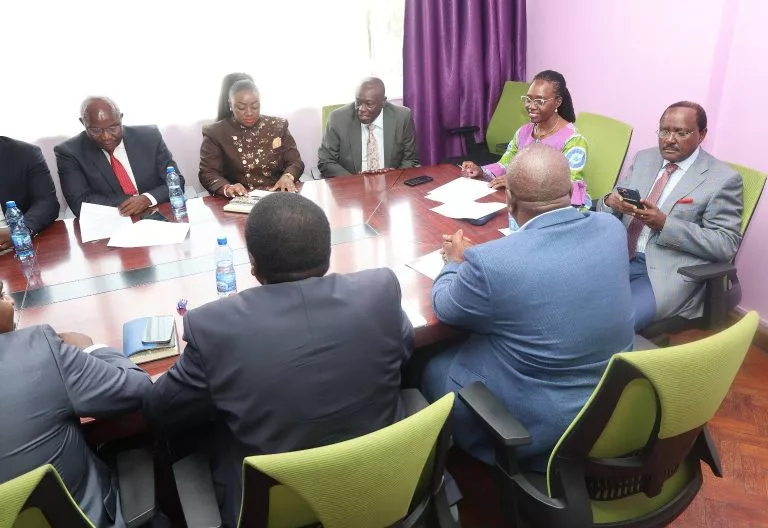 A section of opposition team members during a past consultative meeting/COURTESY
At the time, he said the movement had held rallies in only 14 counties and wanted to reach the remaining counties before deciding whether to field a candidate.
“We have had rallies in only 14 counties. We have not gone to 33 counties, and we must visit them as well. You need to be sure if the excitement is just in one corner of the country or it is everywhere,” he said.
Matiang’i has also acknowledged the difficulty of the negotiations, with opposition parties still discussing how to settle on a presidential candidate and running mate.
The longer the political formations operate separately, the greater the challenge of persuading their supporters to rally behind a rival leader.
How the delay could benefit Ruto
For Ruto, the potential advantage lies in the time his challengers could spend resolving internal disputes instead of presenting a common political alternative.
A divided opposition could struggle to coordinate rallies, communicate a shared agenda and mobilise voters across regions. Separate candidates could also compete for some of the same voters, weakening their collective challenge.
The delay could give Ruto's camp time to organise its campaign, promote its record and respond to opposition criticism while rival camps remain preoccupied with coalition negotiations.
However, the advantage is not automatic. An early announcement could create resentment among aspirants who lose the ticket, while a candidate selected through a credible process could give the alliance time to organise a joint campaign.
The decisive question is whether opposition leaders can agree on a binding formula that all parties will respect.
Gachagua has also argued that declaring a candidate too early could expose the opposition to divisive tactics. But without an agreed selection mechanism, postponing the decision risks allowing competing ambitions to harden into separate political campaigns.
His own position carries an additional uncertainty. An appeal concerning his impeachment is pending, leaving legal questions around his eligibility subject to the ongoing judicial process.
Political analyst Herman Manyora has warned that the prolonged delay in naming a joint candidate gives Ruto a tactical advantage.
“Ruto is a master of political strategy who excels at identifying and exploiting fractures. A delayed nomination gives the state machinery ample time to deploy "Machiavellian tactics" such as leveraging intelligence files and co-opting influential regional elites,” Manyora said in a recent interview.
"By the time the opposition converges around one candidate, Ruto may have already weakened or peeled away essential coalition pillars."
The lesson from 2002 and 2022
Gachagua's comparison with Kibaki offers a historical example of how a late agreement can succeed, but it also highlights the importance of unity behind the eventual candidate.
In 2002, opposition parties united under the National Rainbow Coalition behind Kibaki to challenge Kanu's 24-year rule.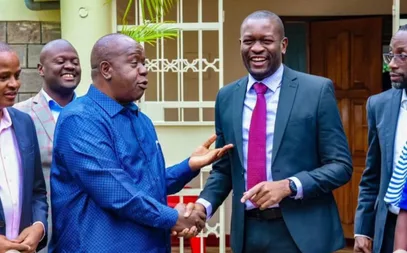 Jubilee acting party leader Fred Matiang'i with Nairobi Senator Edwin Sifuna during a past meeting/COURTESY
Raila Odinga's declaration of “Kibaki Tosha” helped consolidate the alliance, turning competing political interests into a common electoral front.
The lesson was not simply that the candidate could be named late, but that the parties ultimately agreed to rally behind one person and present a coordinated challenge.
The 2022 election offers another warning about disagreements over coalition decisions.
Kalonzo was angered by the decision to select Martha Karua as Raila Odinga's running mate after he had hoped for the position. Although he ultimately supported the Azimio campaign, the episode demonstrated how decisions over senior positions can strain relationships within established alliances.
The current opposition faces a similar challenge: ensuring that negotiations over the presidential ticket and running mate do not undermine the wider coalition.
Can the opposition afford to wait?
The delay could prove strategic if opposition leaders use the remaining months to build grassroots networks, register supporters, agree on policy priorities and establish a transparent method of selecting their candidate.
But if negotiations become a prolonged contest over personalities and political rewards, the opposition risks entering the campaign period without a settled leadership structure or a unified message.
Kalonzo's call for a common candidate, Sifuna's push to test his movement nationally and Gachagua's insistence that there is no need to rush reflect different approaches to the same challenge.
For Ruto, the opportunity lies in the possibility that his challengers will spend too much time deciding who should lead them.
For the opposition, the risk is that a strategy intended to preserve unity could instead expose the divisions it was designed to overcome.







