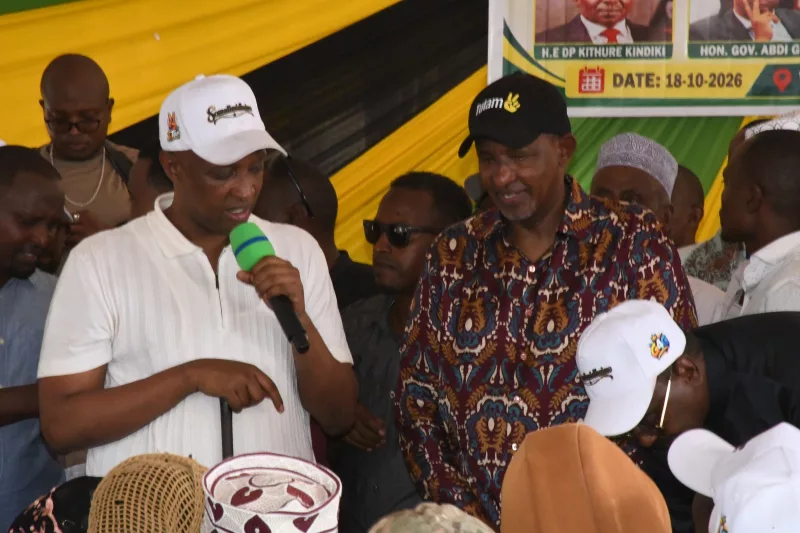
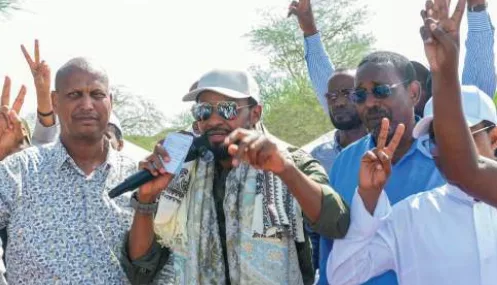
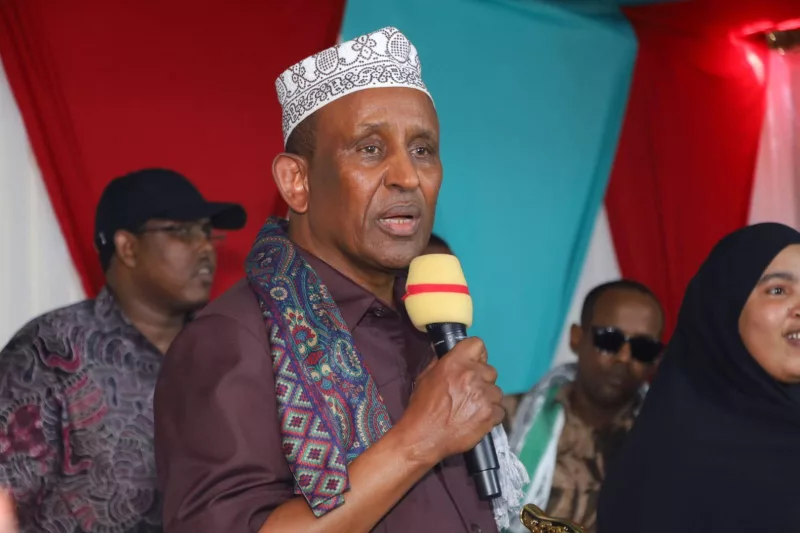
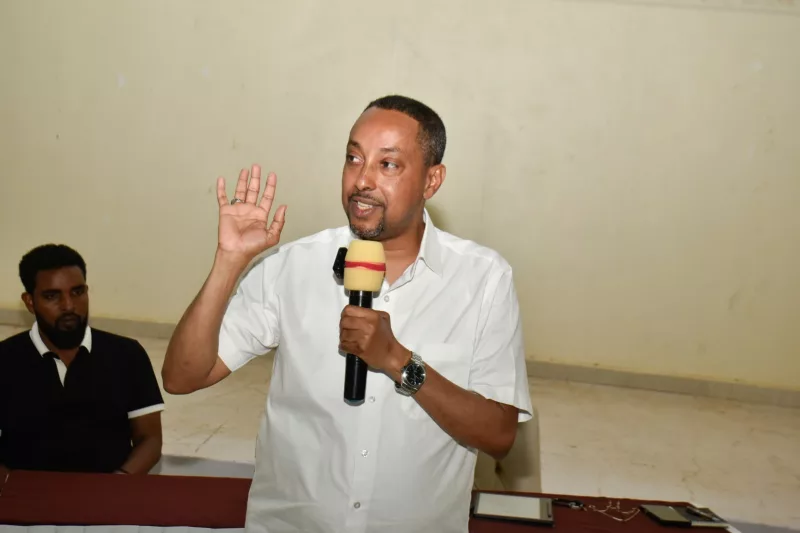
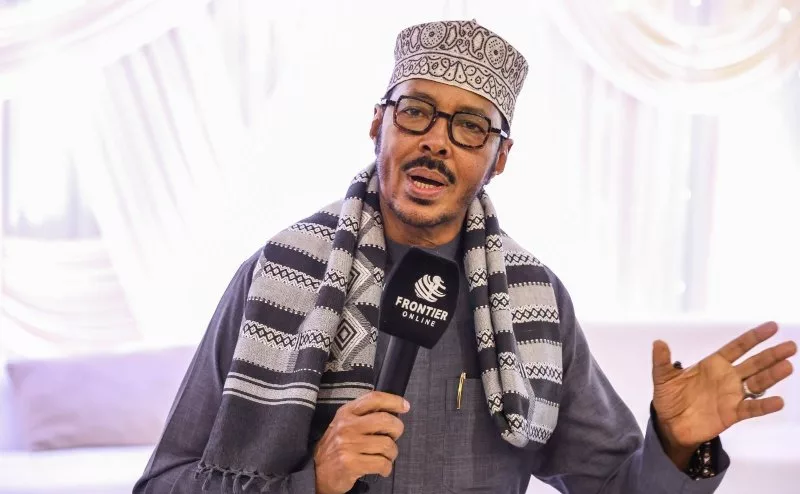
 Eldas MP Adan Keynan speaking at a recent function/STEPHEN
ASTARIKO
Eldas MP Adan Keynan has challenged the new Council of Governors (CoG) leadership to protect the gains of devolution, strengthen county autonomy and improve service delivery across Kenya.
Keynan said the election of Tharaka Nithi Governor Muthomi Njuki as council chairperson presented an opportunity to reinforce cooperation between the national and county governments and promote equitable development.
Congratulating Njuki and Bungoma Governor Kenneth Lusaka, who was elected deputy chairperson, the MP urged the new team to prioritise the institutional and financial empowerment of county governments.
He said effective devolution depended on strong county institutions, adequate funding and closer collaboration between the two levels of government to ensure communities benefited equitably from development.
“As you assume this pivotal mandate, may your stewardship fortify intergovernmental cooperation, safeguard the constitutional gains of devolution and champion the autonomy, fiscal empowerment and institutional capacity of county governments for more responsive service delivery and inclusive development,” Keynan said.
The legislator expressed confidence that the incoming leadership would build on progress made in strengthening devolution while addressing challenges affecting the effective functioning of county governments.
He urged the new team to use its mandate to help counties respond more effectively to residents’ needs through better service delivery, equitable resource distribution and stronger institutions.
Keynan said sustained commitment to the constitutional foundations of devolution and cooperation between the two levels of government would be essential to its success.
“May your tenure herald a renewed era of robust devolution, empowered counties and shared prosperity for all Kenyans,” he said.
Njuki was elected to lead the council for approximately eight months, succeeding Wajir Governor Ahmed Abdullahi.
He will work alongside Lusaka, while Baringo Governor Benjamin Cheboi was elected the council’s whip, completing the executive leadership for the 2026–2027 period.
In his acceptance remarks, Njuki thanked fellow governors for entrusting him with the responsibility, saying the election reflected their confidence in his leadership and the principle that any of Kenya’s 47 governors could head the institution.
“From the oNset, with a lot of humility and a profound sense of responsibility, I accept the privilege that has been given by my fellow governors this afternoon. I accept to be the chairperson of the Council of Governors,” Njuki said.
He acknowledged the responsibilities awaiting the new leadership and pledged to work with his colleagues to advance devolution and improve service delivery during his tenure.
“I agree with our responsibilities for eight or so months. I agree with my colleagues that we shall work together to deliver them,” he said.
Njuki also thanked the governors for their confidence, reiterating that every county chief had an opportunity to lead the council.
“My fellow governors, I thank you with a lot of humility, realising that anyone among the 47 governors can lead the council,” he said.
The new leadership takes office as county governments continue to deliver essential services and implement development programmes tailored to local needs.
The council is expected to guide county administrations on shared concerns and strengthen engagement with the national government on matters including the financing of devolved functions and implementation of development priorities.
Outgoing chairperson Abdullahi thanked fellow governors and the council’s secretariat for supporting him during his tenure, saying the progress achieved had depended on collective effort.
He urged the secretariat to extend similar support to Njuki to ensure continuity as leadership changes.
“I leave this office with gratitude, but my commitment to devolution remains unwavering. Titles may change, and leadership may transition, but the responsibility to defend devolution, strengthen our institutions and improve the lives of our people must endure. The office is temporary; the legacy we build must outlive us,” Abdullahi said.