Pastoralists in Wajir are turning to cowpeas farming as recurrent droughts, unreliable rainfall and rising temperatures threaten livestock production and household food security.
With pasture and water becoming increasingly scarce, the climate-resilient crop are offering an alternative source of food and income, helping households diversify their livelihoods and reduce their dependence on livestock.
It is against this backdrop that the Kenya Agricultural and Livestock Research Organisation (KALRO), through the Food Systems Resilience Project (FSRP), is working with farmers and demonstrating the potential of improved cowpeas varieties in the county.
The project seeks to demonstrate the potential of drought-resilient cowpeas and improved fodder production to strengthen food security, support livestock, and diversify livelihoods in the arid region.
During a stakeholder sensitisation, consultations with farmers and county officials helped inform site selection for the demonstrations, with water availability serving as a primary consideration.
The farmer-managed demonstration plots have been established across four key FSRP sites in Wagberi, Khorof-Harar, Ibrahim Ure, and Wagalla/Nganyure.
These sites are designed to showcase suitable agricultural technologies, help farmers learn from practical experience, and generate evidence to guide wider adoption.
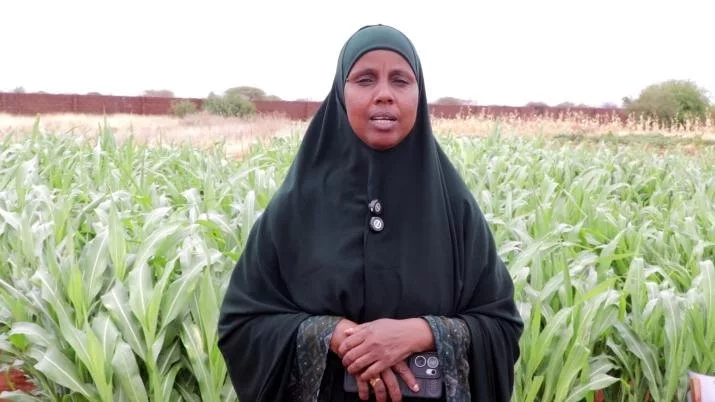
For farmers such as Halima Kahia in Kalkalcha West in Wajir West subcounty, the demonstrations represent more than an agricultural experiment.
She said they offer an opportunity to explore new ways of producing food, supporting livestock, and making productive use of land in an environment where farming is often considered challenging.
Kahia began farming in 2020 during the COVID-19 pandemic. What started as an effort to remain productive while working from home gradually developed into a family farming enterprise.
“I started with vegetables. When I saw vegetables were doing very well, then I went to fruits, pawpaw and lemon,” she explains.
Recognising the potential of agriculture in Wajir, Kahia brought her family together to establish and manage the farm. Over time, she expanded her interests beyond vegetables and fruit production, becoming increasingly interested in the opportunities available in an arid environment.
Her farm was subsequently identified through the county agriculture department as a suitable site for KALRO's cowpeas and fodder demonstrations under FSRP.
Kahia allocated a portion of her land for the trials, providing a practical setting in which researchers and farmers could observe how different crop varieties and fodder technologies perform under local conditions.
She says 10 cowpeas varieties were established on the farm. Most performed well, although a few did not grow as expected. The next step is to identify the varieties best suited to prevailing weather, soil and water conditions.
Cowpeas, locally known as kunde, is an important legume for dryland farming because of its relatively short growing cycle, drought tolerance, and multiple uses. It provides grain for food, leaves for vegetables, and biomass that can be used as livestock fodder. These characteristics make it particularly relevant to communities seeking to strengthen food security while maintaining livestock-based livelihoods.
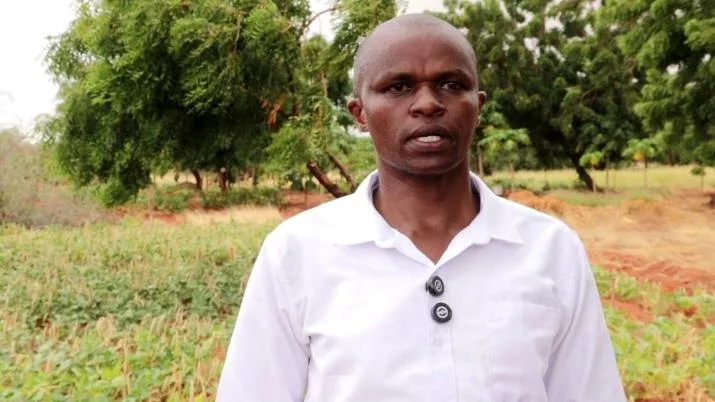
At the Wagalla/Nganyure demonstration site, KALRO scientist Charles Muriuki says the research team established cowpeas demonstrations across the four targeted wards to evaluate performance under local conditions.
“Before planting, the research team collected soil and water samples to better understand the production environment. Particular attention was given to water quality because farmers in the area depend heavily on shallow wells for irrigation,” he says.
Muriuki said continued use of saline water can affect crop production. Furthermore, soil assessments are critical because the predominantly sandy soils possess limited water-holding capacity, while high temperatures increase evapotranspiration and crop water requirements.
Despite these challenges, the cowpeas established well and reached maturity in approximately 60 days.
The crop's short growing cycle is particularly valuable in areas where rainfall is unreliable and households need alternative sources of food within a relatively short period.
“It’s leaves can be harvested as vegetables within approximately three to four weeks under suitable growing conditions, while the crop can later provide grain and residual biomass for livestock feeding,” Muriuki said.