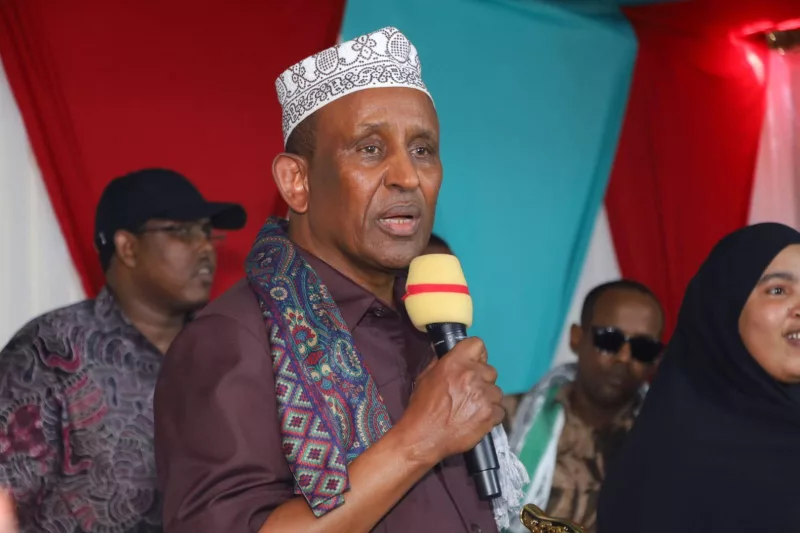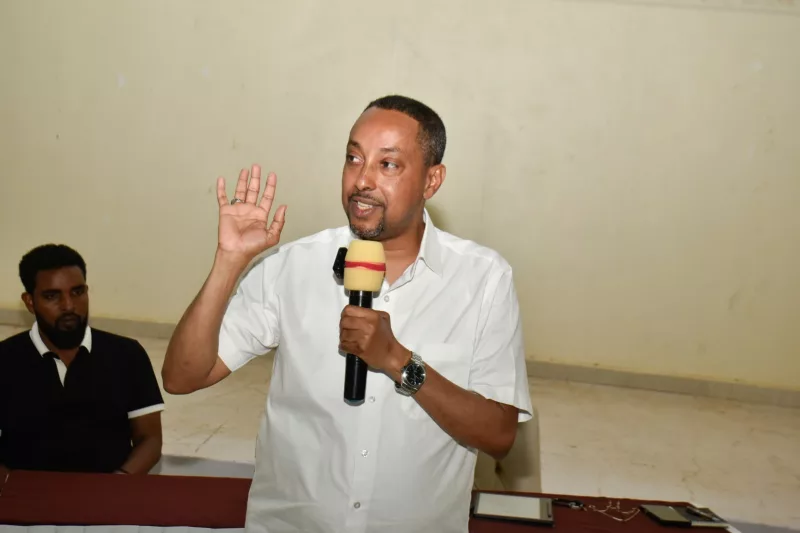
Wajir Governor Ahmed Abdullahi used the Mashujaa Day celebrations to thank residents for entrusting him with the responsibility of leading the county.
The governor said their support also enabled him to represent Wajir at the national level through the Council of Governors (CoG).
Speaking in Korondile, Wajir North, Abdullahi reflected on his leadership journey, highlighting his tenure at the helm of the Council of Governors and the role he played in advancing the interests of county governments across the country.
The governor, who served as CoG chairperson for two consecutive years after previously holding the position of deputy chairperson, said the opportunity to serve at both county and national levels was a privilege he attributed to the confidence residents had placed in him.
He expressed gratitude to fellow governors and other stakeholders who worked with him during his tenure, noting that the experience reinforced his belief that effective devolution was essential to improving service delivery and promoting development.
“The trust you placed in me, the people of Wajir, also allowed me to serve our country at the national level through the Council of Governors,” he said.
“I accepted that responsibility with humility, recognizing that I was not representing Wajir alone, but also advancing the broader interests of county governments and the millions of Kenyans we serve across the country.”
Abdullahi's remarks came as the Council of Governors entered a new leadership chapter following the election of a new chairperson and other officials, marking the end of his tenure at the helm of the intergovernmental body.
In the election, Tharaka Nithi Governor Muthomi Njuki was elected chairperson, succeeding Abdullahi while Bungoma Governor Kenneth Lusaka was elected vice-chairperson.
The leadership transition came as county governments continued to push for adequate funding, timely disbursement of allocations and stronger cooperation with the national government to improve service delivery.
He said his experience at the council had strengthened his conviction that cooperation among county governments was critical to protecting the gains of devolution and ensuring that the interests of ordinary citizens remained central to national policy discussions.
The governor noted that leadership at the council was not merely an honour attached to a position, but an opportunity to strengthen institutions, promote consultation and ensure county governments had a voice in decisions affecting service delivery.
“Through the Council, I gained a deeper appreciation of the importance of intergovernmental cooperation, constructive engagement and the collective responsibility to protect the gains of devolution,” he said.
He added that Wajir County had made a meaningful contribution to the national devolution agenda, demonstrating that leaders from the region could participate effectively in shaping policy and strengthening institutions serving Kenyans.
Turning to the impact of devolution at the grassroots, Abdullahi challenged residents and county leaders to assess development by how it transforms people's lives rather than relying solely on physical infrastructure or statistics.
He said the success of devolution should be measured by whether mothers could access healthcare, children attend school, families obtain clean water and young people acquire skills and opportunities to earn a living.
“Development is not only about buildings, roads or statistics. It is about people,” he said, adding that dignity and improved living conditions for communities should remain the ultimate measure of effective leadership.
The governor said these considerations had guided his administration's approach to governance, insisting that public service should ultimately be judged by its impact on ordinary households.
He also urged incoming and future county leaders to sustain the spirit of collaboration among counties, safeguard the constitutional foundations of devolution and ensure that public resources and decisions continued to serve citizens' interests.
“As I conclude my service as Governor, I do so with the conviction that the work of strengthening devolution must continue,” he said.
Abdullahi expressed confidence that the Council of Governors would remain an important platform for bringing county governments together, facilitating cooperation and advocating for effective delivery of public services.
He thanked governors, public servants and other stakeholders who supported his leadership at the council, saying collective efforts were necessary to build accountable, cooperative and people-centred county administrations.
“I leave this chapter proud that Wajir has contributed not only to its own development, but also to the wider national effort to build a stronger system of devolution for Kenya,” he said.