
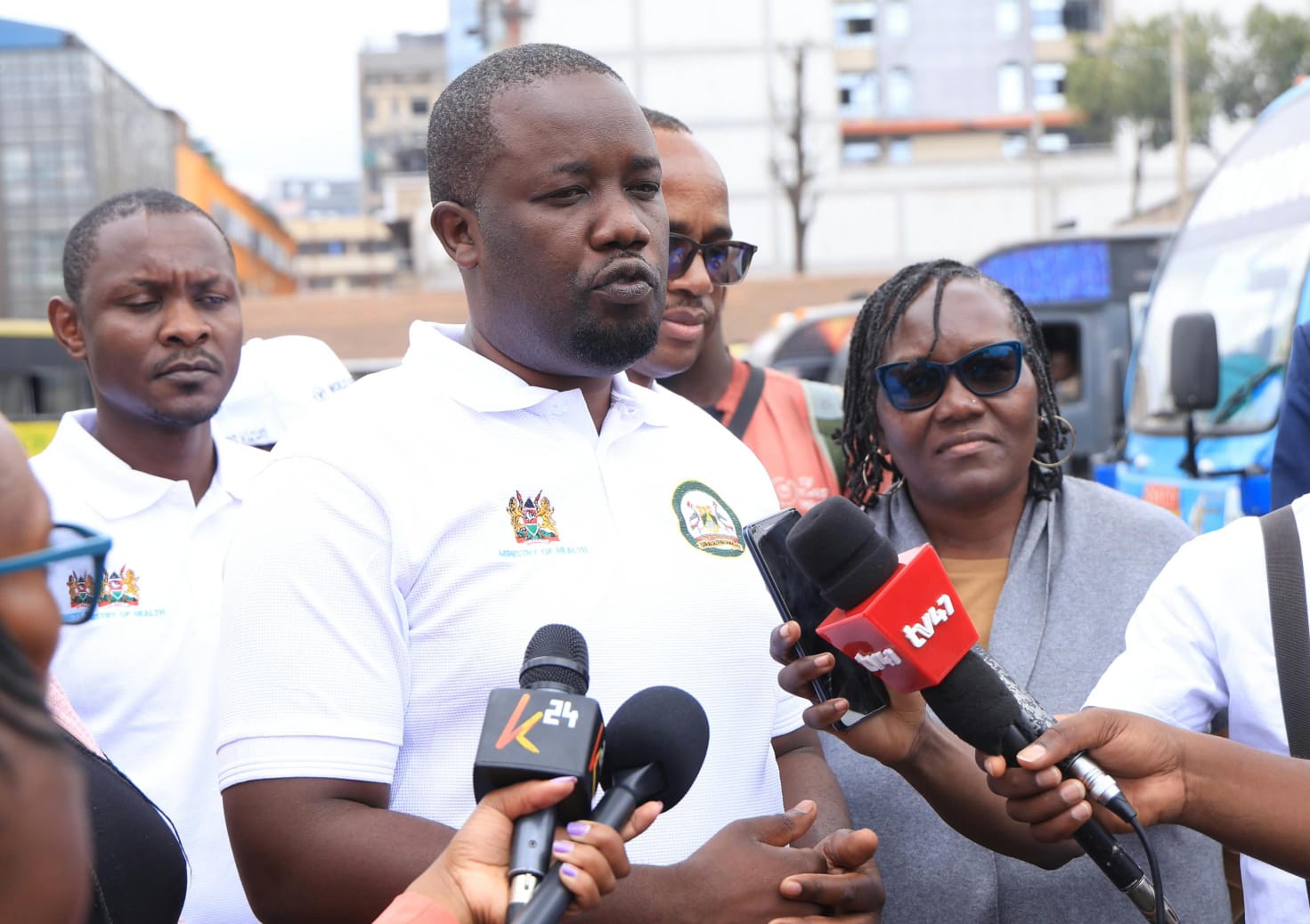
 Nairobi County chief office for public health Tom Nyakaba addresses the press in Nairobi on October 8, 2026/ HANDOUT
Long hours spent on the road are putting public service vehicle (PSV) drivers at risk of undetected vision problems, an eye health expert has said.
Ronald Kefa of Peek Vision said prolonged exposure to demanding working conditions, coupled with limited access to regular eye screening, could leave some drivers with vision problems that may affect their ability to drive safely.
Kefa spoke on Thursday, during a free eye screening exercise for motorists and PSV drivers at the Bus Station in Nairobi.
The exercise was organised by the Kenya Association of Opticians in partnership with the Optometrists Association of Kenya, the Ministry of Health, Nairobi government and other partners as part of World Sight Day activities.
The screening also highlighted cases of drivers who had previously been unaware of problems with their eyesight.
James Maina, a City Hoppa driver who has worked behind the wheel for nearly two decades, said he was diagnosed with long-sightedness during the exercise.
"I normally work from 5am to 10pm on a daily basis. Today I came for check-up and I was diagnosed with long-sighted vision. I have been referred to a clinic in Upper Hill for further analysis," Maina said.
Maina's case was among those identified during the screening, which provided motorists with eye checks and referrals for further assessment where necessary.
Nairobi County Chief Officer for Public Health Tom Nyakaba said drivers were targeted because poor vision can contribute to road crashes and injuries.
"Data has shown us that with poor efficiency, drivers cause a lot of accidents and they impact majorly to public health," Nyakaba said.
He said the screening covered drivers of matatus, long-distance buses and lorries, with those found to have eye problems receiving appropriate support, including referrals for spectacles where necessary.
"Without clear vision, the drivers are susceptible to accidents and such like injuries to our public," he said.
Kefa said technology could help expand eye screening beyond hospitals and specialised health facilities, particularly in communities where access to eye-care professionals remains limited.
He said mobile screening technology can be used by trained community health workers and teachers to identify people who may have eye problems and refer them for further assessment.
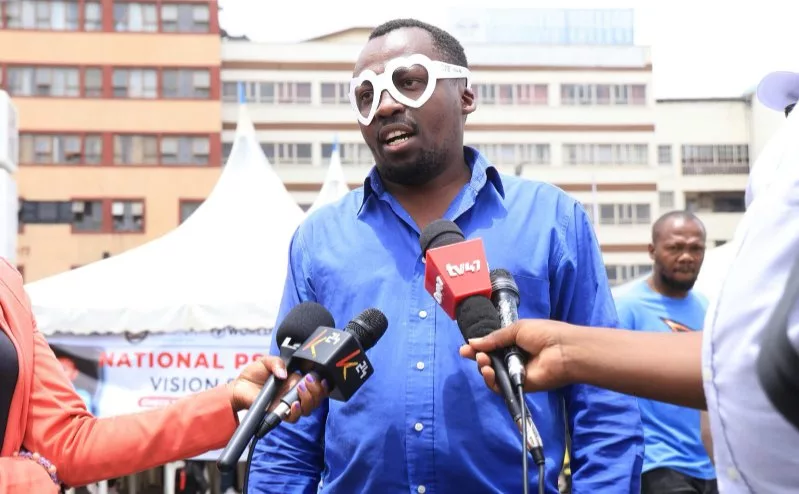 Super Metro driver, Daniel Ndung'u during an interview after undergoing screening process on October 8, 2026 /HANDOUT
The technology, he said, takes about one minute to screen an individual, allowing potential problems to be identified before they become severe.
"If we wait for people to come to the hospital when they have eye problems, many of them come when it’s too late," Kefa said.
He also raised concern over eye problems associated with diabetes and refractive errors.
Kefa said people who spend long hours on digital devices should observe the 20-20-20 rule, taking a 20-second break every 20 minutes to look at something about 20 feet away.
For PSV drivers, the screening also provided an opportunity to have their eyesight assessed as part of efforts to improve safety on the roads.
Daniel Ndung’u, a Super Metro driver, said the exercise helped drivers identify eye problems and access assistance.
"I am happy that today we have gotten the chance to come and be screened as drivers. I am glad that some drivers who have eye problems are getting help," Ndung’u said.
Ndung’u said he had no difficulty seeing objects both near and far but encouraged other motorists to undergo regular eye examinations.
"I would advise fellow drivers and motorists to get screened for their own safety and that of passengers," he said.
The exercise was held under the theme "Ona Vizuri, Safiri Salama" (See Well, Travel Safely), focusing on the link between vision and road safety.







