
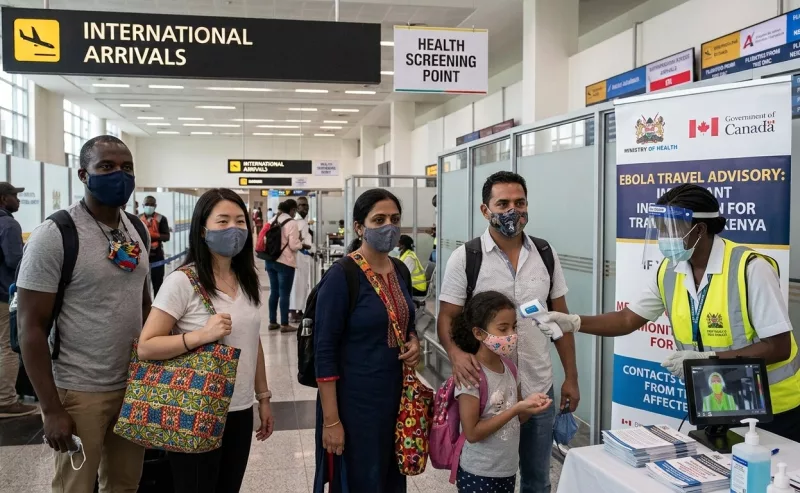
Canada has cautioned its citizens travelling to Kenya to take extra precautions following confirmation of an Ebola case in Nairobi involving a traveller from the Democratic Republic of the Congo (DRC).
In an updated travel advisory, the Canadian government urged visitors to follow local health instructions, practise good hygiene and avoid healthcare facilities in affected areas unless they require urgent medical attention.
Travellers have also been advised to monitor for possible Ebola symptoms throughout their stay and for 21 days after leaving Kenya.
The advisory warns anyone who develops symptoms consistent with the disease to immediately isolate themselves from others and seek medical attention.
“Monitor your health while in Kenya and for 21 days after you leave. If you develop symptoms of Ebola disease, isolate yourself from others and seek medical care right away,” the Canadian government said.
Although the risk to most travellers remains low when recommended precautions are observed, Canada warned against contact with suspected Ebola patients, contaminated objects and the bodies of people who have died from the disease or unexplained illnesses.
The latest warning adds to international concern following confirmation of the imported case, with other Western governments also issuing health-related guidance to their citizens.
The United States has advised potentially exposed individuals to monitor their health and seek medical advice if symptoms emerge. The United Kingdom, meanwhile, has recommended against all but essential travel to some parts of Kenya.
Kenyan authorities have sought to reassure international visitors and investors that the country remains safe for travel as health officials work to contain the risk of further transmission.
On Thursday, October 9, Health Cabinet Secretary Aden Duale told foreign governments that Kenya remained open to tourists and investors, stressing that the confirmed case did not automatically mean the country was experiencing a wider outbreak.
The Ministry of Health has identified 57 people who may have been in contact with the patient, with 10 placed in quarantine as part of efforts to prevent further spread.
The government has also stepped up disease surveillance and introduced enhanced screening at Jomo Kenyatta International Airport (JKIA) for passengers arriving from 10 countries considered relevant to the Ebola response.
Health officials have maintained that the government's decisions will be guided by verified information as contact tracing and other containment measures continue.
Beyond the Ebola-related precautions, Canada continues to advise its citizens to exercise a high degree of caution throughout Kenya because of terrorism threats and elevated crime risks.
Its standing travel restrictions cover several areas considered particularly dangerous, including Mandera, Wajir, Garissa and parts of Lamu near the Somali border. Other restricted areas include parts of Turkana and Marsabit counties bordering South Sudan and Ethiopia.
Canada also discourages non-essential travel to Nairobi's Kibera neighbourhood.







