

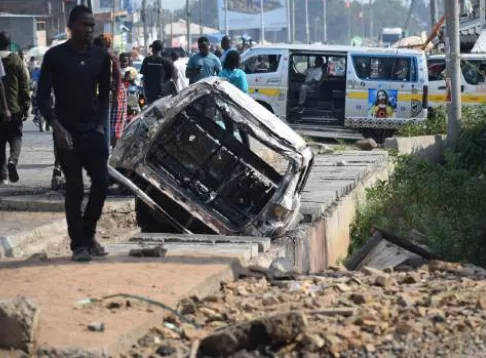
The National Cohesion and Integration Commission (NCIC) and the National Police Service (NPS) have come under intense scrutiny in the Senate over rising political intolerance, hate speech, and violence ahead of the 2027 General Election.
During a heated debate, senators warned that the country risks sliding into chaos unless leaders and state agencies take decisive action. Lawmakers traded accusations over political rally violence, alleged incitement, goonism, voter registration anomalies, and the selective enforcement of laws by security and cohesion agencies.
Tharaka Nithi Senator Gataya Mo Fire sparked the motion by demanding a probe into measures being taken to safeguard peace before, during, and after the August 2027 polls.
He urged the Senate Committee on National Cohesion, Equal Opportunity, and Regional Integration to establish how threats to peace are detected, evaluate the strengthening of security systems, and detail actions taken against financiers and perpetrators of hate speech and violence.
Makueni Senator Dan Maanzo warned of dire consequences if politicians and their supporters operate with impunity.
“Although there are sufficient laws to deal with this matter, at times it lacks political goodwill,” Maanzo said.
He called for legislative amendments to empower the Independent Electoral and Boundaries Commission (IEBC) to bar politicians proven to have sponsored or participated in electoral violence from contesting.
Nairobi Senator Edwin Sifuna targeted the NCIC, accusing the commission of failing to act against politicians involved in incitement during past political confrontations.
“It is that impunity that breeds further impunity,” Sifuna said, warning that unpunished violence would spur fresh unrest.
Sifuna further criticized senior political figures over remarks undermining public trust in the electoral process, including claims that votes could be manipulated to favor the incumbent. He challenged the leadership of the United Democratic Alliance (UDA) to publicly distance itself from such statements.
Murang’a Senator Joe Nyutu accused senior government officials of fuelling ethnic divisions.
“The most disappointing thing is that nothing has been done by the relevant bodies and authorities, especially the NCIC,” Nyutu said.
Nandi Senator Samson Cherargei supported calls to block politicians linked to electoral violence, corruption, and goonism from contesting elective seats.
He also demanded investigations into deaths and injuries linked to recent political rallies, stating that security agencies must not normalise political violence.
Senate Majority Leader Aaron Cheruiyot accused lawmakers of hypocrisy, asserting that leaders only condemn violence when committed by their opponents.
“The problem is that we pussyfoot a lot when it is to our disadvantage but only want to be loud about it when we feel that it makes the other side look bad,” Cheruiyot said.
He urged leaders to consistently condemn violence, citing an incident in Kakamega where supporters allegedly tore down and burnt a UDA banner.
“Until we become sincere with ourselves and say what is right is right and what is wrong is wrong, we cannot make progress,” he said.
Cheruiyot further alleged that supporters at a Nairobi rally attacked and robbed members of the public, adding that politicians must accept political dissent.
Vihiga Senator Godfrey Osotsi raised concerns over alleged skewed mass voter registration and voter bribery disguised as empowerment events.
“We want the IEBC to come out and tell Kenyans what is happening and stop the bribery that is happening every weekend,” Osotsi said.
Kitui Senator Enoch Wambua warned against suppressing political opponents, stating that political intolerance poses an existential threat to the country.
“If we take a position that we can only allow space to people who support us or our cause, we are just burning our country, deliberately doing it,” Wambua said.







