
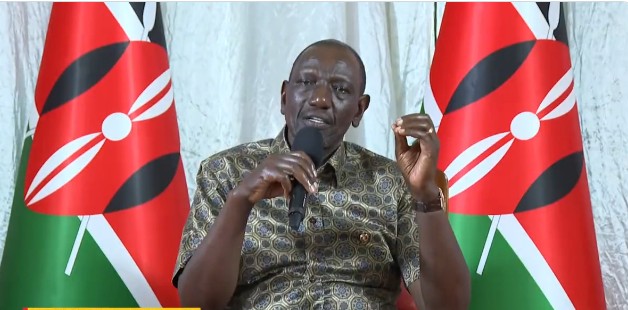
 President William Ruto speaking at State House Mombasa on October 1, 2026/SCREENGRAB
President William Ruto has explained why Lamu was eventually selected as the site for the proposed refinery, saying the decision followed studies that found the coastal town offered better conditions for handling crude oil.
Speaking at State House Mombasa, Ruto said the government initially considered other locations, including Tanga in Tanzania, as it explored where an East African refinery could be established.
He said the discussions were influenced by plans to develop a crude oil pipeline from Uganda to the Kenyan coast.
At the time, Uganda had been considering a pipeline route to Mombasa for transporting crude from its oil fields in Hoima, but disagreements between the two countries led to the project being rerouted through Tanzania to Tanga.
Ruto said the change in the pipeline route prompted officials to consider Tanga as a possible location for a regional refinery.
“We thought perhaps it could be built in Tanga because that is where the crude oil from Uganda was expected to go,” he said.
However, he said further studies conducted by experts and government officials identified Lamu as a more suitable location.
Ruto said one of the key considerations was the depth of the waters off Lamu, which would allow the facility to handle large vessels involved in transporting crude oil.
“Further research was done, involving the investors themselves and our officers, and eventually it was agreed that it should be built in Lamu,” he said.
He said the decision was also informed by Lamu's suitability as a strategic location for handling petroleum products and supporting wider industrial development.
Ruto said the proposed refinery would create opportunities beyond refining crude oil, including electricity generation, investment, trade and the development of industries that depend on petroleum products.
He said the project could support the growth of plastic manufacturing and petrochemical industries while creating opportunities for other businesses around the refinery.
The President said discussions around the refinery had been ongoing for years, with the government seeking to establish a facility that could serve Kenya and the wider East African region.
He recalled meeting Dangote during an Africa Finance Corporation-related meeting in Nairobi, where he said the Nigerian businessman was asked to consider investing in the project.
Ruto said Dangote later visited Kenya and discussions continued on the proposed refinery and other investments.
The President said the project was eventually advanced as part of wider plans to position Lamu as an industrial and logistics hub.
He said the location offered the infrastructure and maritime conditions necessary for a large-scale petroleum project while also providing room for associated industries to develop around it.
The refinery is expected to form part of a wider industrial complex, with opportunities in petrochemicals, plastics and other industries that use petroleum products as raw materials.
Ruto said the government's decision to settle on Lamu was therefore based on technical assessments and the potential of the location to support a broader industrial ecosystem rather than simply the refinery itself.
He said the project would provide opportunities for investment, trade and industrialisation while strengthening Lamu's role in Kenya's economic development.







