

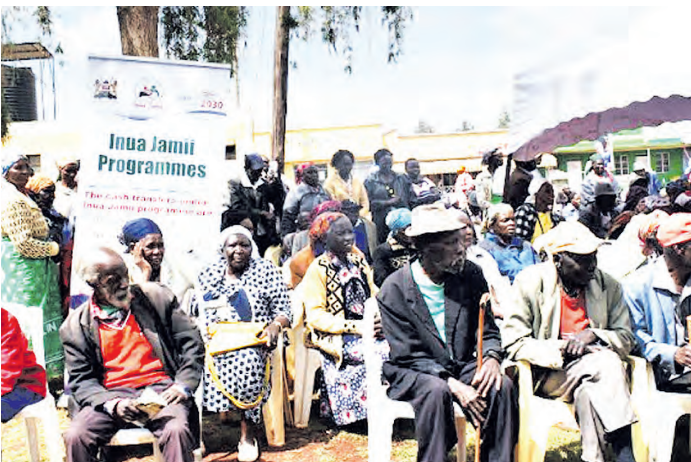
 Senior citizens of Kajiado turn up to receive their Inua Jamii stipends on July 8, 2023 /FILE
The Kenya National Commission on Human Rights (KNCHR) has called for stronger legal, social and institutional protection of older persons as Kenya joins the world in marking the International Day of Older Persons.
The day is observed annually on October 1, with this year’s theme, “The Age of Longevity: Rethinking Systems for Longer Lives,” highlighting the need for enhanced support, care, inclusion and social protection of elderly citizens.
The commission acknowledged progress made through the National Policy on Older Persons and Ageing, the National Social Protection Policy and the Inua Jamii Older Persons Cash Transfer Programme.
However, it called for the timely enactment of the Older Persons Bill, which seeks to strengthen the legal framework against abuse, neglect, discrimination and exploitation.
The commission said it supported and participated in the bill’s development.
KNCHR chairperson Claris Ogangah said the progress must now be matched with stronger implementation and protection of the rights of older persons.
“Older persons are rights holders, not beneficiaries of charity,” Ogangah said, stressing that ageing should not diminish a person’s right to dignity, equality, security and respect.
She said many older persons continue to face poverty, neglect, violence, discrimination, inadequate social protection, barriers to healthcare and public services and limited access to justice.
The challenges, she said, can be more severe for older women, persons with disabilities and those living in rural and marginalised areas, as well as refugees, detainees and those without adequate family or community support.
Ogangah called for more predictable social protection as the rising cost of living puts pressure on older persons’ access to food, medicine, healthcare and housing.
She said the Inua Jamii programme should have stronger beneficiary identification and enrolment, timely payments, accessible payment systems, effective grievance mechanisms and transparent monitoring.
The commission also urged national and county governments to make disaster preparedness and response more responsive to the needs of older persons, particularly during floods, droughts and displacement.
Ogangah said emergency measures should provide accessible evacuation and shelter, food, healthcare, medication, psychosocial support and continuity of social protection for older people who may face additional risks because of limited mobility, disability, isolation or dependence on medication.
The commission further called for recognition and support for older persons who carry significant caregiving responsibilities, including those caring for grandchildren amid changing family structures, migration and economic pressures.
It urged authorities and humanitarian agencies to address the specific needs of older refugees, including access to documentation, healthcare, food, social protection, livelihoods and information.
For older persons in detention, Ogangah called for appropriate healthcare, medication, nutrition, accessibility, family contact, psychosocial support and timely justice processes.
“Deprivation of liberty must never result in deprivation of dignity, humane treatment or essential healthcare,” she said.
Ogangah said the KNCHR would continue monitoring, investigating and advocating for the rights of older persons while engaging institutions responsible for fulfilling their constitutional obligations.
Article 57 of the Constitution requires the State to take measures to ensure older persons fully participate in society, pursue personal development, live in dignity and remain free from abuse.
The commission said families, communities, civil society and faith-based organisations also have a role in preventing neglect, abandonment, abuse, exploitation, violence and discrimination against older persons.







