
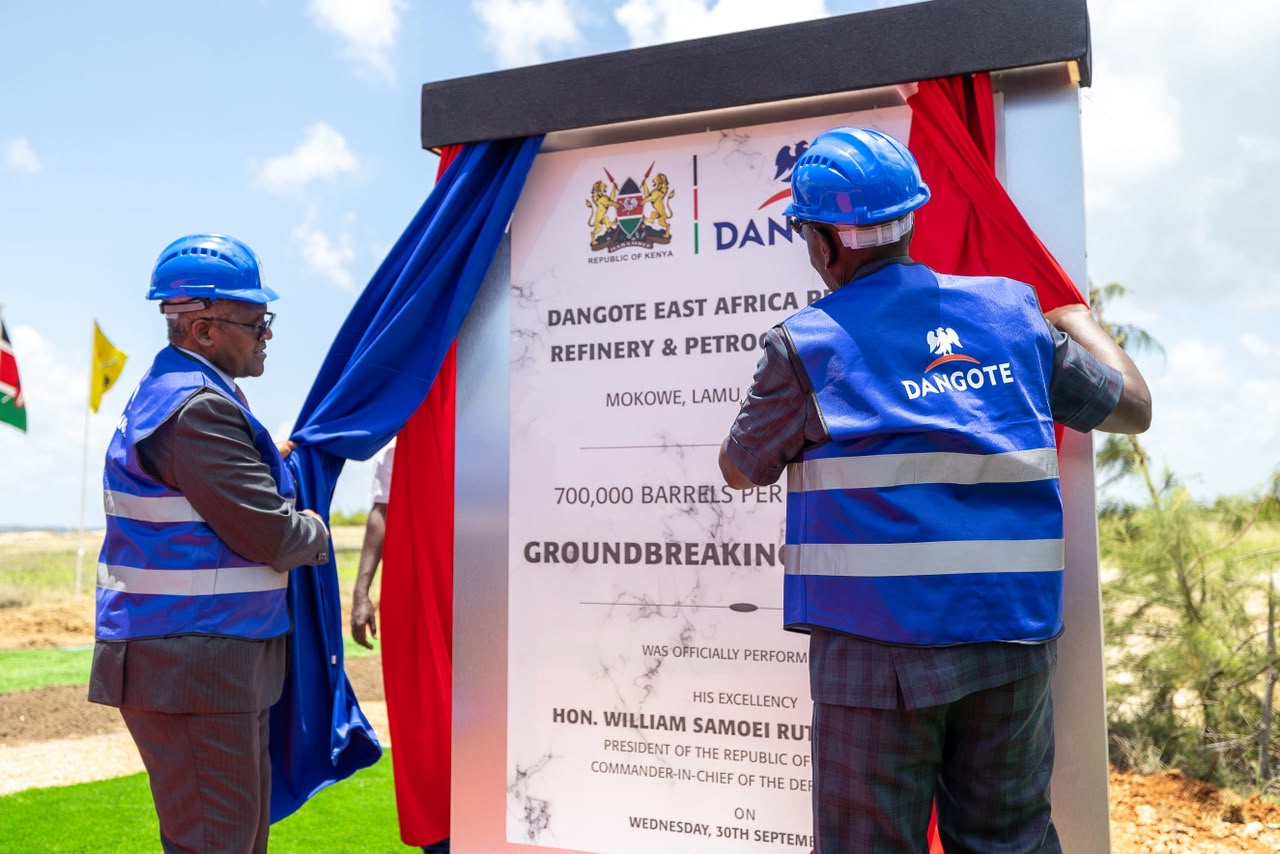
 Billionaire Aliko Dangote (left) with President William Ruto during the groundbreaking ceremony for the Lamu refinery on September 30, 2026/PCS
President William Ruto has warned Nigerian billionaire Aliko Dangote that Kenyans will hold him to the 40-month timeline he has given for completion of the Sh2 trillion East African Refinery in Lamu.
Ruto responded moments after Dangote announced the deadline during the groundbreaking ceremony in Lamu on Wednesday, saying Kenyans closely track timelines given by leaders and investors.
“We have heard you, Aliko Dangote, that you have said we will be back here in 40 months to come and open this refinery. Kenyans are very good at keeping data,” Ruto said.
“I want to warn you, they normally take me to task every time I give them a time frame.”
Ruto said setting deadlines was necessary for ensuring projects were completed, adding that Dangote was now “in good company” with Kenyans who would be watching the clock.
“And the only way we get things done is to have a time frame. So, you are in good company. These people in Kenya know what time frames mean,” he said.
Dangote had challenged Ruto and other African leaders attending the ceremony to return to Lamu in 40 months to commission the refinery, drawing on the experience of his 700,000-barrel-per-day Lekki refinery in Nigeria.
“Lekki refinery in Nigeria proved that it is capable, so Lamu must prove that it can be repeated,” Dangote said.
The proposed Lamu facility is expected to cost about Sh2 trillion and process approximately 700,000 barrels of crude oil a day. Dangote also said it would generate 1,000 megawatts of electricity and produce one million tonnes of polypropylene and base oil.
He said the project would create a wider industrial ecosystem covering energy, petrochemicals, logistics, engineering, marine services, manufacturing and small and medium-sized enterprises.
Dangote also announced plans to establish a training school in Lamu that will train 1,000 local people for opportunities linked to the refinery and associated industries.
Ruto linked the refinery to the wider development of Lamu and the Lamu Port-South Sudan-Ethiopia Transport Corridor.
“Lamu stands at the heart of this opportunity. Its port can support construction today and, in time, move crude and refined products,” Ruto said.
He said the corridor was intended to connect Lamu with Kenya's interior and neighbouring countries, but warned that infrastructure would need economic activity to fulfil its purpose.
“But a corridor without commerce is just a road, and a port without industry is just a harbour,” Ruto said.







