
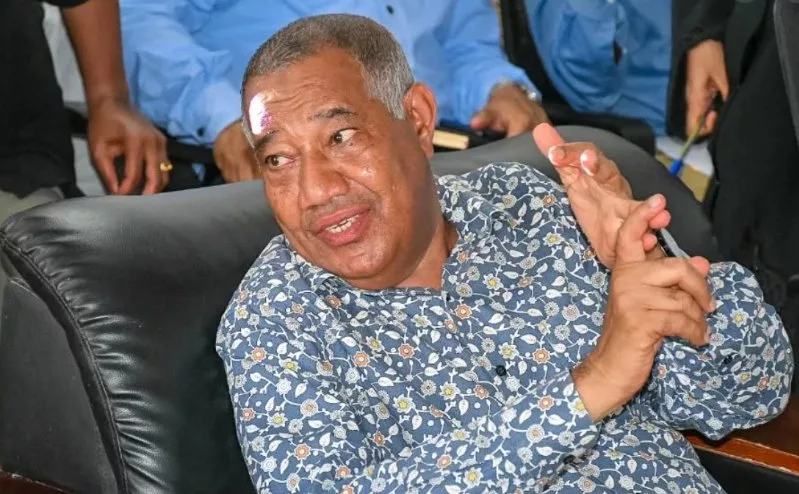
 Lamu Governor Issa Timamy /HANDOUT
Lamu Governor Issa Timamy has condemned individuals attempting to disrupt a major development project in the region, terming them "enemies of Lamu."
He criticised recent efforts to halt the initiative, emphasising that the project is designed to create vital economic and employment opportunities for local youth.
"Yesterday we saw people trying to stop this crucial project. We are saying those are not people of Lamu; they are enemies of Lamu, and we shall not accept," Timamy said.
"How do you want to stop a project that will give opportunities for thousands of our young people?"
The governor reaffirmed his administration's commitment to advancing the development agenda, maintaining that public interest and youth empowerment remain top priorities for the county government despite resistance from opposition groups.
Industrialist Aliko Dangote has, however, stressed his readiness for the naysayers.
“Anyone who want to cause trouble, we are ready for trouble. We will give them headache,” he said.
The groundbreaking ceremony for the refinery was held today, with heads of state from Ethiopia, Benin and Uganda. Former president of Nigeria also attended the event.
The Lamu refinery is Kenya's largest infrastructure project since independence, surpassing the $5.1bn (£3.9bn) Standard Gauge Railway. East Africa does not currently have any oil refineries.
Opposers of the project cited compensation claims from land used in the project.
"To come and say some people are demonstrating, demonstrating about what? Have you ever seen people demonstrating against themselves in terms of development?" he told the BBC, indicating he was not fazed by the protests.
At the height of construction, Dangote, who is Africa's richest man, said the refinery would create 60,000 jobs, with the benefits extending beyond those employed directly by the project.
"Are we going to bring robots? Of course, the people will benefit," he said.
Critics have questioned the decision to build the refinery in Kenya, which is not an oil-producing country. Others have suggested Tanzania or Uganda, both of which are moving towards oil exports through the East African Crude Oil Pipeline.







