It was Friday, September 18, at 8.30am. It was my most anticipated day in China.
We were leaving the hotel for the Great Wall, half-asleep and half-excited. Our guide, Zhao Jingwei, was already on his phone checking traffic.
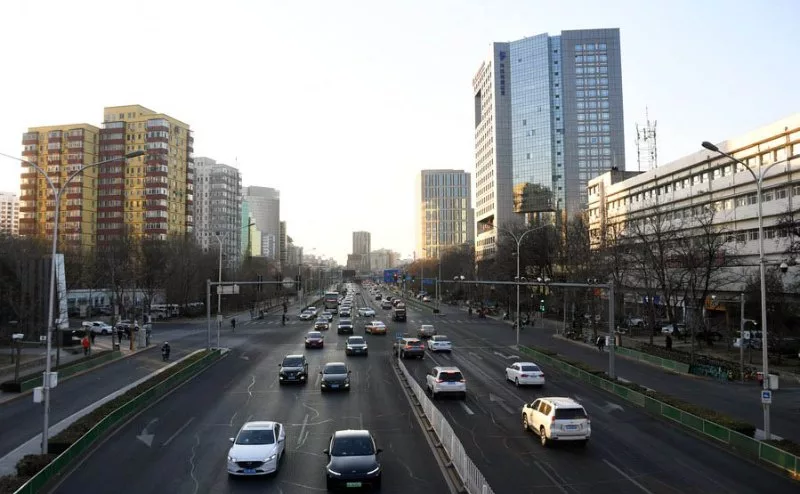
Beijing has 22 million people and more than seven million cars. By Nairobi logic, the city should be a dead parking lot by 6am. But the cars on the 5th Ring Road were moving.
“Beijing traffic is managed by odd-even ban policy,” Zhao said.
That sentence woke me up faster than the cold Beijing air.
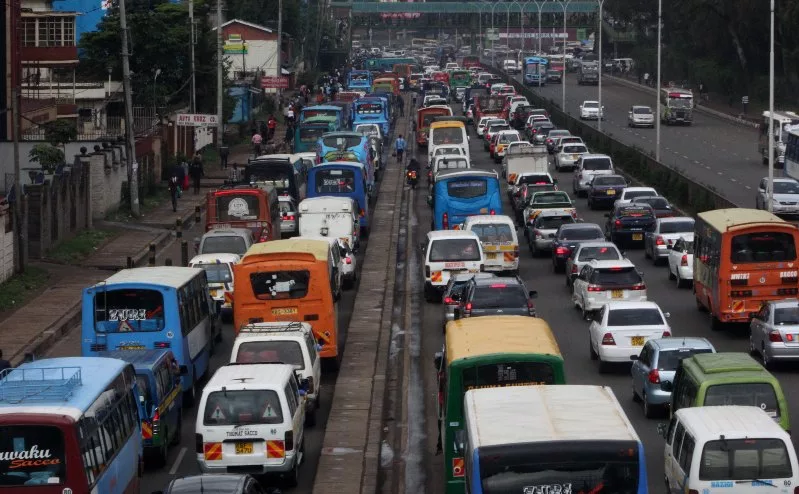
Back home, Nairobi is choking. We lose Sh130 billion every year to traffic, according to the Ministry of Transport. NaMATA warns it could hit Sh1 trillion by 2063.
Numbeo, an online dateabase, ranks us second worst in Africa after Lagos and 11th worst globally. The average commute is 57 minutes.
In Beijing, it should be worse. It isn’t. So I asked Zhao to explain.
One day off the road.
The policy is simple and ruthless.
Every weekday, 20 per cent of private cars are banned from inside the 5th Ring Road, Beijing’s urban heart. The restriction runs from 7am to 8pm. There is no ban at the weekends.
How do they decide who stays home? Number plates. Your last digit is your fate.
Monday — 1 and 6 banned. Tuesday — 2 and 7. Wednesday — 3 and 8. Thursday — 4 and 9. Friday — 5 and 0.
The timetable rotates every 13 weeks, so no one is punished permanently.
Only private cars are affected. Buses, taxis, ambulances, police trucks and army vehicles are exempt. Electric vehicles are free in almost every city — China’s way of pushing green.
“But people try to outsmart the system by [buying] two cars?” Zhao noted, then quickly added: “Cameras are everywhere.”
Break the rule and you pay 100 to 200 yuan — about Sh1,800 to Sh3,600. That is small money for Beijing’s middle class.
But drivers also lose one to three points from their licence. You have 12 points a year. Four mistakes and you are back in driving school.
Now cameras can fine you every three hours, not once a day.
In Shenzhen, the fine is even heavier. There are police on the streets and AI cameras above.
So people comply. Why? Because they have an alternative.
“Free bus. Allowance in public transportation. Generally speaking, people are okay with this. Because most families have two and more cars,” an English-speaking Beijing resident told me at a subway station.
That is the secret.
When Beijing introduced the ban during the 2008 Olympics to clear smog, it had five subway lines. Today, it has 27.
When your car is banned on Tuesday, you swipe your card and jump on Line 10. You are not stranded.
Data from 1,500 monitoring stations shows the ban cuts the number of cars by 20 per cent every weekday. The Beijing Transportation Research Center says rush-hour speed in the centre went up by 10 per cent, while PM2.5 pollution dropped by 21 per cent.
So what about Nairobi?
Maybe the Beijing one-day car ban might just be an alternative.
Our jam is different. Beijing had too many cars. Nairobi has too little planning.
There is no scheduled public transport. Matatus overlap on Jogoo Road, fighting for 50 bob. Illegal parking in the CBD turns two lanes into one. BRT is always “coming soon”.
We are still talking about automating traffic lights through the Nairobi Intelligent Transport System.
Governor Johnson Sakaja thinks bigger.
On August 6, 2026, he appeared before the Senate Committee on National Security, Defence and Foreign Relations with a Sh1 trillion dream.
The Nairobi Metropolitan Mass Rapid Transit System is a 30-kilometre underground metro linking the CBD to Eastlands, Westlands and Upper Hill.
It would be the first subway in East, West and South Africa. Only Cairo and Algiers have one.
“Moving commuters underground is the ultimate solution to chronic traffic congestion and would transform Nairobi into a ‘20-minute city’,” Sakaja told Senators.
The plan is an underground CBD core that would ease surface roads and integrate with walkways and matatu terminals.
The Eastlands line would serve Kayole, Buruburu and Umoja — the corridor that carries half the city every morning.
Sakaja says feasibility studies with international development partners prove it is doable.
Maybe.
But Zhao’s lesson on the way to the Great Wall was clearer.
Beijing did not start by digging tunnels. It started by telling car owners, “Leave it at home for one day.”
It enforced the rule with cameras that do not take bribes, points that hurt more than fines, and buses and trains that actually come.
Nairobi wants the metro before the discipline.
We want to be Beijing, but we still cannot make matatus queue at Kencom.
Until we learn that one-day sacrifice, that Sh1 trillion tunnel will remain a beautiful dream while we spend another 57 minutes stuck at Museum Hill.
INSTANT ANALYSIS
Nairobi’s traffic crisis is increasingly a problem of discipline and alternatives, not merely road capacity. Beijing’s experience shows that restricting private cars can work when enforcement is credible and public transport offers a practical substitute.
For Nairobi, the lesson is that ambitious infrastructure such as the proposed metro must be matched by immediate measures to manage road use, enforce traffic rules and make public transport reliable enough for commuters to leave cars behind.