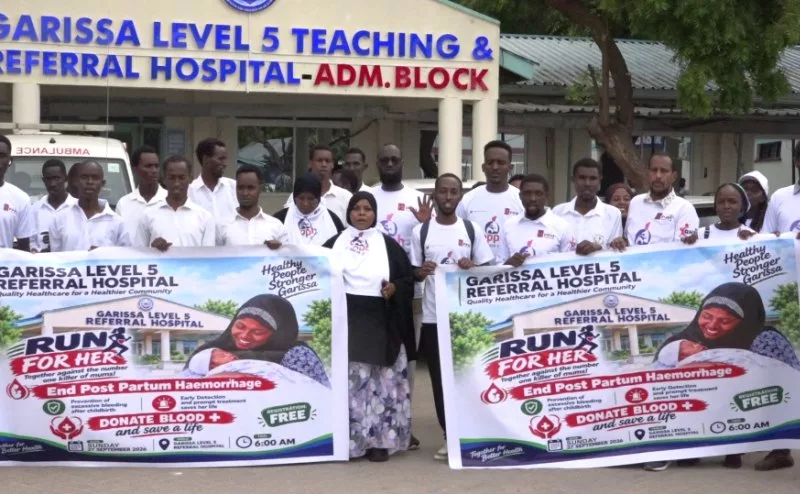
 Healthcare workers from Garissa participating in the awareness campaign during the
End PPH Run /STEPHEN ASTARIKO
They urged residents to adopt regular blood donation to save mothers who suffer excessive bleeding during childbirth.
The practitioners spoke at the Garissa Regional Blood Bank during the End PPH Run, an awareness campaign aimed at reducing maternal mortality associated with excessive post-birth bleeding.
Habon Abdi, the coordinator of family health services, said inadequate blood stocks remained a primary hurdle in managing PPH across the county.
She said some mothers arrive at health facilities in critical condition, only to find the blood required to save their lives is unavailable.
“Blood is essential because many mothers are dying due to a lack of blood when they experience excessive bleeding during childbirth. When we donate blood, we are saving lives,” Habon said.
She said while the county recently established a regional blood bank, the facility remains underutilised due to low donor turnout.
“We are therefore appealing to everyone, including religious leaders, politicians and community members, to step forward and donate blood for mothers,” Habon said.
She also sought to dispel misconceptions surrounding blood donation, reassuring the public that the procedure is safe and religiously permissible.
“It is halal to donate blood, and it is a commendable act because, by donating, you are saving a life,” Habon said.
Dr Amina Mohammed, head of obstetrics and gynaecology at Garissa County Referral Hospital, said PPH remains a leading contributor to maternal mortality, severely depressing national maternal health indicators.
She said many women reach health facilities only after their condition has severely deteriorated, drastically reducing their chances of survival.
“Sometimes mothers arrive at our facilities when their condition is already critical. As frontline healthcare workers, there are instances where we cannot save them because they arrive too late. That is why prevention is paramount,” Dr Amina said.
She said curbing maternal deaths requires comprehensive interventions before, during and after pregnancy, including pre-conception counselling and active management of anaemia.
“Many mothers attend antenatal clinics, yet their haemoglobin levels remain dangerously low. Anaemia is a major risk factor for postpartum haemorrhage and significantly worsens its severity,” Amina said.
Fatuma Issa, the Garissa county reproductive health coordinator, revealed PPH is the leading cause of maternal mortality in the county, accounting for about 70 per cent of maternal deaths according to local health statistics.
She said the county executive has intensified community sensitisation, blood drive campaigns and initiatives promoting skilled birth attendance and prompt medical attention.
“Through these targeted interventions, we hope to eliminate maternal deaths resulting from postpartum haemorrhage,” Fatuma said.
Hundreds of residents turned out at the regional blood bank during the event to donate blood, signalling growing community support for maternal survival initiatives.
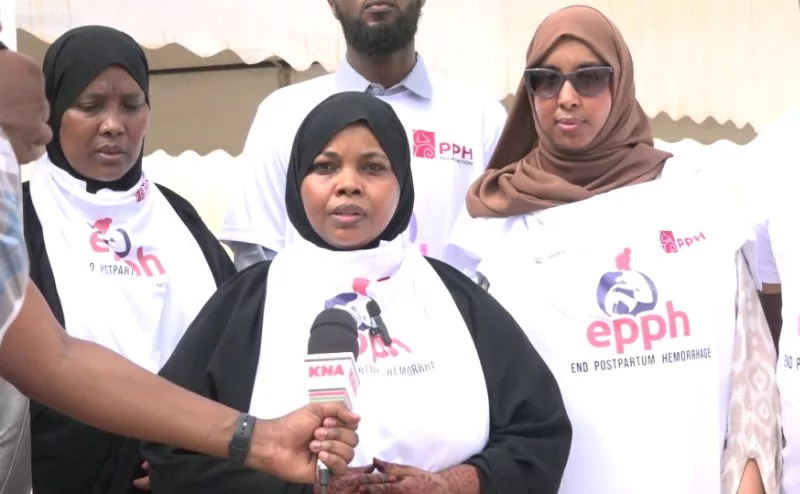 Fatuma
Ibrahim Issa, the Garissa County Reproductive Health Coordinator, speaking to
the press. /STEPHEN ASTARIKO
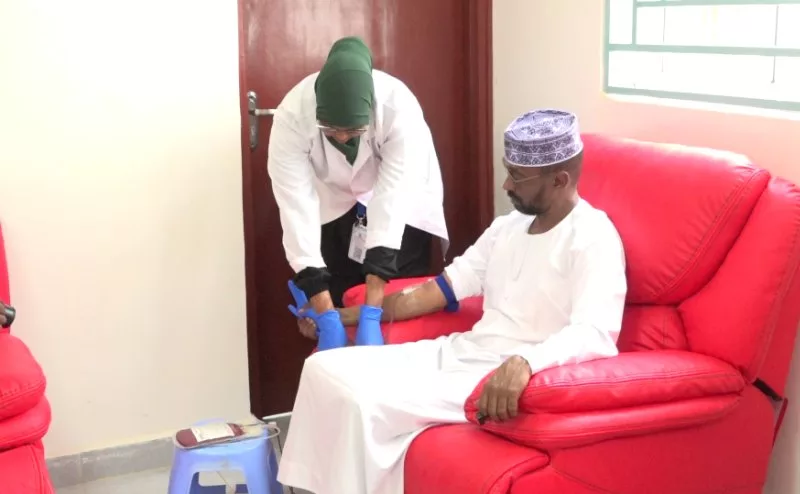 A volunteer
donating blood at the Garissa regional blood bank centre./STEPHEN ASTARIKO
 Habon
Golo Abdi, the Coordinator of Family Health Services, speaking to the press.
/STEPHEN ASTARIKO
 Dr
Amina Mohammed, Head of the Department of Obstetrics and Gynecology, speaking to
the press. /STEPHEN ASTARIKO