
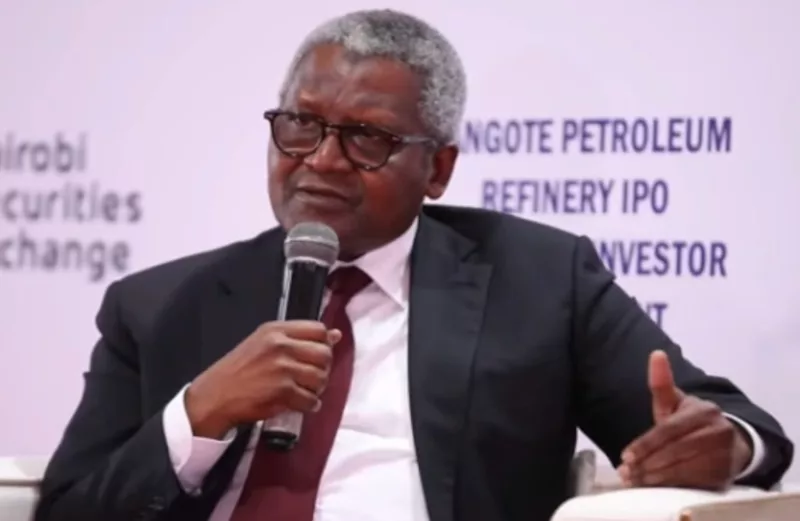
 Nigerian billionaire and industrialist Aliko Dangote /HANDOUT
Nigerian businessman Aliko Dangote has said his planned 700,000-barrel-per-day refinery in Lamu should be listed on the Nairobi Securities Exchange to give more Africans an opportunity to own part of the project.
Dangote said the planned refinery, which is expected to break ground on Wednesday, September 30, would be the biggest of its kind in East Africa.
Speaking at the Nairobi Securities Exchange, Dangote said listing businesses on African capital markets would allow more people on the continent to participate in their ownership.
He said his businesses that are fully owned by his group have traditionally reinvested their earnings instead of paying dividends, but the new approach would allow other shareholders to participate.
“This thing that people are holding, there are a lot of mafia organisations that have actually overtaken most of our businesses in Africa, airline, shipping, ports, you name it,” Dangote said.
“So which means the intention is to continue to make us Africans slaves. And this has to stop.”
Dangote said African countries needed to invest in and own businesses on the continent rather than relying on companies and capital from outside Africa.
He said his group was also preparing to list a new shipping business, which he said would help address the cost of moving goods between African countries.
The industrialist cited the cost of transporting clinker from Nigeria to Ghana as an example of what he described as inefficiencies in intra-African trade.
He said the journey between the two countries could take about a day, yet the cost of transporting clinker to Ghana was higher than bringing gypsum from Spain, despite the latter taking about 12 days.
“That is the reason why we are also opening a new shipping company to be doing that,” he said.
Dangote said the shipping business would also be opened to African investors.
“Let Africans own it,” he said.
He said the business had an initial investment of $1.6 billion but indicated that his group could sell additional shares if there was demand from African investors.
“We’ll go to the regulator and ask the regulator that, look, there’s more demand. We want more Africans to own it,” Dangote said.
He said the group was prepared to reduce its own stake as more investors came on board.
“Even if Dangote will end up having 20 per cent, 25 per cent, we have nothing to hide,” he said.
Dangote said giving other shareholders ownership would also allow them to hold company leadership accountable.
“If we go to an AGM, we are not doing the right thing, then change the leadership. You can vote and vote us out,” he said.
He said shareholders would be free to replace the leadership with people they believed could perform better.
Dangote said the approach was intended to encourage greater African ownership of businesses and strengthen capital markets on the continent.







