

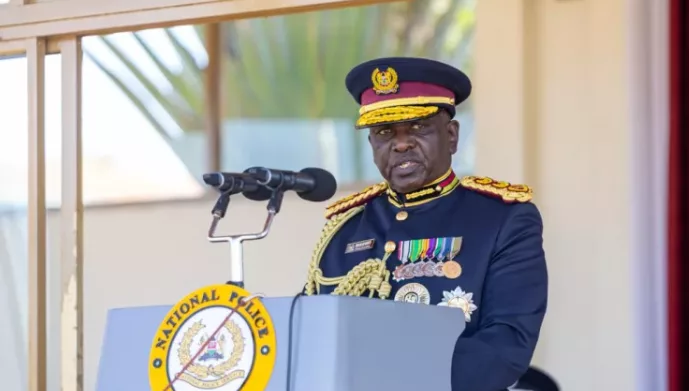
The High Court on Monday pardoned Inspector General of Police Douglas Kanja after finding that the National Police Service had failed to comply with a court order barring the barricading of roads during demonstrations.
Justice Patricia Nyaundi, however, issued a stern warning to the police chief, cautioning that the court would not hesitate to impose a custodial sentence if a similar violation occurs in future.
Kanja appeared before the court in person alongside his deputies Eliud Lagat, Gilbert Masengeli and Director of Criminal Investigations Mohamed Amin among other senior officers.
The judge said Kanja’s personal appearance and assurance that the police would comply with the order going forward had been taken into account in deciding to pardon him.
“Noting that you have attended court in person, appreciating that you have undertaken and given assurance that this will not happen again, I shall pardon you,” the court ruled.
The court found that the police conduct had resulted in the violation of citizens’ freedom of movement, underscoring the importance of contempt proceedings in upholding the authority of the judiciary and the rule of law.
Justice Nyaundi noted that Kanja had demonstrated how the court order would be implemented in future and had assured the court that he had instructed police officers to comply with judicial orders.
“I appreciate that you have emphasised to your officers that court orders must be complied with,” the judge said.
The judge warned that any fresh violation of the order could result in a custodial sentence against the Inspector General.
She said the court’s detailed ruling would further address the responsibility of the National Police Service in safeguarding the rule of law and ensuring compliance with court directives.
The High Court consequently directed the police to respect and fully comply with the order prohibiting the barricading of roads during demonstrations, warning against any recurrence.
Tension had been high at the court ahead of the directions as the parties awaited the outcome of the contempt proceedings.







