The Court of Appeal has upheld the constitutionality of the Affordable Housing Act, 2024, clearing the path for the government to continue collecting its 1.5 per cent levy.
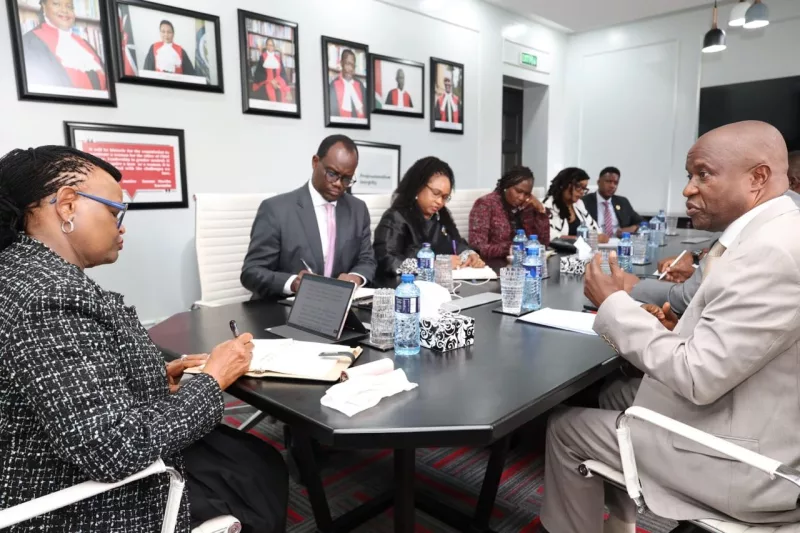
Delivering their judgment, a five-judge appellate panel—comprising Justices Wanjiru Karanja, Patrick Kiage, Aggrey Muchelule, Weldon Korir and George Odunga—dismissed 42 consolidated appeals challenging the legislation.
The appeals arose from the High Court’s October 22, 2024 decision, which had dismissed challenges to the Act.
The petitioners, including Busia Senator Okiya Omtatah and Dr Magare Gikenyi, argued that the law violated constitutional property rights, undermined devolution and suffered from inadequate public participation.
The Act was enacted to give effect to Article 43(1)(b) of the constitution on the right to accessible and adequate housing.
The High Court in Okoiti and six others v Cabinet Secretary for the National Treasury and Planning and three others declared that provision unconstitutional on November 28, 2023, finding the levy lacked a proper statutory framework under Article 210.
Parliament then published the Affordable Housing Bill No 75 of 2023, passed it and the President assented on March 19, 2024. Six petitions followed.
The appellants argued that the Act imposed an unfair tax and undermined devolution, public participation, land management and equality.
The first to fifth appellants—Gikenyi, Pauline Nduta Kinyanjui, Philemon Abuga Nyakundi, Shallum Kaka Nyakundi and Jamlick Otondi Orina — submitted that the Act “creates a scheme through which a certain class of people (especially employees) are compelled to have their money deducted so that other people can get houses, while the contributor/employee does not benefit”.
They sought, among other reliefs, quashing of the Housing Act and an order quashing the imposition of the levy at 1.5 per cent.
The CSs for Lands and National Treasury and Attorney General, named first to third respondents respectively, opposed the appeal, arguing that Articles 209 and 210 of the Constitution mandates the national government to impose taxes on the people, and the housing levy is a tax.
The respondents maintained that collecting the levy through an act of Parliament is a lawful exercise of the state’s taxation powers meant to fulfill a valid public purpose — specifically, advancing the constitutional right to accessible and adequate housing. They asserted that taxation for public interest does not violate individual property rights.
The respondents argued that the Commissioner General of the Kenya Revenue Authority is legally authorised to collect and receive the housing levy. They cited Section 5 and Section 11 of the Kenya Revenue Authority Act, which explicitly establish the KRA as an official government agent tasked with the administration, collection, and receipt of state revenue.
Responding to claims that the levy unfairly targets formal-sector workers, the government argued that different collection mechanisms for formal and informal earners do not constitute illegal discrimination.
Opposing claims of procedural flaws, the respondents insisted that Parliament fulfilled all constitutional requirements for public engagement.
They pointed to nationwide public consultations, newspaper advertisements, stakeholder hearings across 19 counties, and the submission of written and oral memoranda during the drafting of the Affordable Housing Act, 2024.
The bench dismissed all challenges and upheld the constitutionality of the Act, confirming that the mandatory 1.5 per cent levy is legally sound.
On the state's power to tax for public good, they ruled, "Taxation enacted through Parliament for a clear public purpose does not violate private property rights...
“The Affordable Housing Act seeks to respond directly to the constitutional imperative of providing accessible and adequate housing to citizens."
The judges held that setting up distinct tax collection mechanisms for formal and informal workers does not constitute unconstitutional discrimination.
Furthermore, the court confirmed that the Commissioner General of the KRA holds the proper legal authority to collect the levy as an agent of the state.
In regard to public participation and the parliamentary process, the judges stated:
"Public participation is not a static or mechanical exercise. Where Parliament demonstrates meaningful engagement, nationwide stakeholder consultancies, and procedural compliance, the constitutional threshold is satisfied."