
For 10,000 young Kenyans, the journey into the National Police Service has ended not simply with a uniform, a badge and a new title but has brought with it a promise of a more secure future for themselves and the families that stood behind them.
For parents who have struggled to raise school fees, grandparents who stepped in when finances were scarce and young people who survived on casual jobs, the recruitment has opened a new chapter.
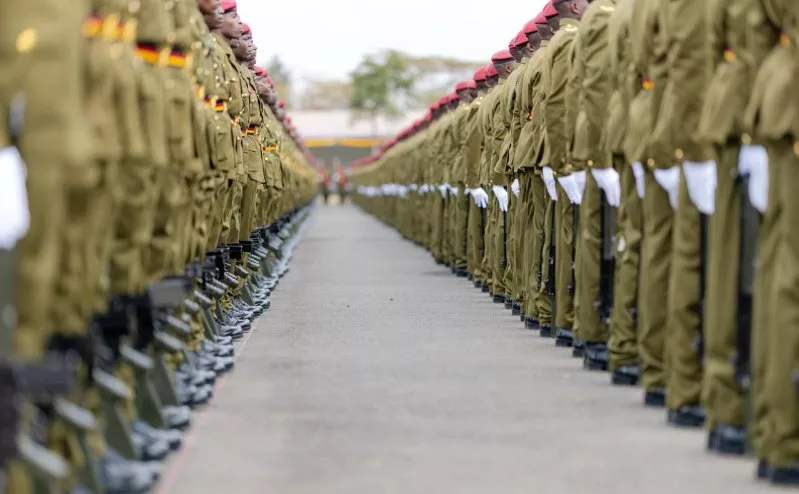
The young men and women recruited in 2025 have completed nine months of intensive training and graduated as police constables, ready to begin their careers.
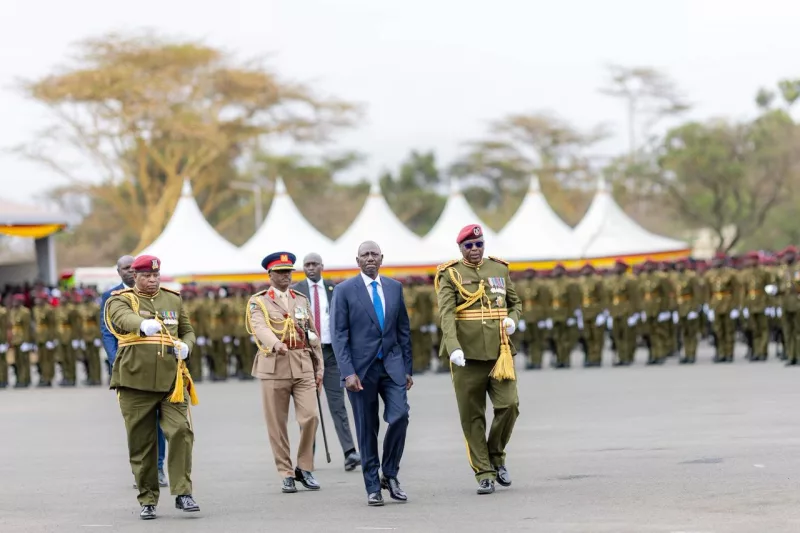
Their journey culminated in the 50th General Service Unit (GSU) Passing-Out Parade at the National Police College, Embakasi Campus, where the final group of the 2025/26 cohort completed its training.
The parade brought together the pomp and ceremony of a new generation entering public service, but behind the uniforms and marching formations were thousands of personal stories of sacrifice, financial hardship and renewed hope.
For the recruits, the job provides a regular income and professional opportunity. But for their families, it could mean school fees paid on time, food on the table, medical bills met and the possibility of returning to education or pursuing dreams that had been put on hold.
The recruitment was also designed to strengthen Kenya's security architecture by increasing the number of officers available for deployment.
President William Ruto directed the recruitment of 10,000 new police constables, with 4,000 positions allocated to graduates of the National Youth Service.
The additional officers are expected to strengthen police visibility, improve response to emergencies and enhance the ability of the National Police Service to deploy personnel to communities across the country.
But the impact of the recruitment can also be measured in homes far away from police stations.
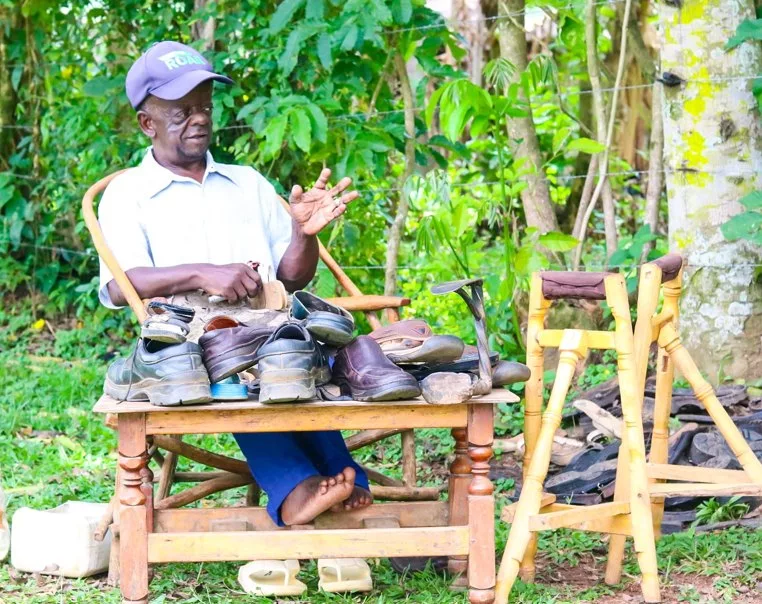
In Butula, Busia county, the graduation of Constable Boniface Owino was a moment of particular significance for his father, Linus Wesonga. Wasonga is a cobbler living with disability. He has often struggled to provide for his family.
Owino, the ninth of Wesonga's children, has now secured a career that his father believes could change the family's fortunes.
“My son's graduation represented more than a ceremony. It was a sign that years of struggle could give way to better prospects,” he said
He said the government had changed the family's outlook and given them hope that things would improve.
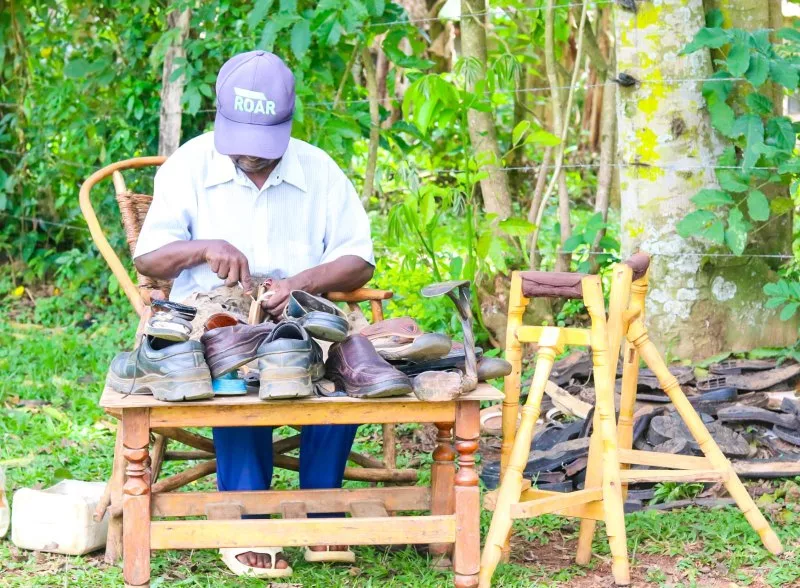 Linus Wesonga is a cobbler and PWD. His son is now a constable with the NPS from Butula, Busia county /HANDOUT
In Ol Joro Orok, Nyandarua county, Constable Marvin Nderitu's journey to the police service was shaped by a childhood marked by financial difficulties.
Raised by his grandparents, Nderitu was forced to abandon his masonry studies at college when his family could no longer afford to support his education.
He later joined the National Youth Service before applying for the police recruitment exercise.
His grandfather, David Mwangi, said the achievement was especially meaningful because he had watched his grandson navigate difficult circumstances while trying to build a future.
“It is a major accomplishment for us as a family,” Mwangi said.
For Constable Ivy Mkandoe from Kilifi county, the police uniform was not part of her original career plan.
Mkandoe had hoped to pursue a diploma in cosmetology. But when her family could not raise the fees, she turned to casual work to survive.
She washed clothes and worked on farms as she sought to make ends meet.
The police recruitment changed that path.
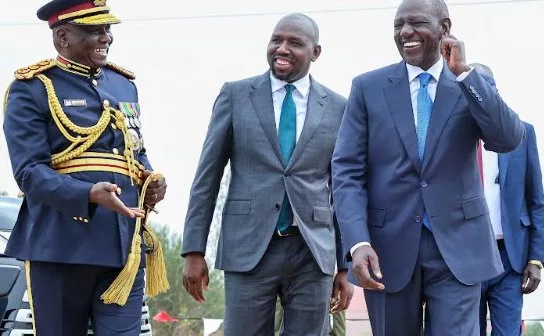
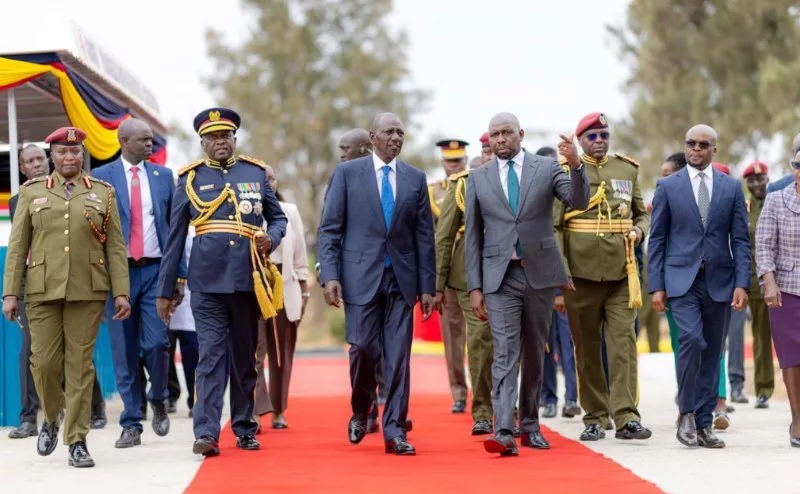 President William Ruto, Interior CS Kipchumba Murkomen, Interior PS Raymond Omollo and IG Douglas Kanja at the pass-out parade of GSU recruits in Embakasi on September 18 /HANDOUT
Her new employment gives her a regular income while also creating an opportunity to return to education and pursue the course she had once hoped to study.
She now hopes to serve the country while continuing to work towards her educational ambitions.
Mercy Mwongeli was a university student but had been forced to interrupt her studies for lack of fees.
When she heard about the recruitment exercise, she applied and was successful.
For thousands of young Kenyans, a government job can provide the stability needed to move from depending on relatives or irregular employment to supporting themselves and others.
A salary can help a newly employed officer contribute to household expenses, support siblings, assist parents and grandparents and begin planning for a future that previously appeared uncertain.
Interior Cabinet Secretary Kipchumba Murkomen has already called for another recruitment exercise, citing both the need for more officers and the employment opportunities created by the latest intake.
“Since you helped those young people to obtain employment, we now ask you to say just one word and tell us to recruit another group of police officers so as to strengthen both our police and security services and enable many young people, the majority of whom are from the Gen Z generation, to come and serve the country,” Murkomen said.
The government has also been investing in police housing, equipment, mobility, technology, infrastructure and officers' welfare as it seeks to improve the capacity of the security services.
At GSU headquarters in Embakasi, Ruto opened a new hospital wing intended to expand healthcare services for officers and local communities.
The facility includes dental and laboratory services. He also launched 20 vehicles to support police operations.
For the newly graduated constables, however, the most important transition is personal.
Nine months ago, they entered police training colleges as young Kenyans looking for employment and an opportunity to build their futures.
They now leave as members of the National Police Service, carrying new responsibilities and the expectations of the communities they will serve.
Their uniforms represent duty. Their salaries represent opportunity. And their deployment represents an additional layer of security for communities across the country.
For Wesonga and thousands of other parents, grandparents and guardians, the meaning of the recruitment is even more intimate.
It is the prospect of a child who can now stand on their own feet. It is relief from years of financial pressure.
It is the possibility of returning to school, helping a sibling, supporting an ageing parent or finally pursuing a dream that had been postponed.
Across Kenya, 10,000 young people are beginning their careers at the same time as their families begin adjusting to a new reality.
The challenge now is to ensure that the opportunity translates into effective, professional and accountable service.
If that happens, the recruitment will have achieved more than adding officers to Kenya's security agencies.
It will have helped build safer communities while giving thousands of young Kenyans a chance to build more stable lives for themselves and those who helped them get there.







