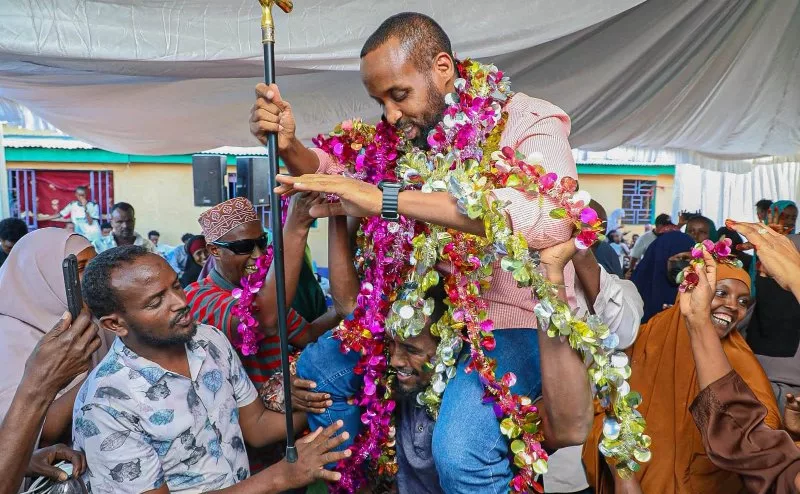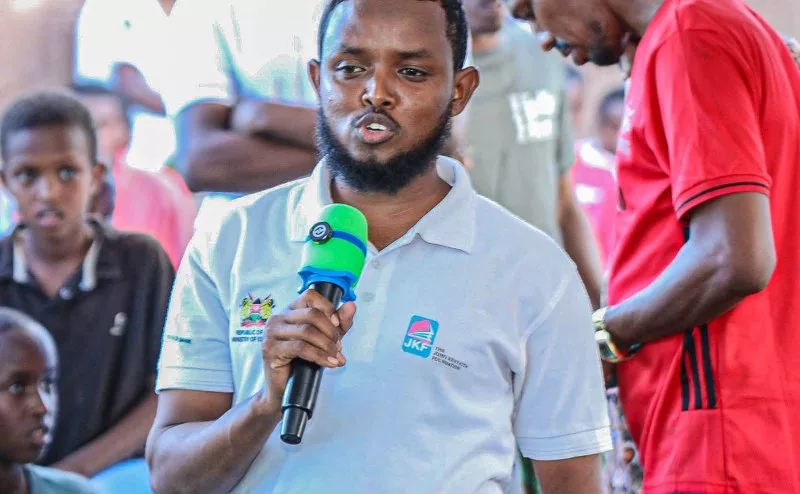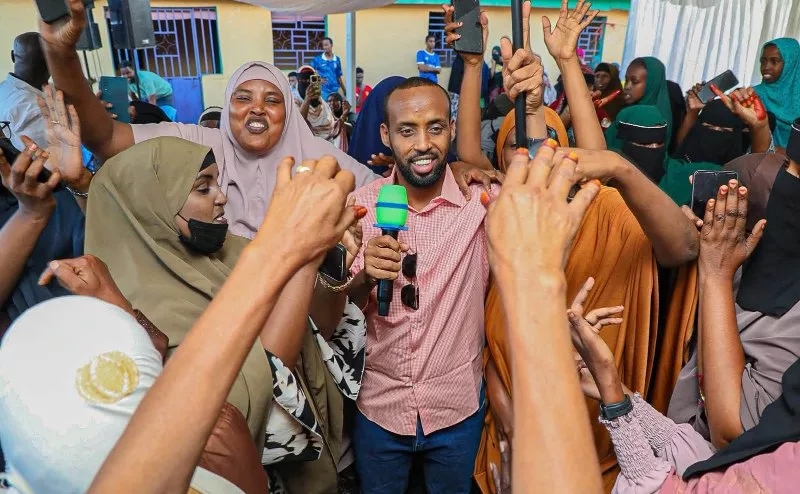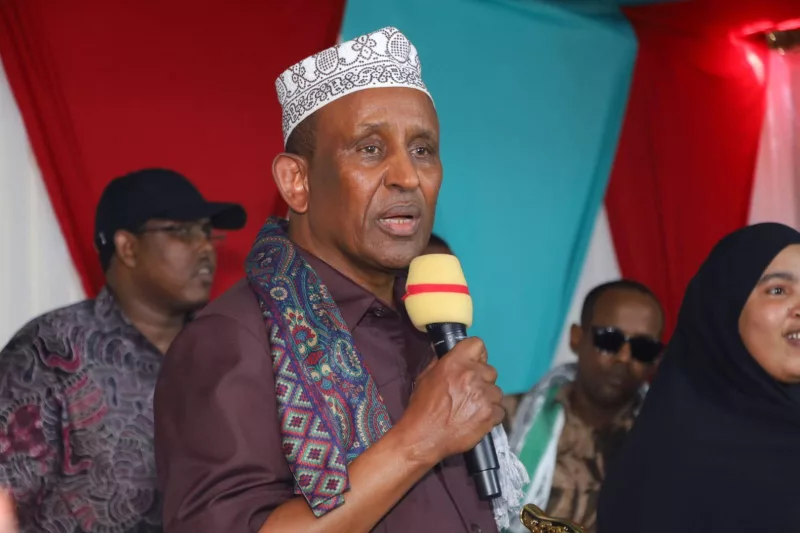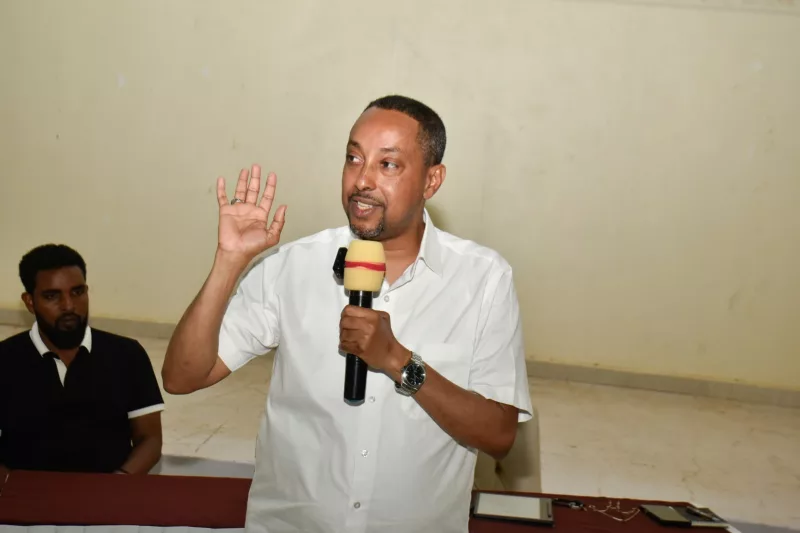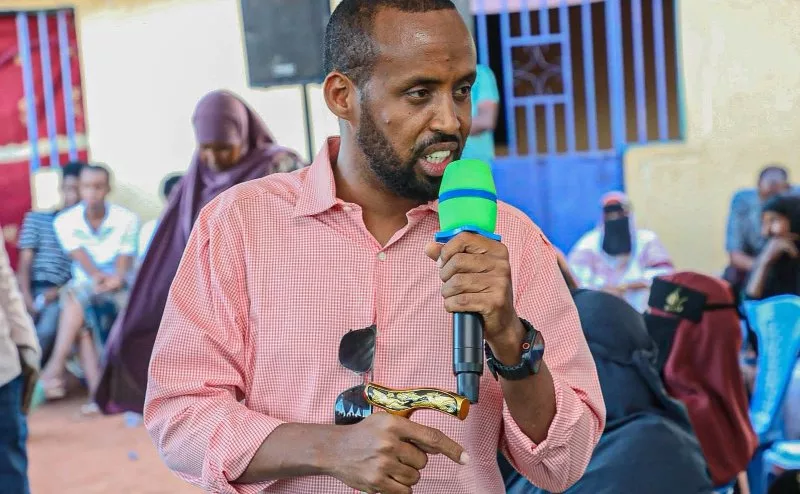
Wajir governorship aspirant Yahya Mohamed Dahiye addressing residents of Bula Gif cade in Wajir town /STEPHEN ASTARIKO
Wajir gubernatorial aspirant Yahya Mohamed Dahiye has asked residents to reject political brokers and make their electoral choices by scrutinising candidates, their manifestos and what they promise to deliver.
Dahiye said voters should be free to interact directly with candidates and make informed decisions without relying on a few individuals who have traditionally acted as political intermediaries.
He spoke on Monday during a campaign in Bula Gif Cade in Wajir town.
The youthful chief officer for finance is in the race to succeed his boss Governor Ahmed Abdullahi whose second and final term ends in 2027. Dahiye said he had deliberately adopted a grassroots campaign strategy that will take him to villages, markets and neighbourhoods rather than rely on established political networks and community brokers to mobilise support.
“This is how I will conduct my politics and campaigns. I have refused the politics of brokers and intermediaries. Such politics has held the county back,” Dahiye said.
He said direct engagement with voters was not merely an election tactic but reflected the kind of politics he would pursue if elected governor.
“Residents should have the opportunity to interact directly with those seeking their votes and make their own political choices after listening to candidates and examining their ideas. I am seeking to carve out a different political identity by putting ordinary voters at the centre of my mobilisation,” he said.
Dahiye said his experience in county administration had given him an understanding of the challenges involved in managing public resources and the need to link political leadership with tangible services and economic opportunities.
His campaign comes as the traditional role of elders in electoral politics among Somali communities in northern Kenya faces renewed scrutiny.
For years, aspirants seeking the elective seats have often appeared before elders to declare their intentions, seek their blessings and, in some cases, undergo vetting and consensus-building before beginning wider campaigns.
The system, often associated with negotiated democracy and clan-based consultations, has played a significant role in political mobilisation in the region.
But it has also attracted criticism from some aspirants and voters, particularly young people, women and minority groups who question whether their interests are adequately represented in closed-door consultations.
Critics have also argued that the influence of political elders and intermediaries can limit the electorate’s ability to independently choose candidates.
It is against this backdrop that Dahiye says he has opted for a campaign model that takes his message directly to voters.
Some residents have welcomed the approach, saying it gives them an opportunity to engage directly with aspirants.
Fardosa Adan Osman, a
resident of Bula Gif Cade, said candidates should engage voters directly rather
than depend on political intermediaries.
“My appeal to other politicians seeking elective seats is to borrow a leaf from Yahya. They need to engage the voters directly instead of relying exclusively on political intermediaries,” she said.
Suleiman Malak said direct engagement should form an important part of political campaigns.
“Candidates need to listen to residents themselves in order to understand their
concerns,” Malak said.
Mama Halima Yarrow, another Bula Gif Cade resident, said Dahiye’s campaign style had introduced a different dimension to the debate over negotiated democracy and clan-based consultations.
“For years, political
mobilisation has often involved elders and community structures
playing a significant role in consultations and the selection of candidates.
This is what we want to do away with because it is not helping the voters and
residents at all,” she said.
However, the influence of elders and community structures remains evident in the 2027 Wajir gubernatorial contest, with communities and sub-clans already undertaking consultations and endorsement processes.
The Fai sub-clan of the Degodia community has endorsed Hassan Mohamed Adan as its candidate, while the Matan community has been consulting aspirants including Dahiye, former MP Ahmed Kolosh and Omar Sheikh.
Dahiye, who hails from the Matan sub-clan of the larger Degodia community, has also received backing from sections of the community.
The gubernatorial contest is gathering momentum, with several political figures declaring interest in the seat.
They include Nairobi West Hospital owner Dr Hassan Mohamed, Capital Markets Authority chairman Ugas Sheikh Mohamed, former governor Mohamed Abdi, former Cabinet minister Mohamed Elmi and Hassan Wehliye.
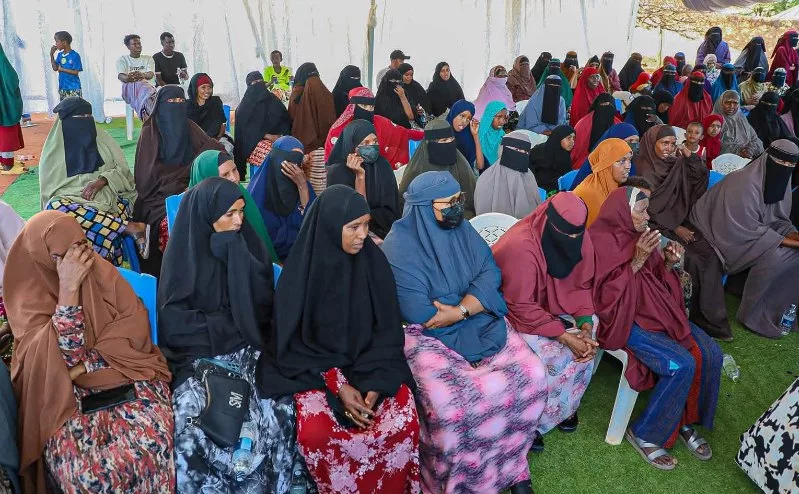
Residents of Bula Gif cade in Wajir town./STEPHEN ASTARIKO
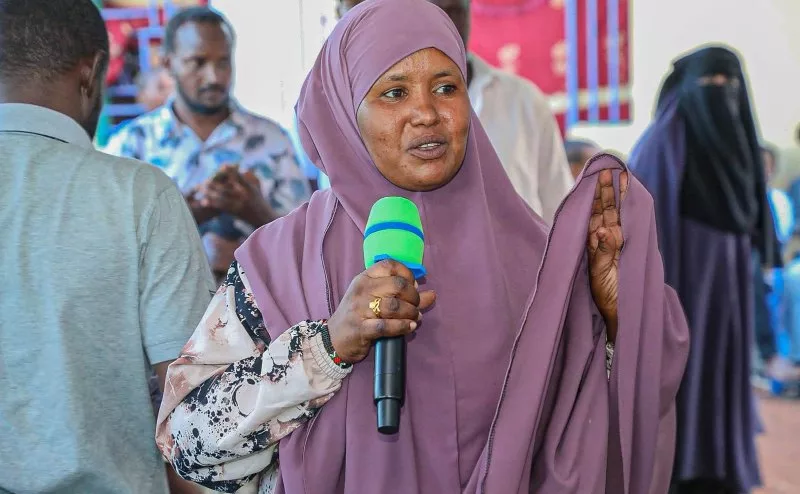
Fardosa Adan Osman, an MCA aspirant Waglla Ganyurey ward and a resident of Bula Gif cade resident./STEPHEN ASTARIKO