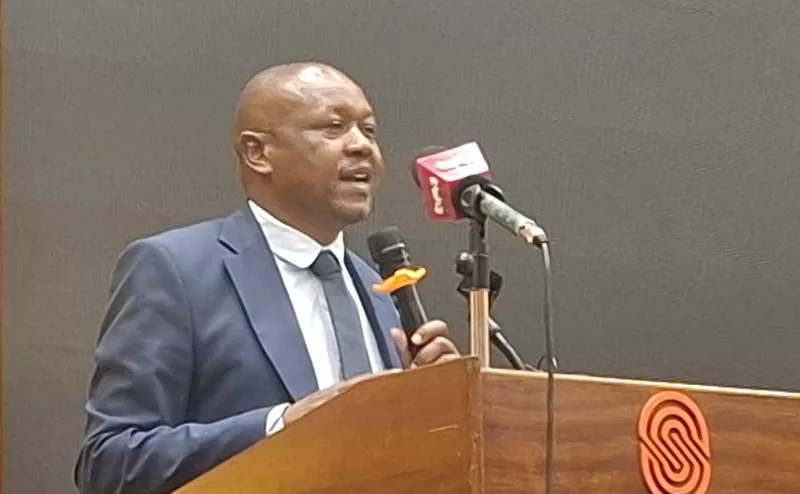
 Joel Mutai, the aaK-GROW Chief Executive Officer, speaking on the influx of illicit agricultural products on Wednesday.
Kenyan farmers are facing two growing problems in the fight against crop pests: illegal agricultural products entering the country and a shrinking number of pest-control products available for use.
aaK-Grow chief executive officer Joel Mutai said the illegal trade had become harder to track as some products were now entering the country in small quantities through informal border routes.
Mutai said efforts by regulators since 2021 had helped reduce counterfeit agricultural products in the formal market, although it was difficult to establish how much of the illegal trade remained.
“At every port of entry to our neighbouring countries, the regulator is present, and that has actually managed to contain the problem,” Mutai said.
He said some traders were avoiding official entry points and using informal methods to bring products into the country.
Some products, he said, were being moved on motorcycles, making it harder for authorities to identify the traders and establish where the products came from.
Mutai also raised concern about cases where farmers who had bought illegal products were unwilling to provide information that could help authorities trace the traders.
He urged farmers to report suspicious products and called for more raids and prosecutions against people involved in the illegal trade.
“The Government and the private sector are happy to help the farmer use the right products,” he said.
Mutai said farmers also needed more information to help them identify genuine products and avoid buying illegal or counterfeit ones.
The concern comes at a time when farmers are also facing fewer choices when it comes to controlling pests and diseases.
Mutai said changes in European rules on agricultural products were affecting the number of crop protection products that could be used by Kenyan farmers.
Kenya exports large amounts of agricultural produce to Europe. Mutai said farmers and exporters therefore had to meet the safety requirements of the European market.
“When Europe withdraws products, and we are trading a lot with Europe as a very key partner, for us to protect that market, we must ensure that we do not use products that they also do not need,” Mutai said.
He said the withdrawal of some products was reducing the choices available to farmers at a time when new pests and diseases were also emerging.
“The availability of products that the farmer requires for use is becoming smaller and smaller,” he said.
Mutai called for closer talks between Kenya and the European Union on agricultural product rules.
He said Kenya needed to protect consumers and meet food safety requirements while ensuring farmers had enough safe and effective options to control pests.
The issue was also discussed from the point of view of the media, with Kenya Editors Guild (KEG) chief executive officer Linda Bach saying journalists had a key role in helping farmers and the public understand agricultural issues.
Bach said agriculture involved much more than growing crops. It also affected food safety, farmers' incomes, the environment, public health and the economy.
“Agriculture is one area where this is particularly important. Food protection intersects with food security, farmer livelihoods, consumer safety, environmental sustainability, science, regulation and the wider economy,” she said.
She urged editors and reporters to identify areas where farmers and the public lacked reliable information and to examine the effect of misinformation on agriculture.
Bach said journalists should be able to question information from government, industry and other sources while maintaining their editorial independence.
“The purpose is not to secure a critical pathway but to enable journalists to ask better-informed questions, interrogate evidence, and report responsibly,” she said.
She said journalists also needed greater access to scientists, regulators and agricultural experts.
This, she said, would help the media explain technical issues in simple language without losing important facts or context.
AAK-Grow board member Nelson Gacuiri said pest control could not be handled by one group alone.
He said government agencies, farmers, agro-dealers, researchers, extension officers, companies and the media all had a role to play.
Gacuiri said pest management was directly linked to food production but also affected farmers' incomes, food safety, public health and the environment.
He called for greater use of scientific information and responsible use of crop protection products.
Farmers, he said, needed clear information on which products were safe, how they should be used and the risks associated with improper use.
He also called for greater public awareness of the cost of pest management, food safety and environmental protection.
The remarks were made during a stakeholder meeting organised by aaK-Grow and the Kenya Editors Guild to discuss pest management, food safety and the responsible use of crop protection products.
The meeting brought together agriculture industry representatives and media stakeholders at a time when farmers are dealing with both pest threats and changing rules governing crop protection products.