
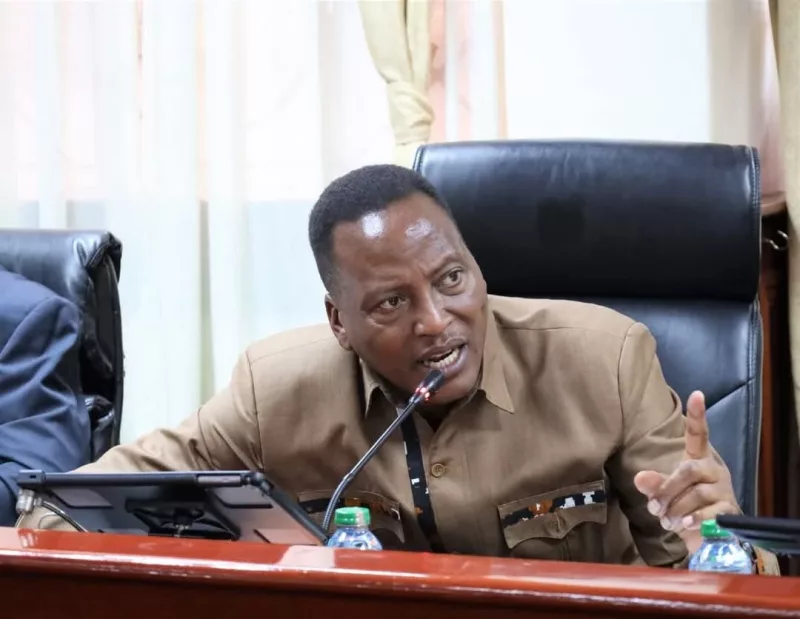
Kisii Senator Richard Onyonka has attributed the internal disagreements emerging within Linda Mwananchi to the movement’s rapid success.
He explained that the political outfit is struggling to manage the attention and popularity generated by its young leaders.
Speaking during an interview with NTV, Onyonka said the movement had grown faster than its leaders may have anticipated, creating tensions and distrust among its members.
He likened Nairobi Senator Edwin Sifuna and Embakasi East MP Babu Owino to music stars, saying their growing popularity had brought new challenges.
“It is shocking, these young politicians have become like stars. Edwin Sifuna is like Michael Jackson, Babu Owino is like Bob Marley,” Onyonka said. “I did not think that they would find it easy to handle it.”
“My feeling honestly is that the success of Linda Mwananchi is what is cannibalising the outfit,” he added, describing the disagreements as “an internal dysfunction which has come about because of the success.”
Onyonka said Linda Mwananchi had demonstrated an ability to mobilise large crowds despite having a relatively loose organisational structure.
He noted that, apart from the violence witnessed during some of its rallies, including the clashes reported in Homa Bay, many of the movement’s public meetings had been peaceful and appeared to require limited formal coordination.
He said the movement’s rallies had largely been organised by a small group of leaders and supporters, citing Vihiga Senator Godfrey Osotsi and Babu as among those involved in coordinating basic logistics.
However, Onyonka said the absence of formal structures had become a weakness as the movement expanded.
Linda Mwananchi is a political movement rather than a registered political party, meaning it does not have the same internal dispute-resolution mechanisms found within established parties.
“And because Linda Mwananchi Movement is not a party, there are no dispute resolution mechanisms, internal, then you will have what has happened,” he said.
He attributed some of the disagreements to distrust among politicians, arguing that Kenya’s political culture has historically encouraged leaders to be suspicious of one another, particularly when alliances begin gaining momentum.
Onyonka also questioned the ideological foundation of the movement, asking whether its primary objective was simply to remove President William Ruto from office or whether it had a broader programme addressing the concerns of Kenyans.
“What is the ideology? Is it just about removing President Ruto or you have genuine concerns for Kenyans?” he posed.
He warned that without a clear national ideology, members could retreat into ethnic and regional political bases as the 2027 General Election approaches. Onyonka said some leaders appeared interested in creating political parties that would give their respective regions greater control of the emerging political outfit.







