

 Clerk of the National Assembly said the deadline for written memoranda had also been extended to Friday October 2 at 5pm.
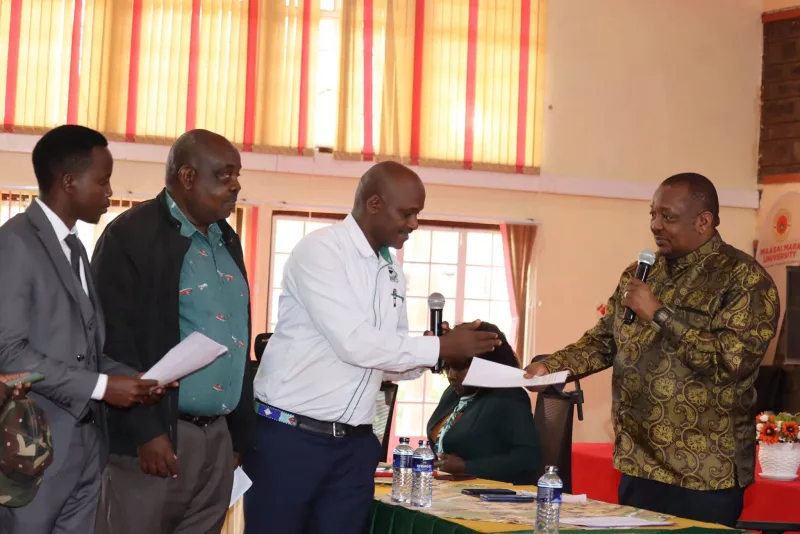
The National Assembly Departmental Committee on Education has extended public participation on six proposed education reform Bills to October 2, bringing 16 more counties into an exercise that was initially scheduled to end this week.
The five-day extension will run from Monday, September 28, to Friday, October 2, covering West Pokot, Marsabit, Mandera, Nandi, Bungoma, Garissa, Busia, Lamu, Vihiga, Kitui, Siaya, Migori, Tharaka-Nithi, Nyamira, Bomet and Samburu.
The additional forums will bring the public participation exercise to all 47 counties after the committee began hearings on September 14.
"Members of the public and stakeholders in the listed counties are invited to attend the public hearings, make oral submissions or submit written memoranda on the Bills," Clerk of the National Assembly Samuel Njoroge said in a notice.
The 16 counties were not included in the initial phase of the exercise, which was scheduled to run from September 14 to September 25 across 31 counties.
The extension comes amid concerns from education stakeholders over the pace and reach of the public participation exercise.
The Kenya Union of Post-Primary Education Teachers (Kuppet) had called for the exercise to be suspended, arguing that the two-week period initially allocated was too short to allow meaningful public engagement on legislation that could significantly reshape the education sector.
"There has been no meaningful public sensitisation on the content and implications of these Bills before the public was asked to submit views," Kuppet said last week.
The union also raised concerns that some of the venues selected for the hearings were far from communities whose views were being sought, particularly in rural and marginalised areas.
Kuppet argued that this could leave out parents, teachers and students who lacked the means to travel to the designated venues.
It further questioned whether the proposed laws were sufficiently anchored in clear policy frameworks, warning that enacting detailed legislation before the underlying policies were settled could create implementation problems and require costly amendments later.
The six Bills seek to introduce changes across different areas of education, from basic education and assessment to teacher training, qualifications and tertiary education financing.
The Tertiary Education, Placement and Funding Bill, 2026, proposes a new framework for admission, placement and financing of students in tertiary institutions.
It provides for the establishment of the Tertiary Education Funding Authority (TEFA), which would bring together the functions of the Higher Education Loans Board, the Universities Fund and the TVET Funding Board.
The proposed model is intended to provide loan support to students while changing how higher education financing is administered.
The Basic Education Bill, 2026, seeks to provide a comprehensive legal framework for the management and delivery of basic education, including giving legal backing to the comprehensive school model in which Early Childhood Development, primary and Junior schools operate under one management structure.
The Kenya National Educational Assessments Council Bill seeks to establish the legal framework governing the national body responsible for educational assessment, including its mandate and functions in assessing learners.
The Pre-Service Education and In-Service Training Bill seeks to provide a framework for the training and continuing professional development of education personnel, covering preparation before entry into the profession as well as training after deployment.
The Kenya National Qualifications Framework (Amendment) Bill proposes changes to the framework governing national qualifications, including how qualifications are structured, recognised and aligned within the country's education and training system.
The Kenya Institute of Curriculum Development (Amendment) Bill seeks to amend the law governing the Kenya Institute of Curriculum Development and its role in curriculum development and related functions.
The Bills have already generated debate among education stakeholders over issues including tertiary financing, the management of Junior schools and corporal punishment.
On tertiary financing, Kuppet has demanded a clear financial roadmap showing how the proposed system would be funded, the timeline for implementation and the source of the required resources.
"Without this, we risk unfunded mandates and implementation failure from the onset," the union said.
Kiambu Senator Karungo Thang'wa separately raised concerns over the treatment of scholarships and loans in the proposed tertiary financing framework, arguing that it does not adequately protect vulnerable learners.
Thang'wa said the Presidential Working Party on Education Reform had proposed a financing model in which poorer students would receive a larger scholarship component and a smaller loan component.
"The loan-only plan now proposed makes it 100 per cent loan. The poorest child's debt jumps the most," he said.
The proposed reforms have also exposed differences between Kuppet and the Kenya National Union of Teachers (Knut) over the management of Junior schools.
Kuppet wants Junior schools to have full autonomy and an independent leadership structure, while Knut supports the comprehensive school model that places Early Childhood Development, lower and upper primary and Junior schools under one management structure.
Corporal punishment is another contentious issue, with some parents calling for its return while the proposed legislation retains provisions criminalising the practice.
Teachers have also opposed the classification of corporal punishment as a criminal offence, arguing that the provision could expose them to punitive legal action.
With the extension, stakeholders in the additional counties will now have an opportunity to make oral submissions or submit written memoranda on the proposed reforms.
The committee will on Monday hold public engagement forums in Turkana and Wajir.
In Turkana, the forum will be held at Turkana University College in Lodwar from 9am to 1pm, while the Wajir hearing will take place at Wajir Teachers' Training College during the same period.
The extended schedule will then move to West Pokot, Marsabit, Mandera and Nandi on Monday, September 28.
The forum in West Pokot will be held at Kenya Medical Training College, Kapenguria Campus, from 9am to 12.30pm.
In Marsabit, the hearing will take place at Kenya Medical Training College, Marsabit Campus, from 9am to 11.30am, followed by Mandera at Mandera Technical Training Institute from 2.45pm to 5.15pm and Nandi at Ol'lessos Technical Training Institute from 3.30pm to 6pm.
On Tuesday, September 29, the committee will hold hearings in Bungoma, Garissa, Busia and Lamu.
The Bungoma forum will be at Kibabii University from 9am to 12.30pm, Garissa at Garissa University from 10am to 12.30pm, Busia at Alupe University from 3pm to 6pm and Lamu at Fort Hall from 3.30pm to 5.30pm.
On Wednesday, September 30, hearings will be held in Vihiga at Kaimosi Friends University from 9am to 12.30pm, Kitui at South Eastern Kenya University from 1.30pm to 4.15pm and Siaya at Siaya Institute of Technology from 3pm to 6pm.
On Thursday, October 1, the committee will hold hearings in Migori at Migori Teachers Training College from 9am to 12.30pm, Tharaka-Nithi at Chuka University from 10am to 1.30pm and Nyamira at Kenya Medical Training College, Nyamira Campus, from 3pm to 6pm.
The final two hearings will be held on Friday, October 2, in Bomet at Bomet University College from 9am to 12.30pm and Samburu at Kenya Medical Training College, Maralal Campus, from 10.30am to 1.30pm.
The committee has split into two teams to cover the counties and conclude the exercise before the deadline.
The Clerk said the deadline for written memoranda had also been extended to Friday, October 2, at 5pm.
Written submissions may be addressed to the Clerk of the National Assembly, P.O. Box 41842-00100, Nairobi, hand-delivered to the Clerk's office at the Main Parliament Building or sent by email to [[email protected]](mailto:[email protected]).







