

Kilifi county has given families of victims of the Shakahola massacre 21 days to identify and collect their relatives’ remains before it seeks a court order to inter the unclaimed bodies.
The county says it plans to conclude the process by December, with 443 bodies and body parts still being held in a temporary morgue at Malindi Sub-County Hospital.
Kilifi Health executive Peter Mwarogo said investigations by the Directorate of Criminal Investigations had been completed, allowing the county to begin the process of interring the remains.
“DCI have concluded investigations on the bodies. We have embalmed the 443 bodies which are at our base. They have given us the go-ahead for the interment of the bodies,” Mwarogo said.
He spoke during a meeting with the members ot the jont Senate committees on Public Investments and Special Funds, and Health at the Malindi Sub County Hospital on Monday.
CPSIFC vice chairperson Beth Syengo and her Health counterpart Miriam Omar led the joint committees.
He said the remains would be buried in a manner that allows them to be identified in future, with the DCI expected to guide the process.
“They have to be disposed of in a way that they can be identified even several years if somebody comes here,” he said.
Mwarogo said the county had identified land near Shakahola forest, where the unclaimed remains will be interred.
The announcement comes more than three years after the discovery of mass graves in Shakahola, where hundreds of suspected followers of controversial preacher Paul Mackenzie died after allegedly being subjected to extreme starvation and other forms of abuse.
The county says only 14 of the 443 remains currently held at the hospital have so far been identified by relatives through DNA matching.
Mwarogo said some families had been traced but declined to collect the remains because of the stigma associated with the tragedy.
“Some people were able to trace their relatives, but they refused to come and take the body because of the stigma that is associated with this whole process,” he said.
He said the DCI retained records of the DNA matching and identification process for purposes of the ongoing legal proceedings.
The county has published a Gazette notice giving relatives 21 days to come forward. If the period expires without the bodies being claimed, Mwarogo said the county will approach the courts for authority to inter the remains.
However, Senators asked the county to go beyond the gazette notice. They said relying on gazette notice alone wpuld leave some families unaware of the deadline.
“Who reads the Gazette notice? We should have put it in the media, on TV and everywhere because I know there are people who are still tracing their bodies,” Elgeyo Marakwet Senator William Kisang said.
He said the county would should consider wider publicity to ensure families who may still be searching for their relatives are informed before the remains are buried.
“Nobody goes to the Gazette notice or even newspaper. People nowadays use social media,” he said.
The 443 remains include complete bodies as well as body parts, which were recovered in difficult circumstances during the exhumation process.
“Some are full bodies and others are body parts because by the time the exhumation was being done, some had been eaten by wild animals,” Mwarogo said.
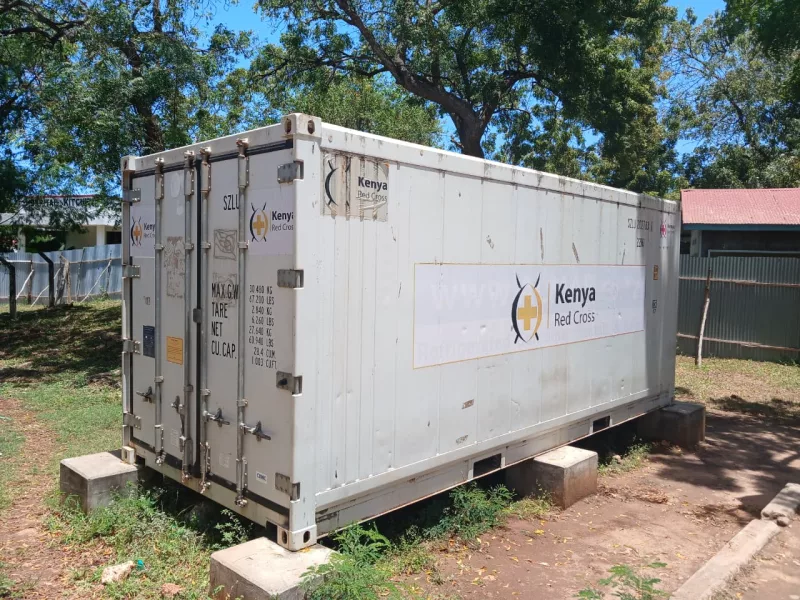
The remains have been stored in a container at the hospital after being released from the custody of investigators following completion of the forensic investigations.
Mwarogo said the county wanted the matter concluded by December, partly because the temporary storage facility was taking up space needed by the hospital.
The Shakahola remains are being held separately from the hospital's normal mortuary, whose capacity has also come under pressure.
Mwarogo said the hospital's conventional mortuary has a capacity of 25 bodies and currently has 22.
To ease the pressure, the county is constructing a new mortuary at the back of the hospital, which he said was about 90 per cent complete.
The new facility is expected to be operational in the coming months, allowing the county to relocate mortuary services away from the front of the facility.







