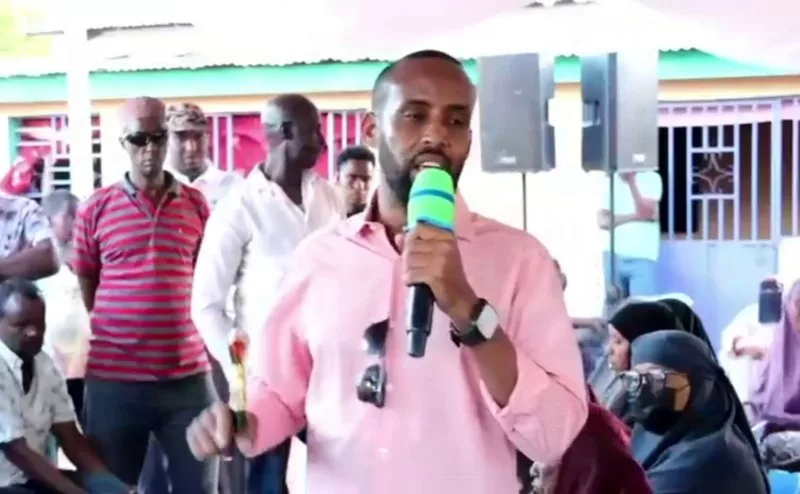
 Wajir County
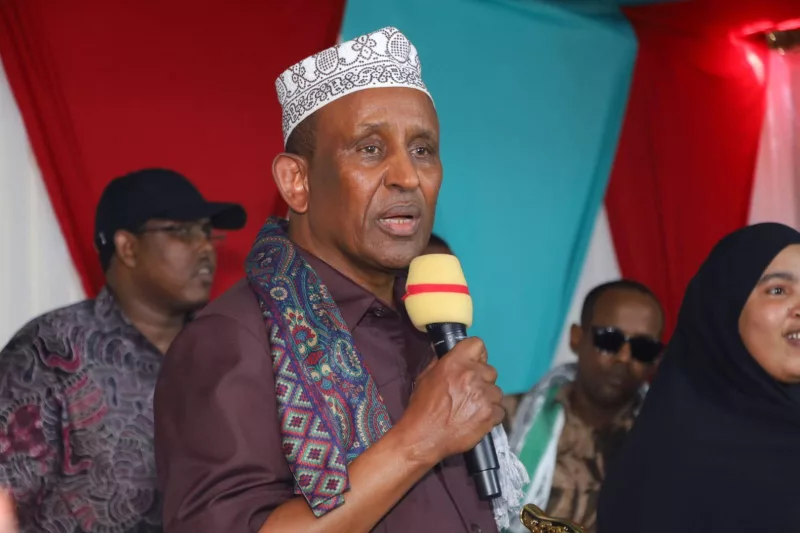
governorship aspirant Yahya Mohamed Dahiye addressing residents Bula Gif cade,
in Wajir town. /STEPHEN
ASTARIKO
The race for the Wajir gubernatorial seat is steadily gathering momentum, with a growing field of seasoned politicians positioning themselves for what promises to be a closely watched contest in the 2027 General Election.
Among those who have expressed interest in succeeding Governor Ahmed Abdullahi are Nairobi West Hospital owner Dr Hassan Mohamed, Capital Markets Authority Chairman Ugas Sheikh Mohamed, former governor Mohamed Abdi, former CS Mohamed Elmi and Hassan Wehliye, among other aspirants.
But while the contest continues to attract some of the county's most experienced political figures, the campaign of youthful Wajir County Chief Officer for Finance Yahya Mohamed Dahiye is beginning to attract attention for a different reason: the manner in which he is conducting his grassroots mobilisation.
Rather than relying heavily on the traditional model of summoning residents to political meetings in hotels and other venues, Dahiye has been taking his campaign directly to the people, moving through villages, markets and other public spaces where he interacts with residents and listens to their views.
His approach comes at a time when political mobilisation in northern Kenya has traditionally involved extensive consultations through elders and other community intermediaries.
Dahiye is now attempting to introduce a more direct style of engagement, placing ordinary residents at the centre of his campaign and seeking to speak to them without what his supporters describe as layers of political intermediaries.
The approach has attracted praise from some residents, who say it has given them an opportunity to interact directly with a gubernatorial aspirant and raise issues affecting them.
On Saturday, he took his campaign to Bula Gif Cade in Wajir town.
Fardosa Adan Osman, an MCA aspirant for Wagalla Ganyurey Ward and a resident of Bula Gif Cade, speaking at the rally, welcomed the approach, saying Dahiye had allowed the public to engage with a gubernatorial candidate in a manner that was rarely witnessed during political campaigns.
She said residents should not only be addressed during carefully organised political meetings but should also have an opportunity to meet candidates in their everyday surroundings and openly discuss issues affecting their communities.
Fardosa argued that the traditional system of negotiated democracy, where elders play a central role in determining political choices, was increasingly coming under scrutiny and said other aspirants should consider adopting a more direct approach to the electorate.
She challenged politicians seeking elective positions to borrow a leaf from Dahiye and engage voters directly rather than relying exclusively on intermediaries.
Her sentiments were echoed by Suleiman Malak, who congratulated Dahiye for what he described as a change in campaign tactics.
Malak said direct engagement with voters should become an important component of political campaigns in northern Kenya, arguing that candidates needed to listen to residents themselves and understand their concerns.
He said Dahiye's decision to engage people directly, while reducing reliance on traditional political intermediaries, had opened a different conversation about how leaders should seek the support of voters.
On her part, Mama Halima Yarrow, a resident of Gif Cade, while commending Yahya for his campaign tactic, promised to not only support him but also rally residents to support him.
She noted that his campaign style also places him within a broader political conversation in Wajir over the role of negotiated democracy and clan-based consultations in determining electoral choices.
“For years, political mobilisation in the region has frequently involved elders and community structures playing a significant role in consultations and the selection of candidates. This is what we want to do away with because it is not helping the voters and residents at all,” she said.
The influence of such structures remains evident in the current gubernatorial contest, with different communities and sub-clans already undertaking consultations and endorsement processes.
The Fai sub-clan of the Degodia community has already endorsed Dr Hassan Mohamed Adan as its preferred candidate, while the Matan community has been engaged in its own consultations involving aspirants including Dahiye, Ahmed Kolosh and Omar Sheikh.
Dahiye's own political journey has also received a boost from sections of the Matan community. In August, women, youth and professionals from the community backed his candidature, with supporters citing his accessibility and willingness to listen to ordinary residents.
Addressing the residents, Dahiye said the grassroots approach is more than a campaign tactic.
He says it represents the kind of politics he intends to pursue if allowed to lead the county.
He noted that his current position as a senior finance official in the county administration has also placed him in a position to campaign on issues surrounding public resources, service delivery and economic management.
According to him, he has deliberately chosen to reject what he describes as the politics of brokers and intermediaries, arguing that such an arrangement has for too long allowed a small group of individuals to wield disproportionate influence over the electorate.
He said he wants to build a political movement in which residents themselves have a direct voice in determining the county's leadership and development priorities.
He urged residents to stand with him as he undertakes what he describes as a journey to change the way politics is conducted in Wajir.
“I have decided that going forward, this is how I will conduct my politics and campaigns. I have refused the politics of brokers and intermediaries. Such politics had held the county back,” Dahiye said.
He said residents should have the opportunity to interact directly with those seeking their votes and make their own political choices after listening to candidates and examining their ideas.
The emerging contrast between traditional political mobilisation and direct grassroots engagement is likely to become one of the interesting features of the Wajir gubernatorial contest as the 2027 election approaches.
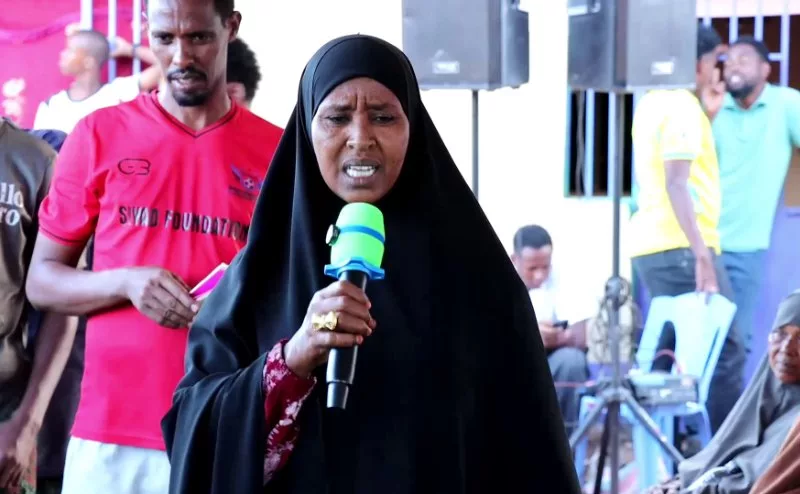 Mama Halima Yarrow - resident of Gif Cade speaking. /STEPHEN
ASTARIKO
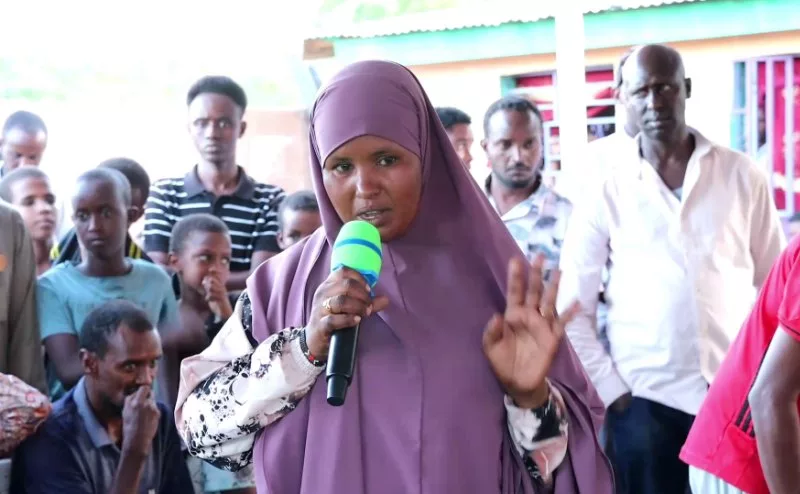 Fardowsa Adan Osman - MCA aspirant, Waglla Ganyurey Ward, and Bula Gif Cade resident.
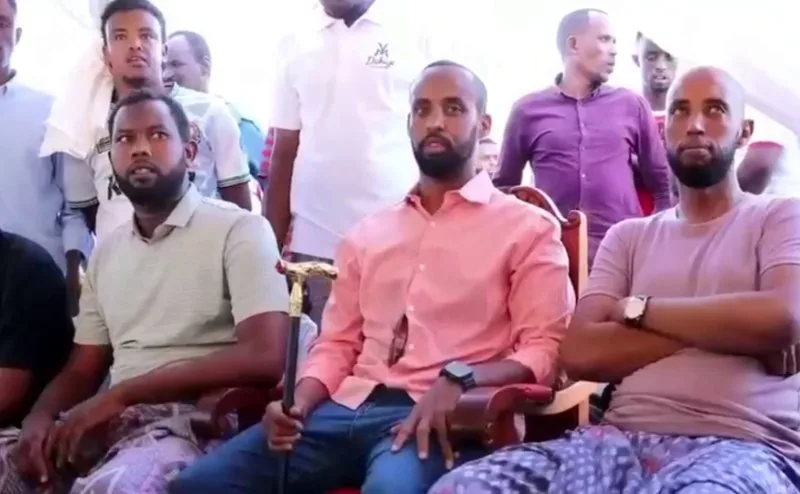 Wajir County
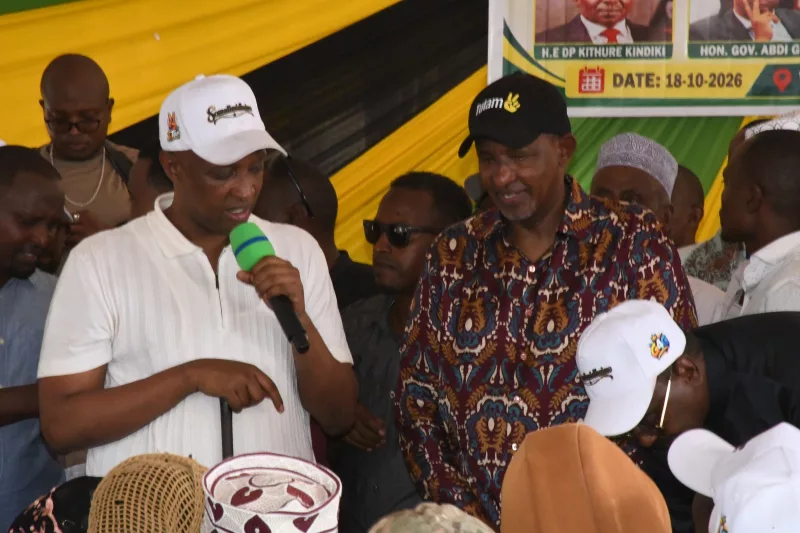
governorship aspirant Yahya Mohamed Dahiye[C] listens to residents of Bula Gif Cade
in Wajir town. /STEPHEN
ASTARIKO