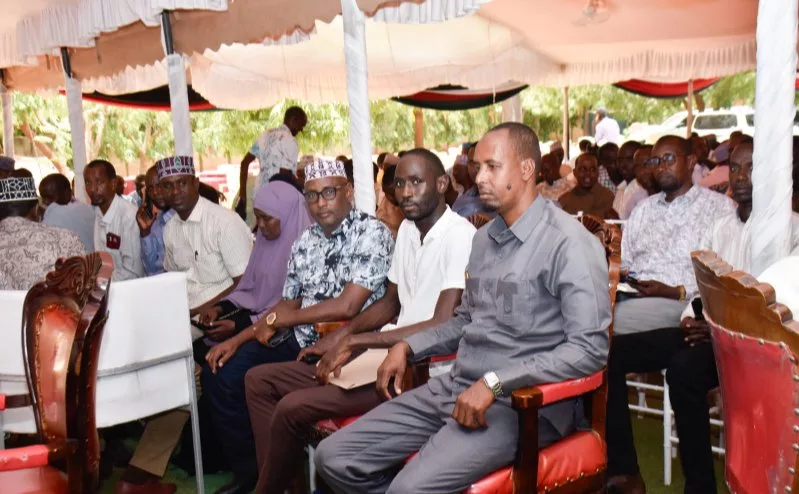
 National
Government Administration Officers from Garissa at the training./ STEPHEN
ASTARIKO
Counties have been urged to tap into the existing grassroots data-collection framework being implemented by National Government Administration Officers (NGAO).
Economist and data scientist Dr Danielton Mwaka said the framework, which puts chiefs and other NGAO officers at the centre of grassroots data collection, allows both levels of government to establish a unified, reliable flow of information from communities to national and county decision-makers.
Mwaka said that by tapping into the framework, counties could leverage an existing government structure, and their decisions and plans would be anchored in information generated closest to the communities they serve.
He spoke during the closure of a three-day grassroots data training for NGAO officers from Garissa County, held at a Garissa hotel.
The officers were trained on data collection, management, protection and validation and were also equipped with a digital application to support data collection.
“I want to encourage the counties to tap into this framework, where chiefs are collecting data. Counties do not have to duplicate these efforts. Instead, we can optimise the resources available for data collection,” Mwaka said.
He said the training had equipped the officers with both the knowledge and digital tools necessary to collect reliable information, paving the way for a more coordinated data-collection exercise from the grassroots to the national level.
“What we now expect is a very unified data collection exercise and framework, running from the grassroots through to the national level,” he said.
According to Mwaka, such a system would strengthen government feedback mechanisms by enabling officers on the ground to monitor government projects while also facilitating the dissemination of information and government programmes from the national level to communities.
He described NGAO officers as occupying a strategic position in government administration because of their close interaction with citizens and their role in information dissemination and monitoring government programmes.
“NGAO sits at a very central position in information dissemination and project management. The officers are essentially project managers for the government at the national level,” he said.
Mwaka said having a single data flow and pipeline would make it easier for government agencies to use information generated at the grassroots level for decision-making, policy formulation and development planning.
He added that the digital application would also improve the credibility of information collected by government officers through built-in validation mechanisms.
“The validation of data also becomes easier because the app has a validation protocol that allows us to confirm that the data collected is accurate,” he said.
The system, he explained, captures the geographical location of both the project being reported and the data collector, making it possible to verify where information was collected.
“You cannot simply collect data from anywhere because the system captures the GPS location of each project, as well as the location of each data collector at the time of data collection,” Mwaka said.
The application also incorporates range checks designed to flag unrealistic information entered into the system, further strengthening the quality and reliability of grassroots data.
The training was welcomed by NGAO officers, who said the skills acquired would transform how information is collected, handled and submitted to the government.
Ubah Abdullahi, Senior Assistant Chief of Bula Mzuri Location in Garissa Township, said locally generated data was critical to ensuring that government planning and decision-making responded to the actual needs of communities.
She said NGAO officers were often the first point of contact between citizens and the government, making accurate and reliable information from the grassroots particularly important.
“The training has equipped us with practical knowledge on how to collect, monitor, validate and submit data more systematically and professionally,” she said.
She said the new skills would strengthen the ability of officers to document challenges and needs within their areas of jurisdiction and provide the government with information that could guide interventions.
Senior Chief of Iftin East, Dekow Mohamud, said the training had fundamentally changed their understanding of grassroots data collection.
“We have been collecting data, but the way we were doing it was not systematic. In some cases, we were simply collecting data for the sake of collecting it. Going forward, we now understand how to collect, manage, validate and systematically monitor data,” he said.
Mohamud said the lessons were particularly important because chiefs routinely collect information that informs government programmes and interventions in their locations.
Mohamud said the training had exposed officers to the importance of following proper procedures when handling such information, particularly with regard to confidentiality, accuracy and professionalism.
“We have been doing birth and death registration as part of our daily activities, but we have now realised that there are procedures that must be followed. There has to be confidentiality, professionalism and a systematic way of handling the information,” he said.
Yussuf Abdi Diriye, Senior Chief of Labasigale, Dadaab Sub-County, said officers were now better prepared to protect personal information while ensuring that data generated at the grassroots was accurately documented and submitted to the relevant government offices.
“Improved data management would give government a more dependable picture of community needs, helping it identify priorities, allocate resources and monitor the implementation of development programmes,” he said.
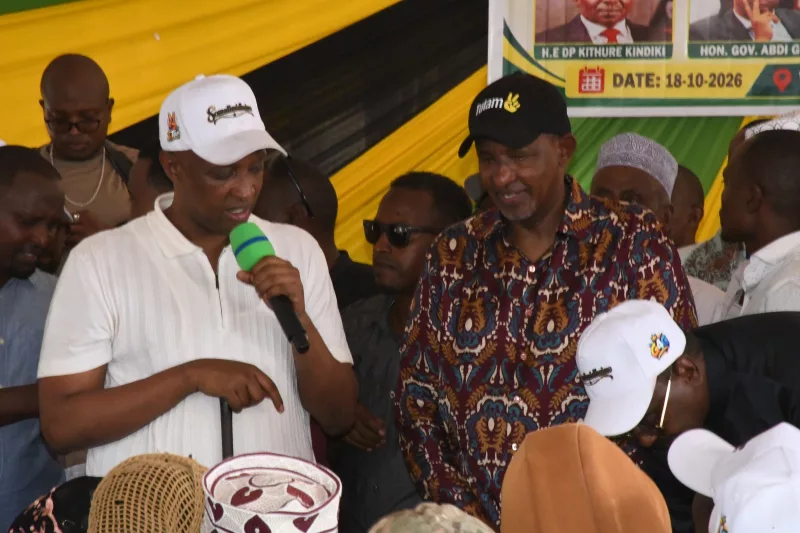
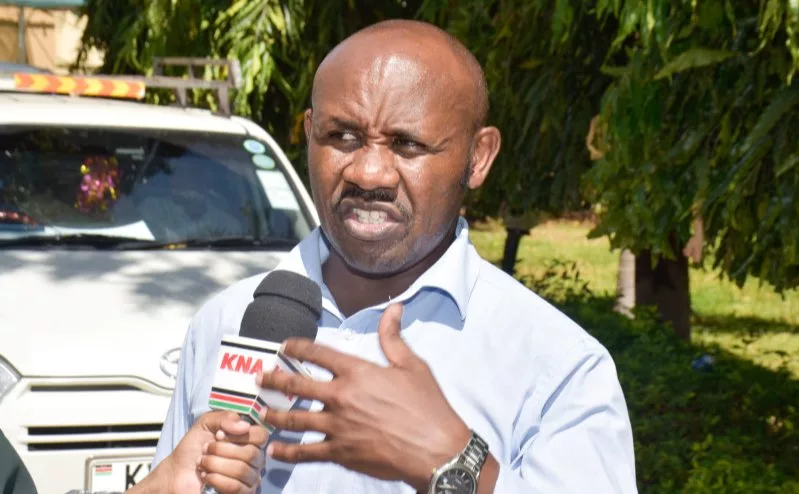 Economist
and data scientist Dr Danielton Mwaka speaking to the press at the conclusion
of the three-day grassroots data training for NGAO officers from Garissa
County held at a Garissa hotel./STEPHEN ASTARIKO
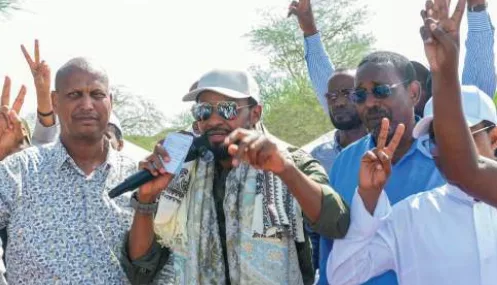
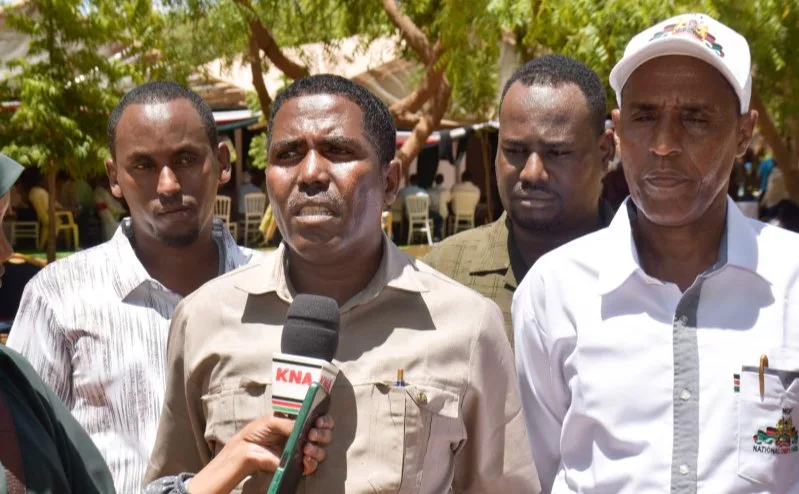 Dekow
Mohamud, Senior Chief of Iftin East Location, speaking to the press while
flanked by his colleagues. /STEPHEN ASTARIKO
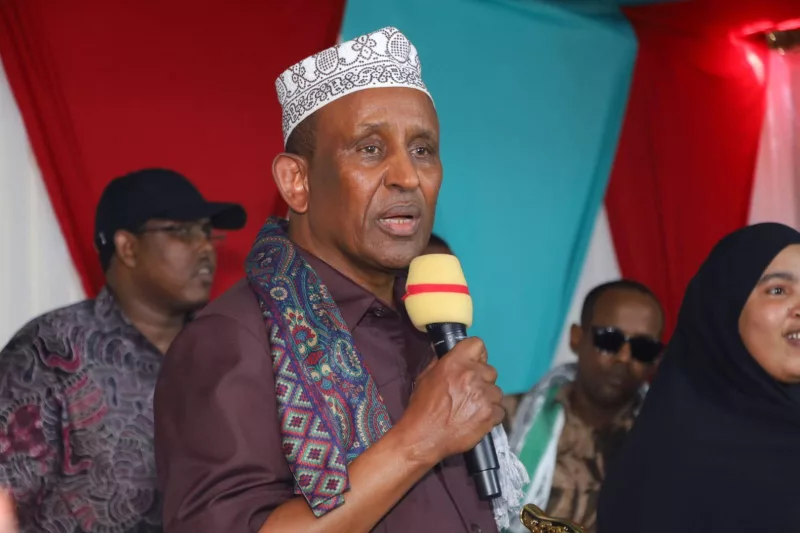
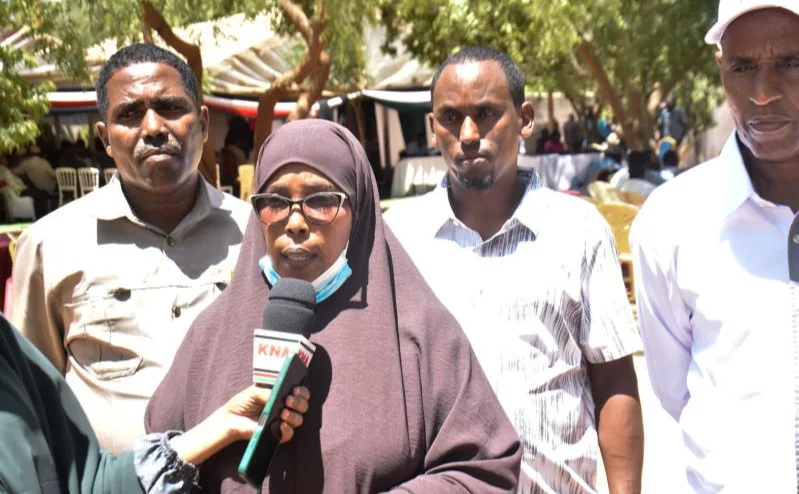 Ubah
Abdullahi, Senior Assistant Chief of Bula Mzuri Location./STEPHEN ASTARIKO
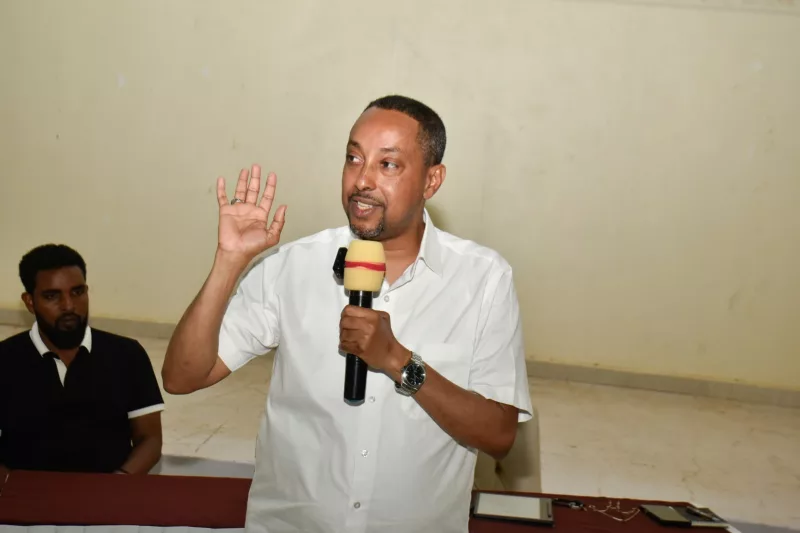
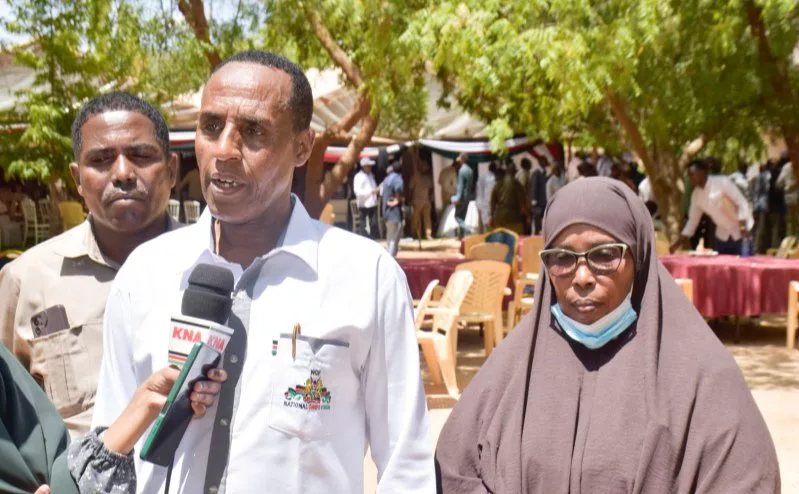 Yussuf Abdi Diriye, Senior Chief, Labasigale-Dadaab Sub-County. /STEPHEN ASTARIKO