

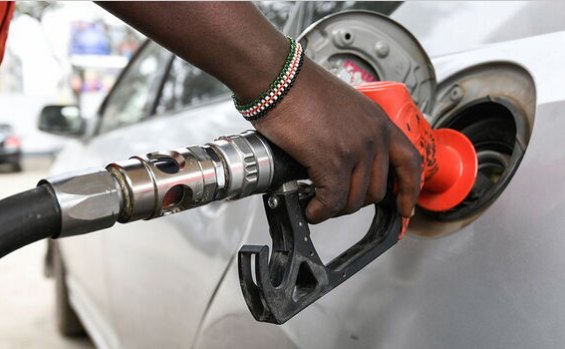
 A man fuels a car at a petrol station
Museveni said on Saturday that Uganda had been buying petroleum products through middlemen in Kenya, a revelation he said prompted his government to review its procurement model.
He said the change had resulted in lower import premiums for petroleum products.
In a statement, MAK said the remarks had raised fresh questions about Kenya’s fuel importation, pricing and distribution system.
“We thank President Museveni. He has vindicated concerns that motorists and consumers have been raising for years,” the association said.
MAK questioned how intermediaries featured in an arrangement described as government-to-government, and called for disclosure of the companies involved, commissions paid and the pricing mechanisms used.
“The question Kenyans must now ask is simple: If governments were supposedly buying directly from governments, why were middlemen sitting between governments and the petroleum suppliers? Who benefited from this arrangement, and at whose expense?” it said.
The association said the concerns warranted a full, independent and transparent investigation into Kenya’s petroleum importation and pricing arrangements.
It called for a forensic audit covering all intermediaries, commissions, contracts, pricing formulas and beneficiaries associated with the G-to-G system.
MAK also demanded disclosure of the actual landed cost of every petroleum cargo, the parties involved and all margins added before fuel reaches consumers.
The association further called for an independent review of the Energy and Petroleum Regulatory Authority’s pricing framework and its independence.
EPRA currently uses a statutory formula to determine maximum wholesale and retail prices.
The formula incorporates the landed cost of petroleum products alongside transport, storage, retail margins, taxes and other approved costs.
MAK said every component of the formula should be independently verified and protected from political or commercial interference.
It said high fuel costs have wider consequences because petroleum products are an input in transport, food production, construction and other sectors.
“Kenyan motorists have effectively become the shock absorber of an opaque fuel-pricing system,” the association said.
MAK also called for prosecution and recovery of public funds if investigations establish fraud, abuse of office, unlawful enrichment or other criminal conduct.
The association said its demands were aimed at accountability rather than subsidies or other concessions for motorists.
“MAK is not asking for charity. We are demanding accountability, transparency and a fair fuel price,” it said.
“President Museveni has opened the door. Kenya must now walk through it.”
Kenya introduced the G-to-G fuel import arrangement in 2023, with the government saying it was intended to ease foreign-exchange pressures and provide greater stability in petroleum supplies.
The framework involves Gulf suppliers and nominated Kenyan oil marketing companies in the supply chain.







