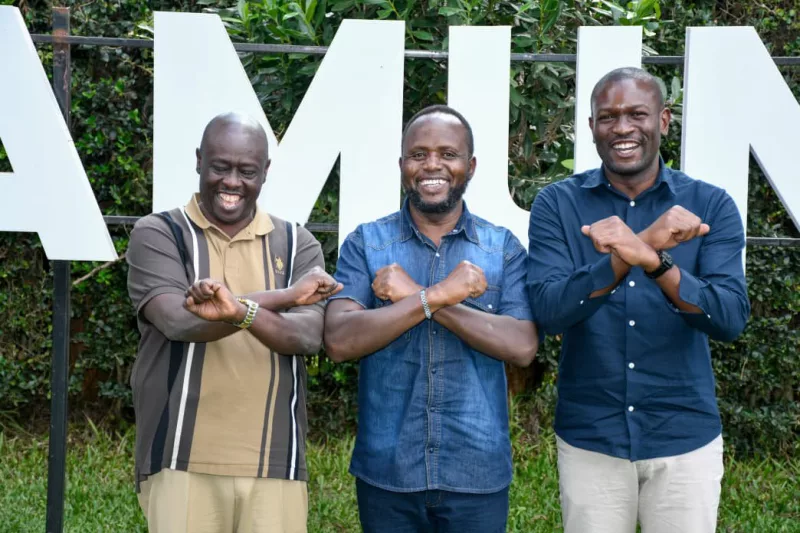
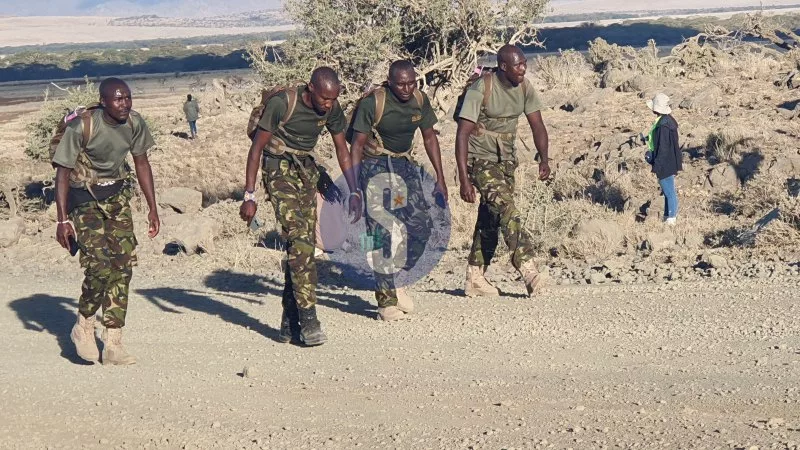
 A section of rangers who took part in the Wildlife Ranger Challenge at Lewa Wildlife Conservancy, September 19/ Gilbert Koech.
The Bongo brigade have emerged as this year’s champions of the Wildlife Ranger Challenge in the male category.
Carrying a 22kg kit across the harsh terrain of Lewa Wildlife Conservancy’s critical conservation landscapes on Saturday, the Bongo brigade from the Mountain Bongo project claimed the title.
The female rangers trekked the rough terrain with a load of 10 kg, a test of their agility and endurance.
Sera men from Sera Rhino Conservancy took the second position, while MEP bulls from Mara Elephant Project took the third position.
Lewa lions from Lewa Wildlife Conservancy took the fourth position.
In the female category, Team Lioness from Olgulului emerged as the winners, followed by Sera Ladies from Sera Wildlife Conservancy in second position.
Chief Conservation Officer for Tusk, Chantal Migongo, said the event displayed strength, discipline and unity among rangers.
“The challenge that took place across Africa today is a powerful reminder of what rangers endure every single day to protect our shared planet. As our research shows, Africa still has only one fifth of the rangers it needs. We must treat rangers as essential frontline environmental defenders who deserve proper equipment, fair pay, insurance and long-term investment,” she said.
More than 2,000 wildlife and marine rangers, including 166 teams from 21 African countries, simultaneously completed the synchronised half-marathons, carrying up to 22kg of kit across some of Africa’s most critical conservation landscapes today.
The wildlife challenge, which is now in its seventh year, is organised by international conservation charity Tusk and the Game Rangers Association of Africa (GRAA), with funding from Mark Scheinberg.
The event is now the continent’s largest initiative celebrating the men and women protecting Africa’s wildlife and wild landscapes.
The initiative has raised more than $25 million for welfare, equipment and training, and supported or engaged more than 11,500 rangers since launching in 2020 to help rangers during the Covid-19 pandemic.
This year’s event is expected to generate a further $3 million.
Following two months of training, including tactical quizzes and a range of other physical challenges, today’s 21km races saw ranger teams push their physical endurance to the limit across the continent, including special regional hub events in Kenya, Uganda, South Africa and Zambia, and affiliated races in many other countries.
Lewa Wildlife Conservancy CEO Rob Macaire said it is a privilege for Lewa Wildlife Conservancy to host the Regional Hub of the Wildlife Ranger Challenge and to welcome 24 ranger teams from across Kenya.
“This challenge is about far more than crossing a finish line. It shines a light on the discipline, resilience and commitment that rangers demonstrate every day in safeguarding wildlife, supporting communities and securing the future of Africa’s wild landscapes,” Macaire said.
Macaire said the conservancy is proud to stand alongside Tusk, the Game Rangers Association of Africa and conservation partners in recognising the frontline conservationists and investing in their wellbeing.
“When rangers are equipped to flourish, both people and wildlife thrive too.”
Louise de Bruin, CEO of the Game Rangers Association of Africa (GRAA), said rangers don't ask for recognition; they simply get on with their work as essential planetary health workers, protecting nature and ecosystems, often in incredibly challenging circumstances.
“The Wildlife Ranger Challenge is an opportunity for the world to stand in solidarity with Africa's rangers, investing in their safety, wellbeing and future, and ensuring they have the protection and support they deserve.”
Africa currently relies on just 65,000 rangers, yet effectively securing its wild spaces and meeting global nature targets will need an estimated 345,000 dedicated personnel on the ground - five times the number today.
With expected donations to this year’s event, the Wildlife Ranger Challenge has raised an estimated $28 million for Africa’s rangers since its inception in 2020.
Yet organisers warn that global backing still falls short of what is required to safeguard Africa’s biodiversity.
Africa hosts nearly a quarter of global terrestrial mammal species and one-sixth of all plant life, making its ecosystems globally critical to planet-wide climate and biodiversity goals.
Rangers will also be essential if African nations are to meet the global target of protecting 30 per cent of land and sea by 2030.
To build a sustainable future for conservation, the job of being a ranger must transform into a respected, well-resourced career to which young people aspire.
Despite performing broad critical functions - from community peacekeeping and search-and-rescue to ecosystem monitoring - many continue to operate without adequate equipment, sufficient health and safety training, or basic insurance.
The Wildlife Ranger Challenge aims to help close these gaps and expand the continent's ranger workforce.
The Challenge was the catalyst for the Ranger Welfare Standards Initiative, launched in 2024 by Tusk and GRAA with support from The Royal Foundation of the Prince and Princess of Wales.
The initiative has already enabled insurance cover for 6,800 rangers, with a target of reaching 10,000 by 2030.
Funds raised from this year’s Challenge, backed by match-funding from founding donor Mark Scheinberg, will go directly to participating ranger units across the continent to support operational costs, equipment, medical insurance through the Ranger Welfare Standards Initiative and specialised capacity development.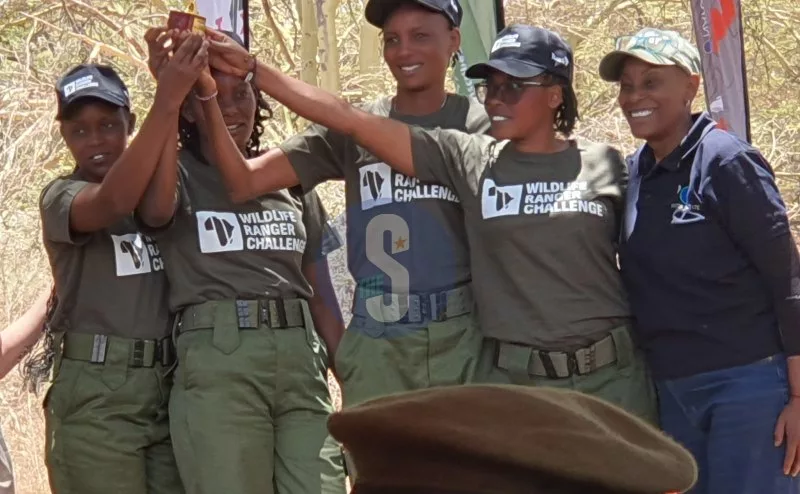 Team Lioness from Olgulului during the award ceremony/Gilbert Koech.