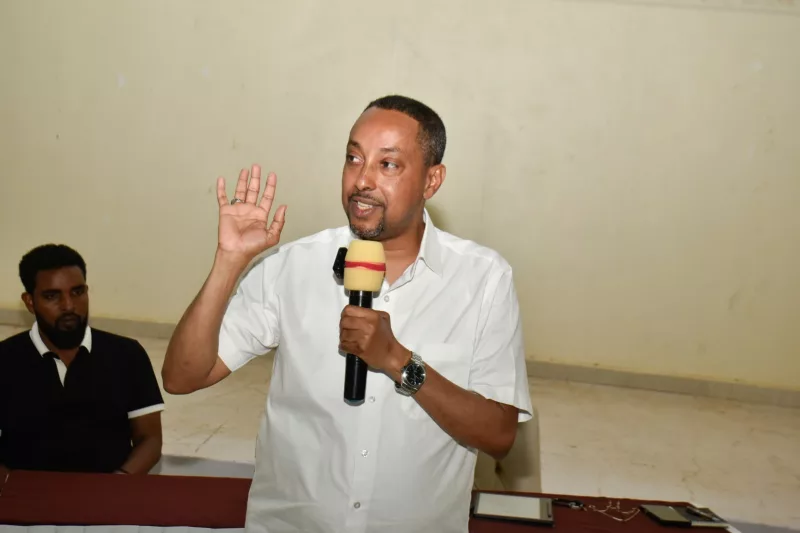
 Halan Mohamed, Project Officer, Worai, speaking to the press /STEPHEN
ASTARIKO
Women peacebuilders in Wajir have pledged to strengthen community cohesion and help diffuse political tensions.
The women, who met at a forum on women, peace, and security organized by the Women Rights Advocacy Initiative (Worai) under the Kenya Community Engagement and Resilience Programme (KCERP), called for greater female participation in peacebuilding and conflict prevention.
Participants included veteran peacebuilders, women chiefs, human rights defenders and activists.
Wajir gender and social services county chief officer Fatuma Olow said the role of women in peacebuilding must be strengthened.
She said women play a vital role in resolving disputes, supporting families, educating children and bringing communities together.
"Nothing about women should be decided without women. Their experiences, ideas and leadership are essential in building lasting peace," Olow said.
The chief officer highlighted the critical role of women in peace and security, calling for their inclusion in decision-making processes.
"When women are safe, families are stronger. When women participate in peacebuilding, communities become more resilient. And when women have equal opportunities to lead, our societies become more just and peaceful," she said.
During the forum, participants exchanged ideas and experiences while discussing the challenges women face in expanding their participation in peace and security.
Participants also reflected on their personal experiences of the inter-clan conflicts that affected Wajir county in the early 1990s, drawing lessons from the past to reinforce current peacebuilding efforts.
"We have asked ourselves many questions and we have obtained many answers. There will be lasting peace here in Wajir county," Barwaqo assistant chief Nasra Farah said.
The women also pledged to fortify existing peace structures ahead of the election.
"We are promising that with the coming general election, we are going to execute the most impactful activities concerning peace here in Wajir. We hope that women across the county will support us," Nasra said.
"There are people who fought for the peace we enjoy today. All in all, what matters most is peace. Let us advocate for peace wherever we are."
The women reaffirmed their commitment to lasting peace in the county, calling on all stakeholders to join forces in bolstering existing peace structures.
The forum provided an opportunity to deepen collaboration among women and other community stakeholders in preventing violent extremism, promoting social cohesion and building community resilience.
In recent years, women in Wajir have played an increasingly vital role in peacebuilding, security and governance.
Their greater inclusion in public decision-making and community dialogue is poised to strengthen social cohesion and foster lasting stability in the county.
Their meeting came barely two weeks after religious leaders in Wajir cautioned politicians against using divisive rhetoric, hate speech and mobilisation tactics that exploit clan and subclan loyalties for political gain.
The religious leaders, led by the North Eastern Regional Coordinator of the Supreme Council of Kenya Muslims (Supkem), Sheikh Adan Yunis, said politicians seeking elective positions in Wajir, Garissa and Mandera must place peace and cohesion at the centre of their campaigns.
They warned against tactics that could turn communities against each other.
Sheikh Yunis urged both incumbents and aspirants to exercise restraint in their public utterances.
“We are urging politicians, current and aspiring, to watch their tongues. Our primary request is for politicians from the Northeastern region to unite communities through peaceful campaigns,” he said.
“They should avoid sowing disunity among the people. They should use their platforms to promote peaceful coexistence and respect the values that hold communities together.”
Yunis also raised concerns over what he described as inappropriate conduct during certain political endorsement ceremonies.
The warning came as political activity intensifies ahead of the 2027 elections, with prospective candidates holding consultations, endorsement meetings and community mobilisation events across the region.
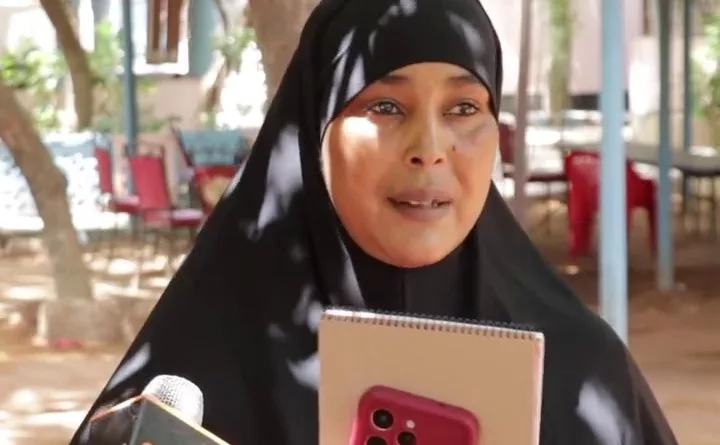 Nasra Farah, assistant chief Barwaqo /STEPHEN
ASTARIKO