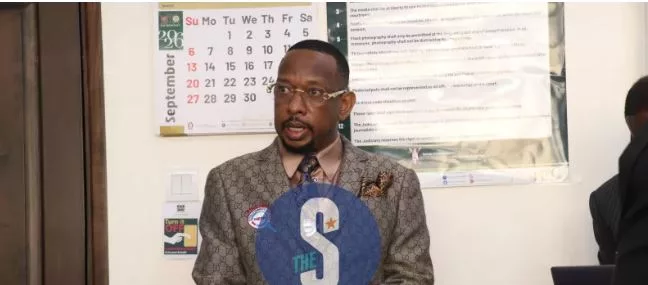
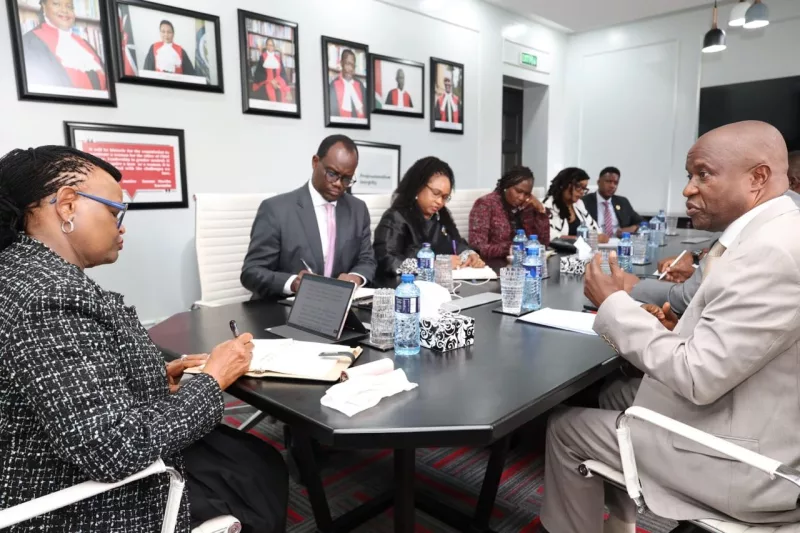
 Joe Lenai, director for primary healthcare, preventive and promotive health in the Ministry of Health delivers remarks during the official opening of WHX Nairobi /Handout
The Ministry of Health is concerned over costly medical equipment lying idle in health facilities.
It is seeking tighter scrutiny of imported equipment to prevent the country from becoming a dumping ground for obsolete or poorly supported technology.
The government says Kenya needs to ensure imported medical equipment remains functional throughout its intended lifespan.
The concern came amid challenges including a lack of spare parts, power problems, inadequate maintenance and shortages of technical skills, which have left expensive equipment unused in some facilities.
Public Health and Professional Standards PS Mary Muthoni said county health officials, clinicians and procurement officers should assess equipment based on its total life-cycle cost, energy efficiency, maintenance requirements and the training needed to operate it.
“Kenya and the greater Africa must no longer be an equipment graveyard. Equipment procurement should move beyond the initial purchase price to consider the full cost of owning and operating the machines,” she said in a speech read by Joe Lenai, director of primary healthcare, preventive and promotive health.
Lenai spoke at the opening of the World Health Expo (WHX) Nairobi 2026.
The PS said the shift would require suppliers to provide stronger after-sales support, including maintenance agreements and guaranteed access to spare parts.
The ministry also urged manufacturers and vendors to support the transfer of technology and train Kenyan biomedical engineers and technicians.
It further proposed partnerships to establish mobile and stationary calibration laboratories to ensure medical equipment operates safely and accurately throughout its intended lifespan.
The concern is particularly important as Kenya continues to expand healthcare infrastructure and attract international suppliers of medical devices, laboratory equipment and pharmaceuticals.
More than 350 international companies are participating in WHX Nairobi 2026, according to exhibition manager Daniel Green, with firms seeking investment, sales and procurement opportunities in East Africa.
“These companies are really, really interested in importing or exporting their products to the East African market. They are looking at investments, sales and procurement in this region,” Green said.
“And they have highlighted East Africa as being a key gateway not only into the East African region but also to the whole African continent. And they see Kenya as that real focal point and city to do, and country to do, business in.”
Kenya relies heavily on foreign supply chains for its clinical infrastructure, importing nearly 95 per cent of its medical devices and equipment.
The total annual import demand for medical equipment is estimated to be approaching $500 million (Sh64.77 billion).
The expo has also highlighted the growing role of technology in improving healthcare supply chains, particularly in reaching rural areas where access to medicines and medical equipment remains a challenge.
The increased imports also create a need to ensure equipment entering the market is appropriate for local conditions and can be supported after installation.
“Procurement is quite difficult because at the end of the day you need to look at the quality of what you need to bring in. You don't want to have any quality products with problems that you bring in for your patients,” said FedEx managing director for sales in sub-Saharan Africa Leon Bruwer.
The ministry said reliable diagnostics, surgical equipment, medical oxygen and functioning laboratory equipment are essential to strengthening primary healthcare.
This means procurement decisions will increasingly need to factor in whether facilities have the power, technical expertise, spare parts and maintenance arrangements required to keep machines running.
The government is also looking to deepen engagement between manufacturers and public health buyers, with direct partnerships seen as a way of reducing unnecessary intermediary costs.
The push for closer scrutiny comes as Kenya seeks to build stronger local healthcare manufacturing capacity and reduce reliance on imported products.
The Ministry of Health said partnerships developed through the expo should translate into functional healthcare facilities, stronger local manufacturing and a more self-reliant African health sector.
Instant Analysis
Facing a $500 million import bill, Kenya’s Ministry of Health is mandating strict life-cycle evaluation to curb idle equipment in public hospitals. By demanding guaranteed spare parts, technical training, and after-sales support from foreign vendors, the government aims to prevent Kenya from becoming an obsolete technology graveyard while building local capacity.