Kenya is set to join the global community in commemorating World Bamboo Day.
The Day is celebrated on September 18 all over the world and is an initiative created in 2009 by the World Bamboo Organisation to raise awareness about the incredible benefits of bamboo.
This day emphasises bamboo’s role as a sustainable resource, with significant environmental, economic and social impact.
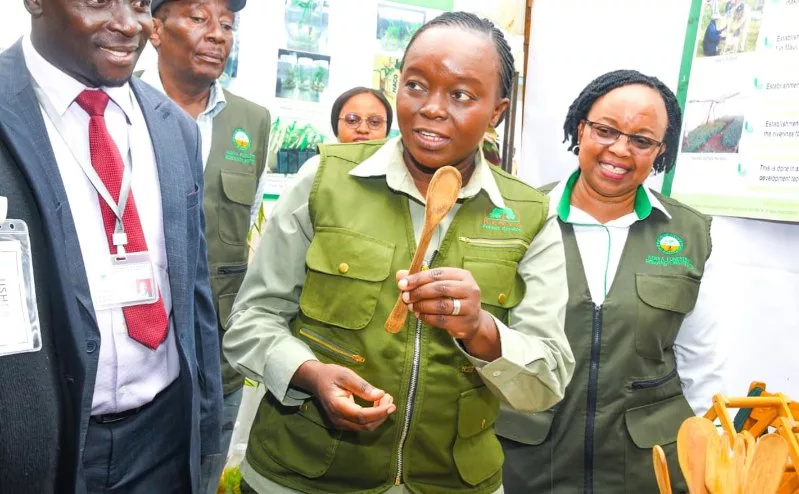
Environment CS Dr Deborah Barasa speaks to environment and science reporter Gilbert Koech on the significance of the day and how the state is promoting bamboo in the country.
The Star: What is the significance of World Bamboo Day to the bamboo sector in the country?
CS Barasa: World Bamboo Day provides an important platform for Kenya to showcase the economic, environmental and social potential of bamboo and to bring together farmers, researchers, government agencies, investors, processors, development partners and communities.
For Kenya, the day is more than a celebration. It is an opportunity to promote bamboo as a strategic resource for landscape restoration, climate action, green jobs, industrial development and improved livelihoods.
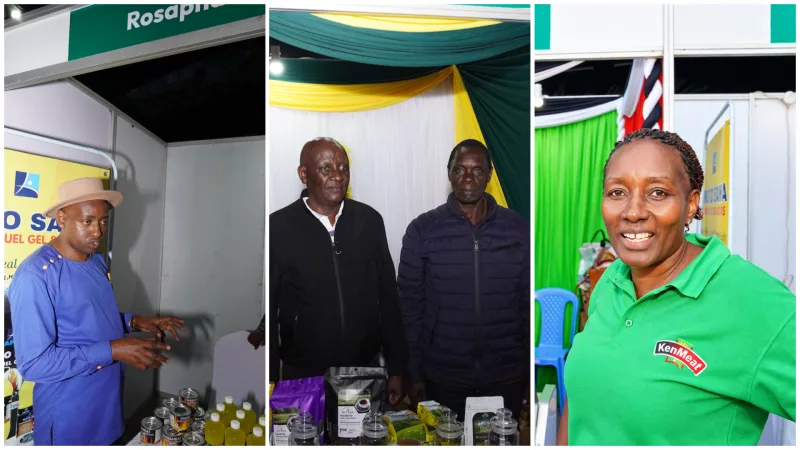
The 2026 National Bamboo Expo and World Bamboo Day celebrations are being held from September 16–18 at the Meru University of Science and Technology. The event provides a platform for policy dialogue, research and innovation, technology transfer, trade, investment and business-to-business engagement.
What is the country seeking to advance during this year's event?
This year's event seeks to move the bamboo sector from largely small-scale and cottage-level activities towards a more organised, commercially viable and competitive value chain.
The focus is on strengthening collaboration between government, research institutions, farmers, private investors, development partners and communities; promoting technology and innovation; expanding bamboo cultivation; increasing value addition; creating markets; and attracting investment.
The ultimate objective is to position bamboo as an important contributor to Kenya's green economy, climate resilience, restoration agenda and industrial transformation.
How many hectares of bamboo are grown in Kenya?
Indigenous bamboo forest covers 133,273 ha of land area in Kenya, mainly in the Aberdare Ranges, Mt Kenya, Mt Elgon, Mau Forests Complex and Cherangany Hills. The largest bamboo forest cover is in the Aberdare Ranges (50,038 ha), followed by Mount Kenya (25,966 ha).
The resource is, therefore, substantial, but the key issue is not only the area under bamboo; it is how effectively the resource is sustainably managed, expanded and converted into economic and environmental benefits.
How can bamboo development in Kenya support the green economy?
Bamboo can become an important pillar of Kenya's green economy because it is a rapidly renewable resource with applications across many sectors.
It can provide raw materials for furniture, construction materials, flooring, panels, textiles, paper and pulp, energy, packaging, crafts and other products. It can also substitute some imported products, create opportunities for micro, small and medium enterprises, generate carbon revenue, employment and support rural incomes.
From an environmental perspective, bamboo contributes to carbon sequestration, soil and water conservation, riverbank stabilisation and restoration of degraded landscapes. Its development, therefore, creates a link between economic growth and environmental sustainability.
How far has the sector developed?
The bamboo sector has made important progress, particularly in policy, research, seedling production and awareness. Bamboo was gazetted as a scheduled cash crop in 2020, providing a legal basis for its commercialisation.
Kenya has also introduced more than 40 exotic bamboo species through Kefri, with at least 12 reported to be performing well in different ecological zones. Private enterprises, farmers, community organisations and artisans are increasingly participating in bamboo production and processing.
However, the sector remains at an early stage of commercialisation. Many activities are still undertaken at cottage and small-enterprise level, and the full industrial value chain has not yet been developed.
Has the country tapped the benefits accruing from the sector?
Kenya has started benefiting from bamboo, but the country has not yet tapped its full potential.
There are already farmers growing bamboo, artisans producing furniture and crafts, enterprises involved in processing, and institutions such as Kefri undertaking research, propagation, training and technology transfer.
However, compared with countries where bamboo is a major industrial resource, Kenya's value addition, processing capacity, domestic market development and exports remain limited. The National Bamboo Development Strategy and Action Plan 2025–35 is intended to address this gap.
If the country has not tapped the full potential, what are some of the challenges?
The major challenges include limited value addition and processing capacity, inadequate investment, weak market linkages, limited access to appropriate technology, inadequate quality planting material in some areas, insufficient technical skills and limited awareness of the commercial opportunities.
The national bamboo strategy also recognises that bamboo value chains are not yet well developed. For example, some bamboo products, including plywood and flooring, are still imported because local production has not reached the required scale and competitiveness.
There is, therefore, a need to develop the entire value chain, from quality planting material and sustainable production to harvesting, transportation, processing, standards, marketing and export.
There were plans to develop bamboo demonstration sites. Are these plans still on?
Yes. Demonstration and learning sites remain important to the Government's bamboo development agenda.
They provide practical platforms where farmers and investors can see suitable species, propagation methods and management practices, harvesting techniques, value-addition technologies and commercial applications.
The approach is increasingly being linked with research, technology transfer, incubation and enterprise development, rather than simply establishing plantations. The National Bamboo Development Strategy provides for stronger institutional support, including a proposed National Centre of Excellence and 20 county incubation centres for technology and innovation.
How is bamboo being integrated into the 15 Billion Tree Growing Programme?
Bamboo is an important component of Kenya's broader landscape restoration agenda and is being integrated into the 15 Billion Tree Growing Programme as a restoration and livelihood resource.
The government's restoration programme seeks to restore 10.6 million hectares of degraded landscapes and increase national tree cover to 30 per cent by 2032. Out of the 10.6m ha targeted, 1.43% (150,000 ha) is for bamboo establishment.
What is the government doing to ensure household products, such as toothpicks, are not imported but produced locally?
The government is encouraging local production and value addition by developing the bamboo value chain, supporting research and innovation, strengthening MSMEs and promoting investment in bamboo processing.
The objective is to move from exporting or selling raw bamboo to producing finished and semi-finished products locally. This includes household products, furniture, construction materials, boards, flooring, packaging and other products.
This approach will help Kenya substitute imports, retain more value within the country, create jobs and expand opportunities for local enterprises.
How much revenue can bamboo generate every year?
The revenue potential is substantial, but it is important to avoid presenting a single national annual figure as a guaranteed income because returns depend on species, productivity, management, market prices and the level of value addition.
Available studies demonstrate that bamboo can generate significantly higher returns when it is commercially cultivated and properly integrated into value chains.
At national scale, the greater opportunity lies beyond selling raw culms. Furniture, construction materials, panels, flooring, textiles, energy, pulp and paper and other processed products can generate substantially greater value and employment.
The government is, therefore, focusing on developing a complete bamboo industry rather than relying solely on raw bamboo sales.
Beyond economic benefits, what are the other benefits associated with bamboo?
Bamboo provides significant environmental and social benefits.
It can help stabilise riverbanks, control erosion, reduce siltation, conserve soils and water, restore degraded landscapes and contribute to climate-change mitigation through carbon sequestration.
Bamboo can also support biodiversity and improve resilience of communities whose livelihoods depend on natural resources. Because it grows rapidly and can be harvested on a rotational basis without destroying the entire plant, it is a particularly useful renewable resource when sustainably managed.
What role are KFS and Kefri playing in promoting bamboo growing?
The Kenya Forest Service plays an important role in forest management, restoration, extension and implementation of national forestry programmes. It provides an institutional platform for integrating appropriate bamboo development into forest and landscape restoration activities.
Kefri, on the other hand, has a major research and technology-development role. It undertakes research on bamboo species, propagation, management, utilisation and value addition; supports production of quality planting material; develops technologies; and provides training and technology transfer to farmers, artisans and other stakeholders.
Together, KFS and Kefri help bridge the gap between research, policy and field implementation, while working with counties, communities, private sector actors and development partners.
What is the targeted hectares of bamboo in the next five years?
The national target is to establish an additional 150,000 hectares of bamboo under the Kenya National Bamboo Development Strategy and Action Plan 2025–35 which is aligned to the National Landscape and Ecosystem Restoration Strategy 2023-32.
For the next five years, the country expects to grow 75,000ha of bamboo across forests, farms, riparian areas and other suitable landscapes.
What interventions are in place to ensure that the target is achieved?
The government is implementing a combination of policy, research, investment and field-level interventions.
Key measures include the implementation of the Kenya National Bamboo Development Strategy and Action Plan 2025–35; strengthening production and availability of quality bamboo planting materials and promoting bamboo within the 15billion Tree Growing Programme and national landscape restoration agenda.
Others are the establishment and strengthening of demonstration, incubation and technology-transfer centres; promotion of bamboo research and development through Kefri and other institutions; supporting farmers, communities, artisans and MSMEs; attracting private-sector investment into plantations and processing and developing markets and promoting value addition.
We are also strengthening standards, skills and technology; promoting partnerships with development partners and international bamboo organisations; and improving coordination across national and county governments, communities, researchers and the private sector.