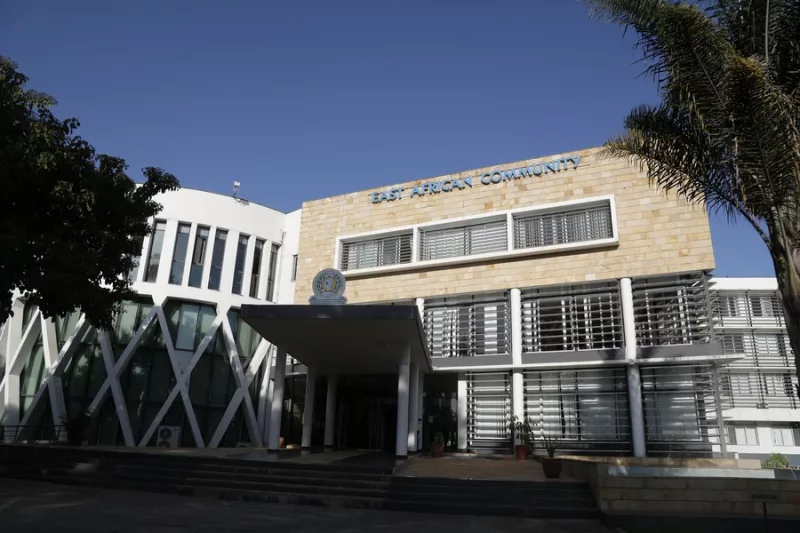
 This photo taken on May 20, 2022, shows an exterior view of the East African Community (EAC) headquarters in Arusha, Tanzania. (Photo by Herman Emmanuel/Xinhua)
The 2026 Conference will be held under the theme, "Transforming Education in East Africa: From Commitments to Impact, Fostering Resilience and Future-Ready Systems for Sustainable Development".
It will bring together high-level government officials, policymakers, teachers, education practitioners, students and youth representatives, researchers and academia, civil society organisations and development partners from the eight
Education leaders and stakeholders from across East Africa will gather in Nairobi between 25 and 28 August for the 2nd EAC Regional Education Conference, as the region seeks to convert years of education commitments into practical reforms that improve learning, inclusion, skills and opportunity for millions of learners.
The conference comes at a critical moment for education in East Africa. While Partner States have expanded access and pursued major reforms, persistent inequalities continue to affect children in rural and marginalised communities, learners with disabilities and other vulnerable groups.
Learning quality remains uneven, teacher shortages and resource constraints continue to affect classrooms, and weak transitions between education levels leave too many young people without clear pathways into further learning or work.
The region also faces a widening disconnect between education and the world of work. Skills mismatches, limited links between Technical and Vocational Education and Training (TVET) and industry, and a rapidly growing youth population are increasing pressure on education systems to equip young people with relevant, future-ready skills for employment, entrepreneurship and a changing economy.
Against this backdrop, the Nairobi Conference will take stock of progress since the inaugural regional education conference held in Arusha in 2024, identify the systemic and implementation gaps that are slowing change, and build regional agreement around the actions that now require greater political, technical and financial commitment.
The central question is no longer whether the region has education policies and commitments, but whether those commitments are producing measurable improvements for learners and communities.
Priority areas include strengthening early and foundational learning, improving teacher capacity, expanding inclusive education, and creating stronger pathways from education and training into decent work. The Conference will also focus on how digitalisation, innovation and emerging technologies can strengthen learning while avoiding deeper inequalities, and how better research, data, financing and governance can support stronger education decisions.
These priorities are becoming more urgent as education systems respond to climate change, conflict, public health shocks, technological disruption and rapidly changing labour-market demands.
Building resilient education systems that can adapt to these pressures while protecting learning continuity and equity is therefore a central part of the region's education transformation agenda.
Regional cooperation will also be a key focus. The Conference is expected to strengthen collaboration among governments, academia, TVET institutions, industry, civil society and development partners, while advancing efforts to improve the quality and relevance of higher education, support harmonisation and enable a more skilled and mobile East African workforce.
The intended outcomes extend beyond the four days in Nairobi. The Conference is expected to generate practical policy recommendations and implementation actions, strengthen regional consensus on education priorities, improve the use of data to track access, equity, quality and learning outcomes, and support proposals for more sustainable education financing and governance.
It is also expected to contribute to a conference communique or roadmap setting out agreed commitments, priority initiatives, timelines and next steps.