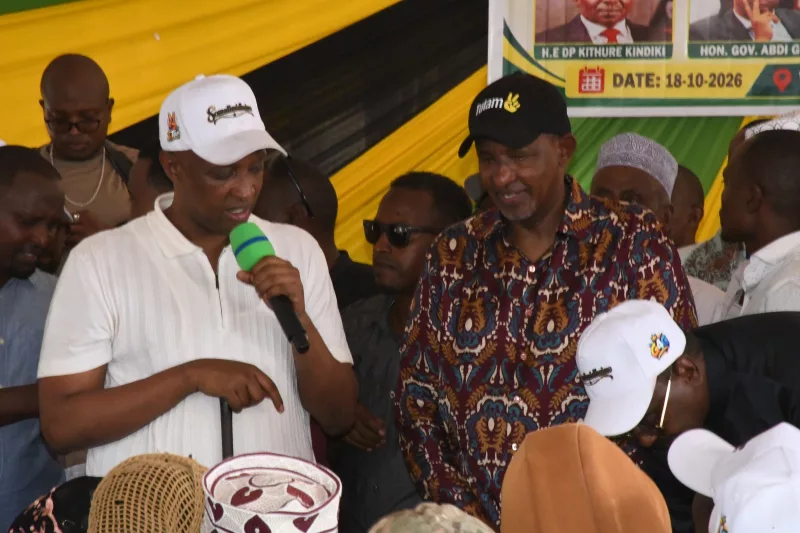
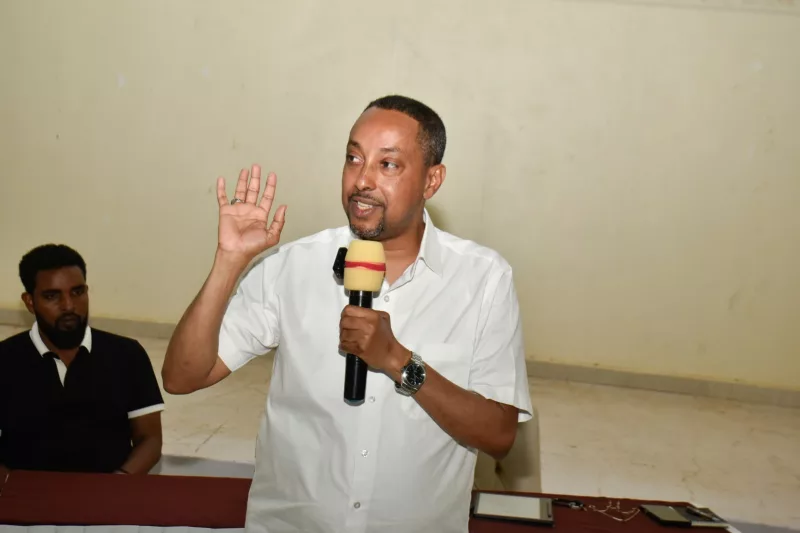
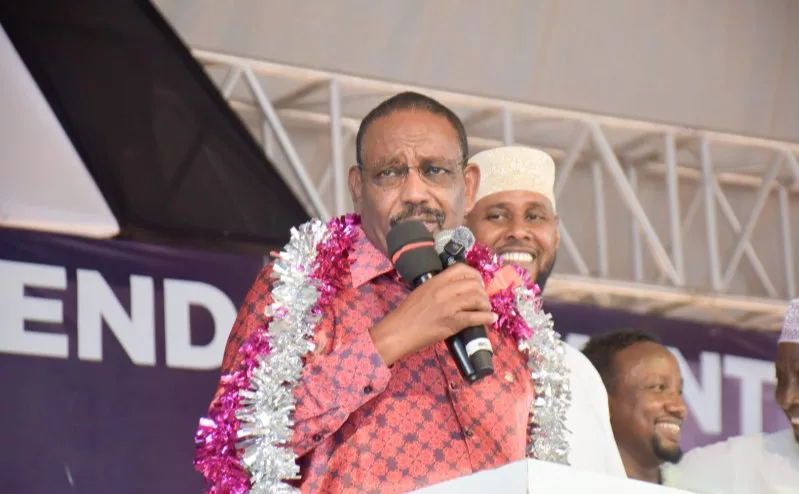
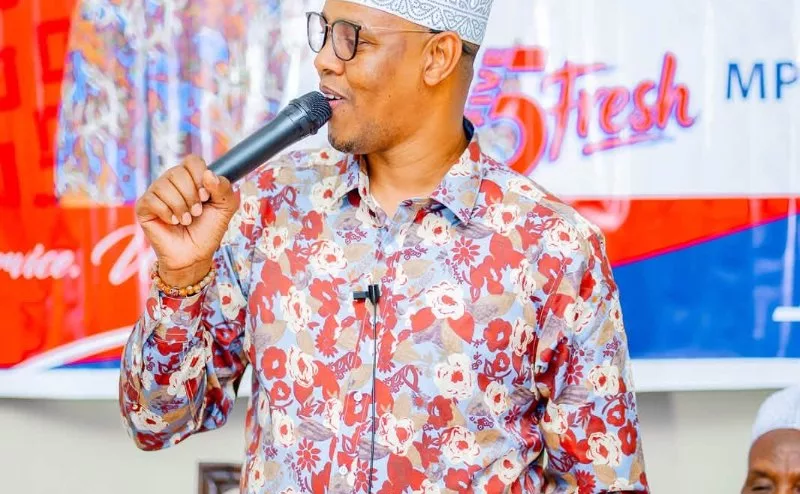
 Dadaab MP Farah Maalim speaking at a recent event /STEPHEN
ASTARIKO
The race for the Dadaab parliamentary seat is once again shaping up as a battle royal, with four candidates already positioning themselves for what promises to be a fierce contest in the 2027 general election.
Those in the race include incumbent Farah Maalim, former Abakaile MCA Mohamed Sheikh Ali, popularly known as Amin Computer, Ahmed Muhumed, commonly known as Ahmed Chetah, and former State official Abdikheir Abdullahi Dubow, popularly known as Kheirow.
Beyond individual popularity and political parties, the contest is expected to be heavily influenced by the intricate clan and sub-clan dynamics that have historically played a major role in elections among the Somali community.
Dadaab is predominantly inhabited by the Awlihan clan, with four sub-clans as the main inhabitants of the constituency. They are Reer Ali, Afgaab, Adan Kheir and Awis.
Maalim hails from Awis, Mohamed Sheikh Ali from Adan Kheir, while Muhumed and Dubow are both from Afgaab.
The Reer Ali, despite being regarded as the largest of the four sub-clans, is yet to present a contestant. The sub-clan did not field a candidate in the 2022 elections.
That
decision could prove significant in a race where even a relatively small shift
in support among the sub-clans could determine the eventual winner.
The 2022 election demonstrated just how unpredictable and fiercely contested the seat can be.
The contest eventually narrowed down to a two-horse race between Maalim and Dubow, with the veteran politician defeating his challenger by a narrow margin.
One of the biggest turning points in that election was the decision by Ahmed Muhumed, who comes from the same Afgaab sub-clan as Dubow, to withdraw his candidature in the final weeks of the campaign and throw his weight behind Maalim.
The move significantly altered the political equation, with Muhumed's supporters largely backing Maalim and helping him secure victory.
The rivalry was so intense that supporters associated with Muhumed and Dubow clashed on election day, with several people reportedly injured in the confrontations.
With memories of that contest still fresh, Muhumed's return to the race has added a fresh twist to the contest.
On Monday,
he held a rally in Dadaab town where he formally announced his
candidature and called on his supporters to rally behind him as he sought to
make another attempt at capturing the seat.
His candidature is particularly significant because it could split the Afgaab vote between him and Dubow, potentially creating an entirely different electoral equation from that of 2022.
Dubow, who is making his third attempt to win the parliamentary seat after recently receiving the endorsement of his sub-clan, has nevertheless expressed confidence that this will be the election in which he finally succeeds.
His challenge will be to consolidate support within Afgaab while also reaching beyond his traditional base and attracting voters from the other Awlihan sub-clans.
Mohamed Ali is also entering the contest with a potentially important advantage — he is the only candidate so far from the Adan Kheir sub-clan.
The former Abakaile MCA has been busy meeting community members from other sub-clans and has projected himself as a candidate offering a new political direction.
In an
interview with The Star newspaper, Ali, who is also the ODM chairman in Garissa county, argued that Dadaab needed fresh leadership capable of steering the
constituency towards greater development.
He is seeking to translate his experience in county politics into a successful parliamentary bid, while taking advantage of the support that could come from his sub-clan.
Maalim has repeatedly dismissed concerns over his re-election prospects, maintaining that he has no reason to worry about retaining the seat.
The veteran politician's experience and incumbency give him an advantage, but the fragmentation of the contest means that he cannot afford to take any support for granted.
The constituency comprises six wards; Dadaab, Labasigale, Abakaile, Dertu, Damajaley and Liboi and is among the most populous constituencies in Garissa county.
Its large electorate makes the ability of each candidate to build a broad coalition across the six wards crucial to victory.
While clan identity remains an important factor in Somali politics, the candidates will also have to contend with other considerations, including development record, personal popularity, party structures, mobilisation networks and the ability to appeal to voters outside their sub-clans.
The entry of four candidates could therefore make the race less predictable than the 2022 contest, particularly if none manages to consolidate support from the larger voting blocs.
The sub-clan's eventual political direction could become one of the most closely watched developments in the Dadaab contest, particularly if the race remains tightly balanced in the final stages of the campaign.
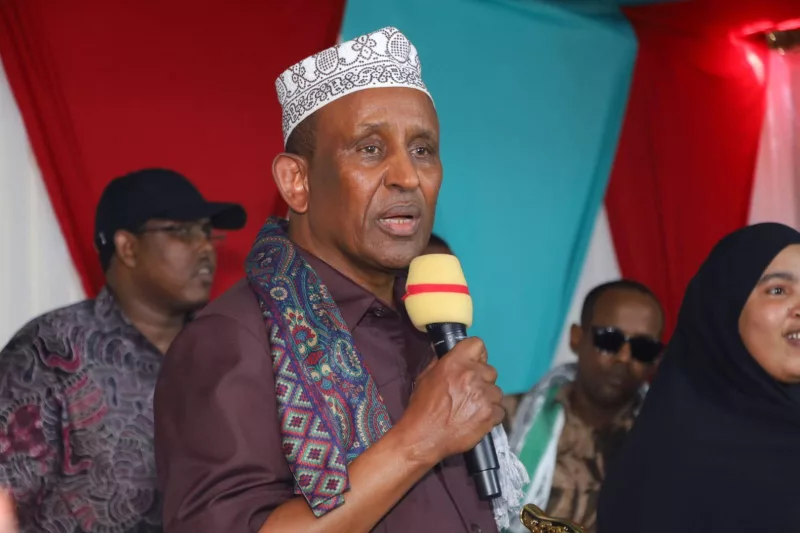
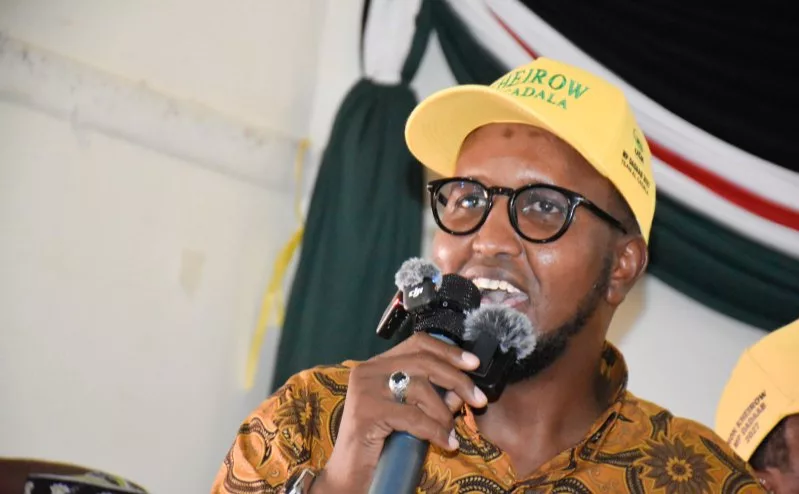 Abdikheir Abdullahi Dubow, popularly known as Kheirow, addressing
his supporters at a Garissa hotel recently./STEPHEN ASTARIKO
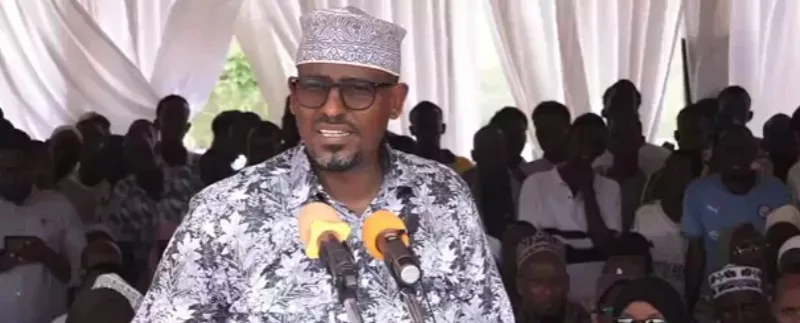
 Mohamed Sheikh Ali, popularly known as Amin Computer, addressing his supporters at a recent event. /STEPHEN ASTARIKO
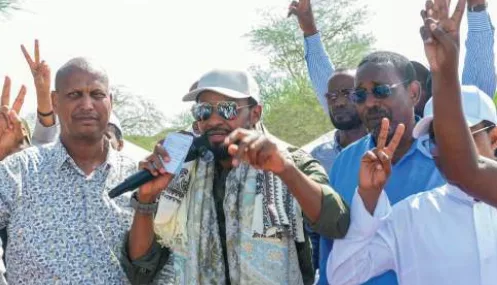
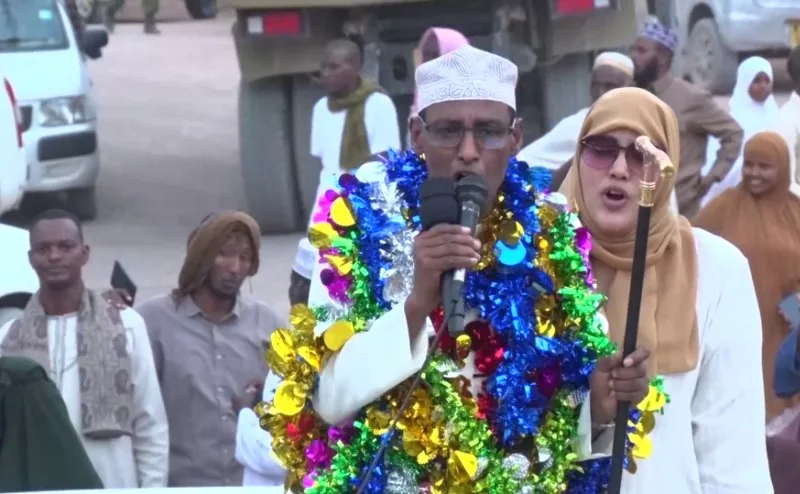 Ahmed Muhumed, commonly known as Ahmed Chetah addressing
his supporters in Dadaab town on Monday. /STEPHEN ASTARIKO