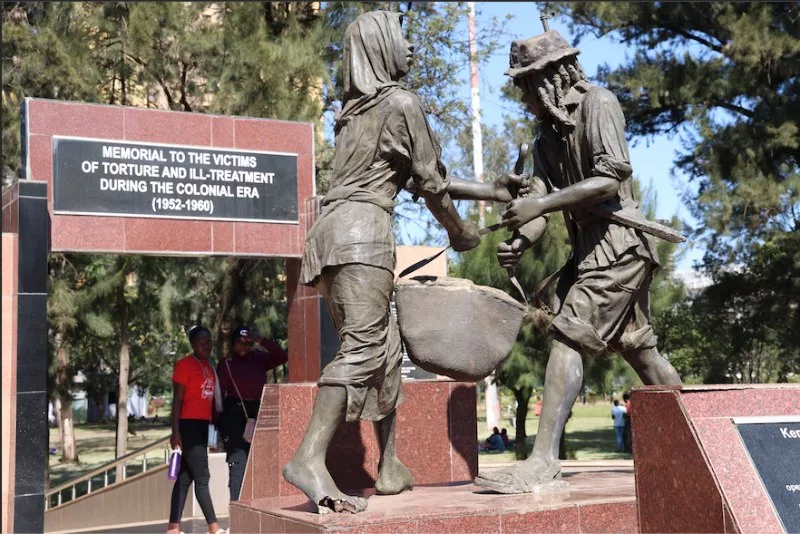
Eleven years ago, we unveiled the Mau Mau memorial monument at Uhuru Park to honour the victims of torture and other abuses committed during the colonial era. It was a public acknowledgement that the freedom Kenyans enjoy today was paid for through blood, sacrifice, resistance and, for many, unimaginable suffering.
That monument must be preserved.
Its destruction during the June 25, 2025, protests was a painful reminder of how easily Kenya can lose the physical reminders of its own history. The monument, which has since been repaired, was unveiled during the 11th commemoration on Saturday at Uhuru Park, spearheaded by the Kenya Human Rights Commission, Mau Mau War Veterans Association (MMWVA), Mazingira Institute, British High Commission, National Museums of Kenya and Nairobi county.
But repairing the structure is only the beginning. Kenya must preserve the monument as a permanent national memorial and ensure it is not left vulnerable to neglect, vandalism and political amnesia.
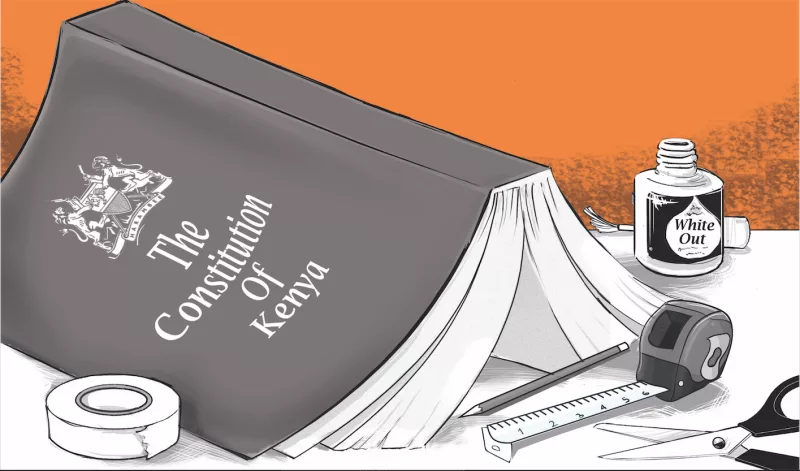
The constitution itself provides the moral foundation for preserving it. Its preamble acknowledges and honours those who heroically struggled to bring freedom and justice to our land. The Mau Mau memorial monument gives physical meaning to that constitutional promise.
It also carries an extraordinary history of its own.
The monument emerged from a long campaign for justice by the MMWVA and their supporters, including KHRC and Leigh Day, a leading UK law firm. The legal case against the British government culminated in a 2013 settlement in which Britain acknowledged that Kenyans had suffered torture and other ill-treatment during colonial rule, issued a statement of regret and agreed to compensate 5,228 claimants and contribute towards the construction of a memorial monument.
The significance of that achievement cannot be reduced to the money involved. For decades, the victims had pursued justice against a former colonial power that many believed could never be held accountable for crimes committed generations earlier.
They proved otherwise.
The case became an important reference point for efforts to seek redress for historical and systemic abuses. It showed that victims do not lose their right to justice simply because governments would prefer the past to remain buried.
That is precisely why the memorial monument matters. It is a place of memory, but it is also a place of political education. It tells younger generations that freedom was neither given nor inevitable. It was fought for.
Kenya’s current generation of young people should be able to stand before the monument and understand that the freedoms they exercise today have a history. The right to assemble, speak, organise and challenge authority did not begin with them. They inherited a tradition of resistance that stretches from the anti-colonial struggle through the second and third liberation and into today’s struggles for constitutionalism, accountability and democratic space.
That history should not be simplified. The Mau Mau struggle was complex and difficult. But precisely because history is complicated, it must be preserved and taught, not erased by acts of vandalism that lead to raising a generation that is not physically connected to their history.
This is why responsibility for the monument can no longer rest primarily with civil society organisations and veterans’ groups. The Kenyan government, through the National Museums of Kenya or another appropriate national institution, should assume permanent responsibility for its preservation.
A dedicated maintenance fund should be established. Nairobi county should guarantee public access, security and the conditions necessary for the monument to remain a functioning site of remembrance.
The memorial should also become part of a wider national programme of historical education. Uhuru Park and Uhuru Gardens can provide spaces where Kenyans encounter the stories of freedom fighters, human rights defenders and other generations that expanded the country’s democratic space.
Britain’s responsibility for its colonial legacy remains a matter requiring continued engagement. Kenya, too, must confront the selective amnesia that has characterised parts of its post-Independence history. For the freedom fighters who fought for our freedoms, the least we can do is preserve the places that tell their story.
Executive Director, the Kenya Human Rights Commission