

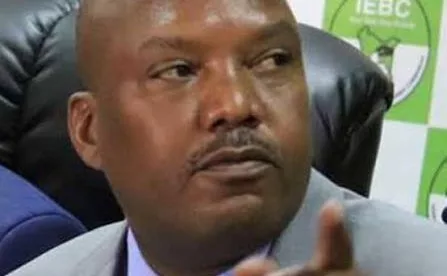
 Former IEBC commissioner Thomas Letangule /HANDOUT
Former IEBC commissioner Thomas Letangule speaks to the Star on the commission’s preparedness for next year's general election, the procurement of election technology, the risks posed by court challenges and whether the absence of a substantive chief executive officer could affect preparations.
With less than 12 months to the general election, the Public Procurement Regulatory Authority has raised concerns over IEBC’s tender for election technology and ordered the commission to restart the process. How could this affect its preparedness?
I would not say it is alarming at this stage because we still have some time. But I fear it may affect the commission if the process is not handled carefully.
When a tender is advertised, there is sufficient time for interested parties to submit their bids. After that, there is evaluation, which also takes time. The main challenge I foresee is what we call tender wars.
Tender wars can be very vicious. Whoever loses the tender may challenge the award. They can go to court and stop the process. The matter can move from the procurement tribunal to the High Court and, depending on the circumstances, even further.
That is what could affect the timelines. These issues should have started being addressed much earlier so that by now many of them would have been sorted out.
How serious is the threat posed by these tender wars to the commission’s preparations?
They are a serious concern. They will definitely arise because these are very lucrative contracts, particularly those involving election technology.
There are competing interests and some bidders will not simply accept losing a tender. They will challenge the process. If that happens, the commission can find itself unable to proceed with procurement while the dispute is being determined.
That is why procurement of critical election materials should be done early enough. Once court cases and other challenges emerge, the timelines become compressed.
The commission is sometimes helpless because it has to comply with court orders. All we can hope for is that where matters relating to the commission reach the courts, they are expedited so that election preparations are not unnecessarily delayed.
In your experience, what is the biggest challenge facing IEBC as it prepares for the next election?
The biggest challenge normally in preparation for elections is the procurement of critical materials and equipment. This is where competition for contracts comes in.
Election technology is expensive and involves very lucrative contracts. Competing interests can therefore hamper the commission through court cases, challenges to bidding processes and procurement disputes.
Once those issues emerge, they delay the commission’s timelines because the gadgets and other systems have to be procured, delivered, tested and deployed.
There have also been questions over whether IEBC should retain its existing election technology or acquire a new system. With the election approaching, would you advise the commission to introduce new technology?
Technology keeps evolving and improving. The whole purpose of advertising a competitive tender is probably to allow the commission to acquire better technology.
So, I would not say that introducing new technology at this stage is necessarily a problem. They still have time, provided they do not face prolonged tender wars and court challenges.
The important thing is to ensure that whatever technology is acquired is tested and fully operational well before the election.
The constitution requires the commission to use technology that is simple and verifiable. Therefore, IEBC has to grapple with that issue early enough — whether it will continue with what it already has or procure an alternative.
Whatever decision it makes must allow sufficient time for testing, training and simulations.
Opposition leaders had claimed the commission was planning to award the technology tender to a South Korean company. What is your view of such concerns?
I think the competitive tendering process is meant to allow the commission to identify the best technology available.
Technology keeps changing. It keeps improving. So perhaps the commission is looking for better technology and that is why it has gone through a competitive tender process.
The important thing is that the process must be transparent, competitive and compliant with the law.
If the commission does not face challenges from tender wars, I think it can still pull through.
One concern raised about new election technology is whether it will be compatible with IEBC’s existing data and systems. Could transferring data become a major problem?
I think those concerns can still be addressed.
The tender documents must have specifications that accommodate the existing data within the commission. The new system should be designed in a way that allows the current data to be transferred and integrated.
So, I don't think data transfer should necessarily become a major problem if the procurement specifications are properly designed and the successful bidder meets them.
These are technical matters that can be addressed as part of the implementation process.
What about training election officials to use a completely new system?
I think the commission still has sufficient time for that.
Training is important, so I keep emphasising the need to have the technology in place early.
Once the system is procured, it should be tested, election officials should be trained and stakeholders should be allowed to understand how it works.
The commission should also conduct simulations. You cannot wait until a few weeks before the election to discover that officials are unfamiliar with the system or that there are problems with data transmission.
Those preparations have to start early.
So, in your view, what should IEBC be prioritising at this particular stage?
Putting the critical systems and infrastructure in place should be the priority.
People sometimes focus on things like ballot papers, but those can be produced and delivered relatively late in the process. The systems that will run the election are more important at this stage.
The commission needs to get the technology, infrastructure and other critical election materials in place early enough. They then need to test them thoroughly.
That allows them to identify and correct problems before the election.
IEBC currently does not have a substantive chief executive officer. Could that affect preparations for the election?
I don't see that as a problem.
Remember, even an acting chief executive officer is a CEO. The commission can continue with its work as the recruitment process takes place.
There is still time, and the recruitment of a substantive CEO is not something that should take very long. It can happen within a month.
So, I don't see the absence of a substantive CEO as the biggest challenge facing the commission.
Why are you confident the commission can continue functioning without a substantive CEO?
The directorates within the commission are always top-notch. They are the engine of the commission.
You have the various directorates dealing with registration, operations and other aspects of election management. Those are the people who have the institutional knowledge and experience of running elections.
As long as those directorates are in place and functioning properly, preparations can continue.
The CEO is important, but the commission is not dependent on one individual to undertake all its work.
What lessons should IEBC draw from previous elections as it prepares for 2027?
One major lesson is that critical procurement should not be left until the last minute.
The commission needs to anticipate challenges and begin procurement early enough to allow room for disputes, testing and corrections.
Where procurement disputes arise, they should be resolved expeditiously because the commission has fixed constitutional timelines for conducting elections.
The other lesson is that technology should not simply be procured and installed. It has to be tested and understood by the people who will use it.
Election officials need training. Stakeholders need to be taken through the systems. There should be simulations to establish whether everything works as expected.
Given the political stakes surrounding the 2027 election, how important is it for IEBC to get these preparations right?
This is a high-stakes election.
That is why every aspect of preparation must be handled carefully. Procurement, technology, training and logistics all have to be addressed in good time.
The commission must also ensure its processes are transparent enough to give stakeholders confidence.
Finally, what would be your advice to IEBC as it enters the final phase of preparations?
I would advise the commission to move quickly but carefully.
The procurement of critical election infrastructure should be prioritised. They should also anticipate tender challenges and ensure their processes are strong enough to withstand scrutiny.
On technology, the commission should make a decision early enough, whether to retain the existing system or acquire a new one. Once that decision is made, there must be enough time for testing, training and simulations.
The commission still has time. If it avoids unnecessary delays and gets the critical systems in place early, I believe it can still pull through.
We wish the commission all the best as it continues preparing for the general election.







