

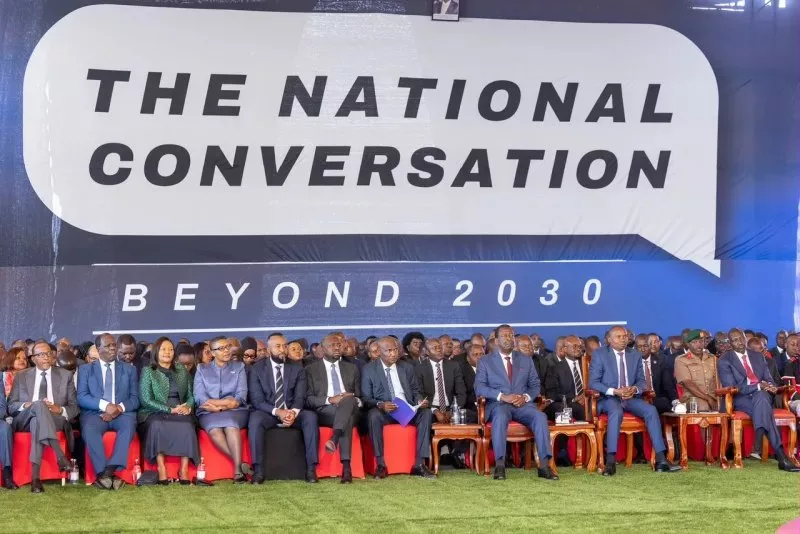
Kenya has opened nominations for a Multi-Stakeholder Steering Committee to guide public conversations on the country’s long-term development direction beyond Vision 2030.
The Vision 2030 Delivery Secretariat (VDS) said the committee will lead and guide public conversations from the ward to the national level.
It will also help ensure Kenya’s next long-term development vision reflects Kenyans' collective aspirations, as well as the values and principles of the Constitution.
The call comes as Kenya Vision 2030 nears the end of its implementation, with the country beginning a national conversation on its long-term development future.
In January 2026, President William Ruto tasked a Technical Working Group, chaired by Kisumu Governor Peter Anyang’ Nyong’o, to prepare strategic guidelines to stimulate thinking and conversations on Kenya’s long-term development future.
The report was published on July 21, 2026, before the National Conversation on Beyond Vision 2030 was launched on August 12, 2026.
According to the VDS, subsequent stakeholder engagements agreed that the next phase should involve broad and inclusive public conversations to build national consensus on Kenya’s future development direction.
The engagements identified broad clusters of organisations to participate in the national conversation.
The VDS is inviting nominations and expressions of interest from organised stakeholder groups representing MSMEs and the private sector, employers and workers associations, professional associations, children and youth-serving organisations, student networks and women’s networks.
Other groups include persons with disabilities, civil society organisations, faith-based organisations, academia and research institutions, the diaspora, the digital and technology sector, media, farmers and cooperatives, and marginalised and minority communities and pastoralists.
Each cluster is expected to identify a convenor and nominate three volunteer representatives to the committee. The representatives must include at least one man, one woman and one youth.
The secretariat said the convenor should be an organisation of good standing and recognised credibility within the stakeholder sector or cluster. It should also demonstrate experience, institutional capacity and the ability to convene and engage a broad and diverse range of organisations and stakeholders.
Nominees should be persons of integrity and good standing within their sectors, with relevant experience and the willingness and availability to support conversations and consensus-building from the grassroots to the national level.
“Service will be voluntary,” the VDS said.
Organisations that do not fit within the listed clusters have also been invited to participate. They should submit a one-page memorandum explaining the stakeholders or groups they represent, why they should be included and how they could contribute to the conversation at the grassroots and national levels.
Submissions must be made through the Beyond Vision 2030 portal by October 7, 2026, at 5:00 PM EAT. They may also be sent virtually or delivered to the Vision 2030 Delivery Secretariat in Nairobi.
Submissions should be clearly marked “Expression of Interest: Beyond-2030 Steering Committee Nomination” and addressed to the Acting Director General, Vision 2030 Delivery Secretariat (VDS), 7th Floor, Britam Centre. They can also be emailed to [email protected].







