
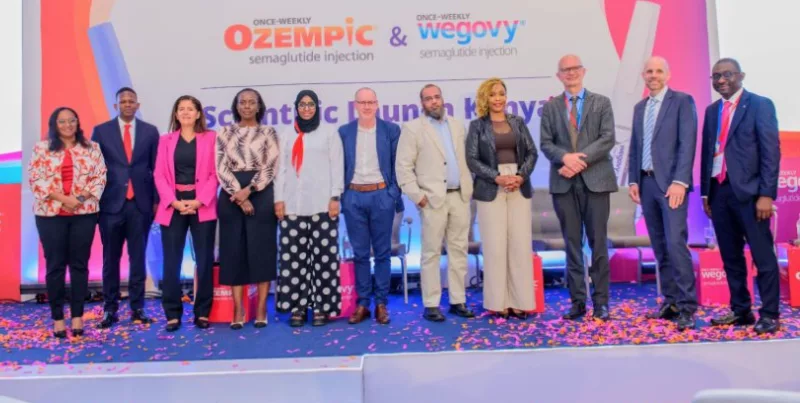
 Guests pose for a photo during the launch of Ozempic for the management of type 2 diabetes and Wegovy for weight management among people living with obesity /SCREENGRAB
Pharmaceutical company Novo Nordisk has introduced Ozempic and Wegovy in Kenya as healthcare experts call for a broader approach to the growing burden of Type 2 diabetes, obesity and related cardio-metabolic conditions.
Ozempic has been introduced for the management of type 2 diabetes, while Wegovy is intended for weight management among people living with obesity or overweight who have associated health conditions.
The medicines were launched during a scientific event in Nairobi that brought together healthcare professionals, policymakers, experts and other stakeholders to discuss the changing landscape of diabetes and obesity care.
The launch comes as Kenya and other African countries grapple with an increasing burden of non-communicable diseases, with experts warning that many people are living with diabetes without knowing they have the condition.
Consultant physician and endocrinologist Dr Roseline Ngugi said Africa had experienced a significant increase in diabetes prevalence over the past decade, making early screening and diagnosis increasingly important.
“Africa alone has seen a rise in the prevalence of diabetes of over 142 per cent in the last ten years,” Ngugi said.
She said the challenge went beyond the number of diagnosed patients, noting that a substantial proportion of people in Kenya could be living with diabetes without being aware of their condition.
According to Ngugi, the situation underscores the need for greater investment in screening and early diagnosis to enable patients to receive appropriate care before complications develop.
She also highlighted the close relationship between obesity and other chronic conditions, including hypertension, arguing that obesity should be understood as a metabolic condition rather than simply an issue of lifestyle choices.
“Obesity is not a lifestyle disease. It is a metabolic condition closely causing cardio-metabolic diseases,” she said.
Ngugi said obesity was increasingly affecting different population groups, including children, raising concerns about its long-term impact on the health system.
She called for a more integrated approach to managing diabetes, obesity and related cardiovascular and kidney conditions rather than treating each disease in isolation.
The launch also emphasised the need for responsible prescribing and proper patient assessment, with healthcare professionals being provided with information on eligibility, prescribing and appropriate use of the medicines.
Malika De Maillard, Head of Novo Nordisk Business Area Africa, said the scale of diabetes and obesity across the continent demonstrated the need for continued innovation and stronger healthcare responses.
“There is a great medical need for diabetic patients,” De Maillard said.
She highlighted the growing recognition of the relationship between obesity, diabetes and other cardio-metabolic conditions, including cardiovascular and kidney disease.
Danish Ambassador to Kenya Stephan Schønemann said the introduction of additional treatment options could expand choices available to people living with diabetes.
“We are giving people with diabetes a better option,” he said.
Schønemann also highlighted differences in health outcomes between Kenya and Denmark, including life expectancy, saying addressing underlying health challenges would require cooperation beyond the pharmaceutical sector.
The discussions emphasised the importance of partnerships involving governments, healthcare professionals, researchers, insurers, private-sector players, development partners and communities in tackling the rising burden of chronic diseases.







