For nearly two years after the 2022 election, Kenya had no fully functioning electoral commission. Commissioners who departed amid the bruising 2022 contest were never replaced, and the Independent Electoral and Boundaries Commission limped along without the quorum it needed even for routine constitutional duties.
By early 2025, that vacancy – not any single scandal – had become the biggest threat to a credible 2027 election. The European Union's Election Follow-up Mission said as much publicly, noting that the absence of commissioners had stalled voter education, continuous registration and the boundary delimitation the law requires.
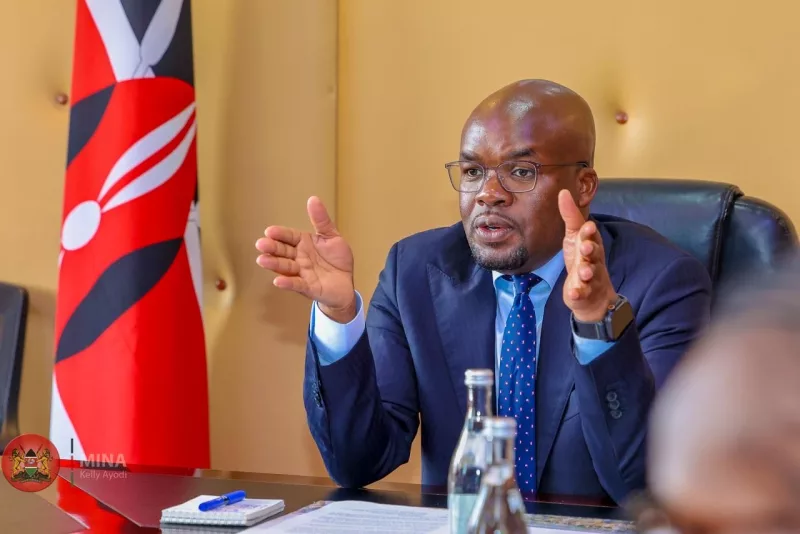
Parliament finally acted in mid-2025. In May, the National Assembly's Justice and Legal Affairs Committee approved a full slate of nominees. Erastus Ethekon was confirmed as chairperson, alongside six commissioners: Ann Nderitu, Moses Mukhwana, Karen Sorobit, Hassan Noor, Francis Aduol and Fahima Abdalla.
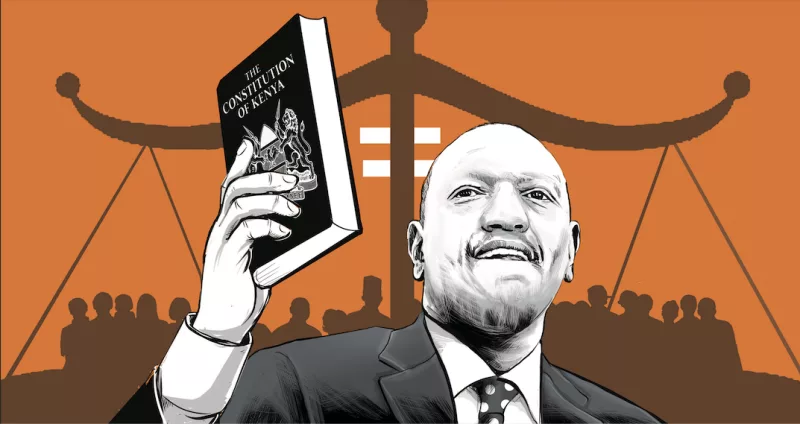
Even that process was not clean; a court nullified the first gazette notice, forcing President William Ruto to re-gazette the same names before they could be sworn in. At the ceremony, Chief Justice Martha Koome reminded the new commission that its work would shape not just an election outcome but the legitimacy of government itself.
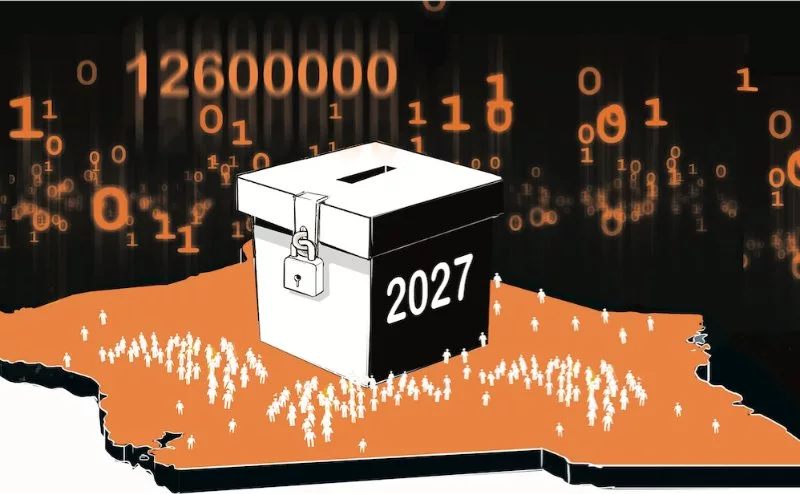
That history matters because Kenya now has roughly a year to do what the last commission could not: convince a sceptical public and an opposition that has already alleged State House engineered the whole process that the vote it delivers in August 2027 will be one both sides accept as real.
There is a case for cautious optimism. This commission's legal roots trace to the National Dialogue Committee talks that followed the disputed 2022 election—a rare moment when government and opposition agreed on paper how the next IEBC should be built. Its selection involved public vetting and parliamentary scrutiny, and when that process was challenged in court, the challenge was heard and ruled on rather than ignored.
Chairperson Ethekon has engaged civil society and the media directly rather than governing by press statement, and has committed the commission to registering roughly 6.3 million new voters, seven in 10 of them under 35 — a direct attempt to close the youth registration gap that has dogged the roll since 2022.
After November's by-elections, he argued that improved KIEMS technology and audit trails had made rigging structurally difficult. At his swearing-in, he told Kenyans plainly that trust "is not demanded — it is earned."
But Kenya's own history is the caution here. In 2013 and 2017, technical competence did not by itself settle either election in the public mind. What mattered was whether the losing side's leadership and grassroots base believed the process had been fair. The Ethekon commission's real test has not started yet; it begins with voter registration, delimitation and the first genuinely contested multi-candidate races it must referee before polling day.
Kenya is not alone in this test, and the company it keeps should worry it. Roughly a dozen significant African elections are packed into the 2026–2027 cycle, and the early results are not encouraging. Uganda's Yoweri Museveni claimed a seventh term in January with about 72 per cent of the vote, after a campaign run under an internet blackout and reports of security forces beating opposition supporters. His rival Bobi Wine rejected the result outright.
That contest was less a vote than a demonstration of how completely an incumbent can lock down a commission, security forces and the information space at once; proof that "peaceful" and "free and fair" are no longer the same claim in this region.
Other votes offer a better model. Benin's parliamentary and presidential elections this year were among West Africa's steadier transitions. But 2025 already gave us Tanzania, Guinea and Côte d'Ivoire, each producing outcomes that observers and opposition figures called compromised or pre-determined — a pattern, not a coincidence.
Nigeria votes in January 2027, Kenya in August, back-to-back: the continent's most populous democracy and one of its most closely watched within the same seven months. The IEBC can end up looking like Benin or Zambia, or it can end up looking like Uganda. A commission that spent two years without quorum and had its own appointment nullified by a court is not starting that comparison from strength.
The Kenya this commission must manage is also not the Kenya of 2022. Gen Z is now a standing political force, not a one-off protest movement — opposition figures marked the anniversary of the 2024 Finance Bill demonstrations alongside young Kenyans again this June, even as that bloc remains too fragmented to vote as one.
The ruling coalition has fractured: Rigathi Gachagua's impeachment cost Ruto support in Central Kenya and produced a new opposition front built on that grievance. And the opposition has lost its most durable figure — Raila Odinga struck a power-sharing arrangement with Ruto after the 2024 protests, then died, leaving a leadership vacuum in ODM and the wider Azimio coalition at the worst possible moment.
Ruto, for his part, is playing coalition arithmetic rather than chasing popularity, betting that co-opting regional powerbrokers matters more than soft approval ratings in Nairobi — a bet that a newly passed, revenue-hungry Finance Bill, 2026 could yet upend.
None of the commission's underlying problems has disappeared; they have simply compounded. It still must complete voter registration, resolve delimitation and clear a backlog of by-elections, all while depending on Treasury allocations rather than guaranteed funding — a dependency that looks more dangerous, not less, in a year the government is trying to raise Sh100 billion in new taxes.
The technology question that dogged 2013 and 2017 has not gone away either; it has simply been layered under a deeper question of legitimacy, at precisely the moment the Chief Justice herself describes public trust in institutions as being in a period of national introspection.
Free, fair and credible elections are not an optional extra for a democracy — they are the whole point. The IEBC now sworn in has a bipartisan legal origin, functioning judicial oversight of its own formation and a chairperson willing to make specific, checkable promises instead of vague reassurance. Those are real assets.
But assets are not trust, and in Kenya trust is rebuilt at the ballot box or not at all. Given this commission's own recent history, the opposition's live grievances, and the company it keeps on Africa's 2026–2027 electoral calendar, the bar it must clear is considerably higher than it looked a decade ago.