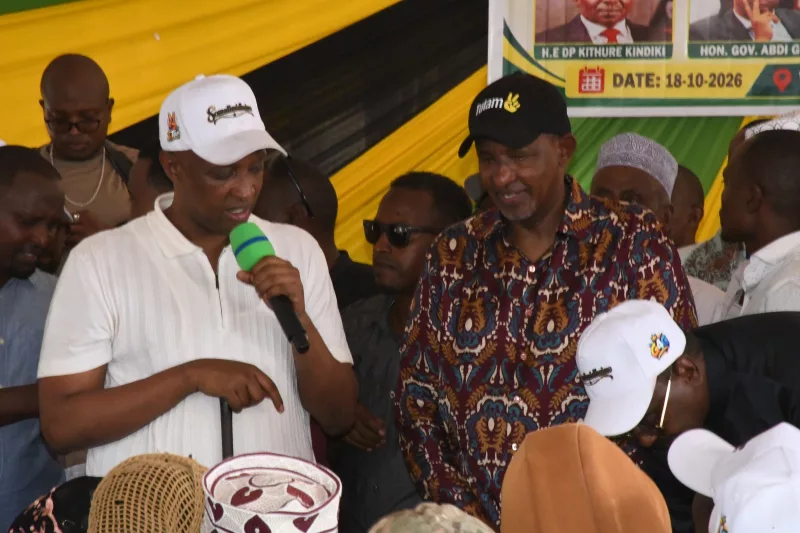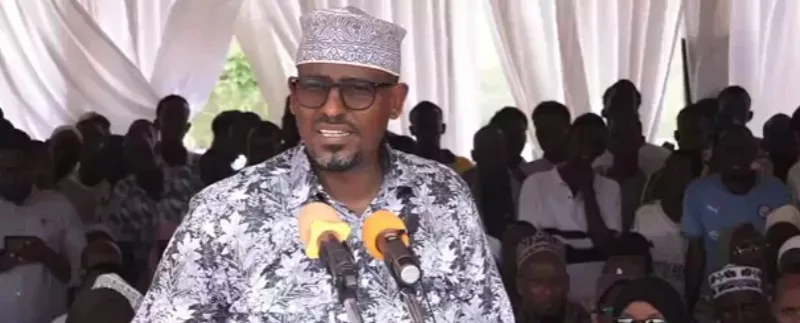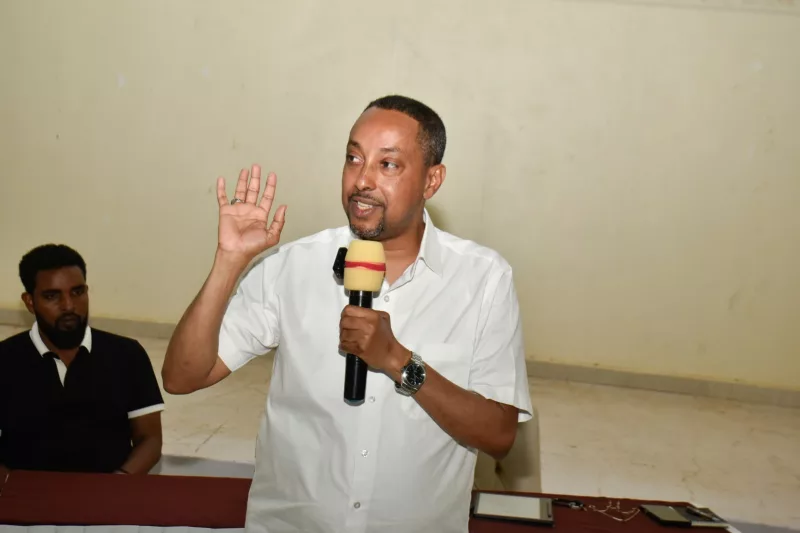
Aden Bille, Garissa County PWD chair, speaking to the press. /STEPHEN ASTARIKO
Persons with disabilities in Garissa have urged the national and county governments to scale up support and empowerment programmes targeting them.
Garissa county PWD chairperson Aden Bille said many continue to face severe economic hardships and vulnerability.
He said PWDs require greater assistance to lead dignified and independent lives, as many are unable to engage in economic activities at the same level as their able-bodied counterparts due to additional disability-related challenges.
He said the government and other stakeholders should increase financial assistance, food support, assistive devices and economic empowerment programmes targeting PWDs, particularly in Garissa and the wider Northeastern region.
“Unlike our able-bodied counterparts, PWDs cannot do as much on their own. Many of us require support and assistance to survive and to participate meaningfully in society,” the chairman said in Garissa town.
"We therefore need the government to pay greater attention to our needs.”
He said the situation had deteriorated over the past year, saying PWDs in Garissa who previously benefited from various forms of assistance—including food supplies distributed among members—had increasingly been left without adequate support.
According to Bille, the reduction in assistance has left many PWDs struggling to meet their basic needs, with some facing extreme poverty and vulnerability.
“Previously, we used to receive our fair share of assistance, including foodstuffs, which we would bring together and distribute among ourselves," he said.
"But in the last one year, things have changed. We have not been getting these supplies, and this has left many of our members vulnerable.”
Bille appealed to the government and development partners to restore and strengthen such interventions, stating that food assistance remains critical for PWDs who have limited income sources and often depend on relatives and well-wishers.
He also called for a stronger focus on economic empowerment, arguing that providing occasional relief assistance alone would not adequately address the challenges facing persons with disabilities.
“We need empowerment. Many of our members are poor and cannot start businesses or engage in meaningful economic activities without financial support," Bille said.
"We are asking the government to help us become economically independent rather than only assisting us when there is a crisis.”
Bille acknowledged the support provided through the National Fund for the Disabled of Kenya (NFDK), particularly in supplying assistive equipment, but said the programme needed expansion.
“Although we appreciate what the National Fund for the Disabled of Kenya has been doing, the equipment we receive after every two years is not enough. The demand is much higher than what is available, and many deserving people are still left out,” he said.
Bille urged the government to increase funding for assistive devices and shorten the waiting period for beneficiaries, noting that wheelchairs, walking aids, and other equipment are essential tools that enable PWDs to move around, work and participate in community life.
He also appealed for a tailored approach to supporting PWDs in the Northeastern, saying harsh socioeconomic and climatic conditions, coupled with poor roads, make mobility and access to essential services particularly difficult.
“Northeastern is a unique case. Our people face many challenges, including harsh climatic conditions and poor roads. For a person living with a disability, these challenges are even more severe,” Bille said.
He said long distances between settlements and essential services hinder access to hospitals, government offices, educational opportunities and markets.
Bille urged Garissa leaders to prioritise disability inclusion in development programmes and ensure PWDs are actively involved in decision-making processes.
He urged the government to strengthen the identification and registration of PWDs to ensure social protection programmes reach deserving beneficiaries.
“Persons with disabilities have abilities, skills, and potential. What we need is an opportunity and the support to utilise that potential. If the government empowers us, many of our members can become self-reliant and contribute to the development of their families and communities,” Bille said.
He affirmed the PWD community in Garissa remains ready to partner with government agencies and other stakeholders to develop practical solutions that improve livelihoods.
“We are not asking for special treatment; we are asking for fairness, inclusion and an opportunity to live with dignity. The government must recognise the unique challenges faced by PWDs in Northeastern and increase the support reaching our people,” he added.
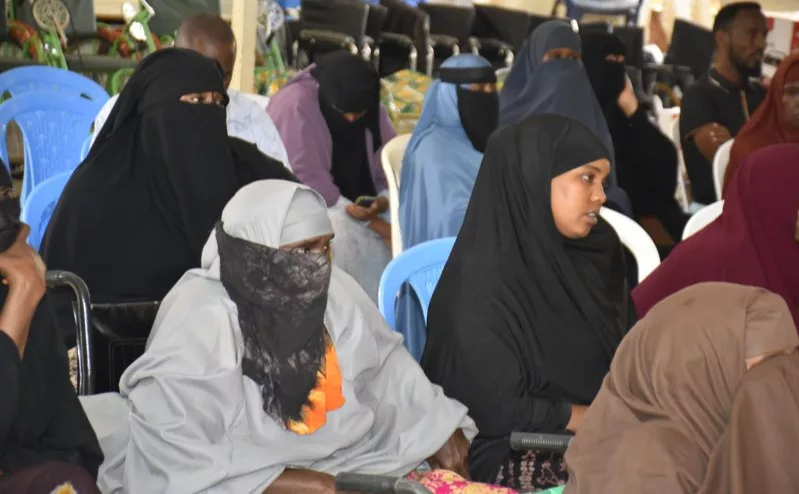
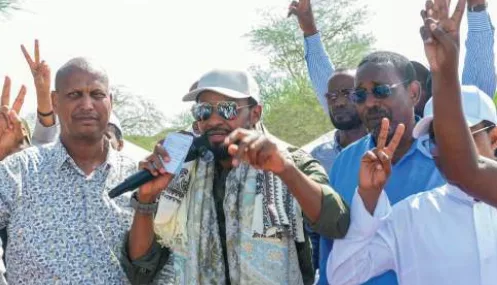
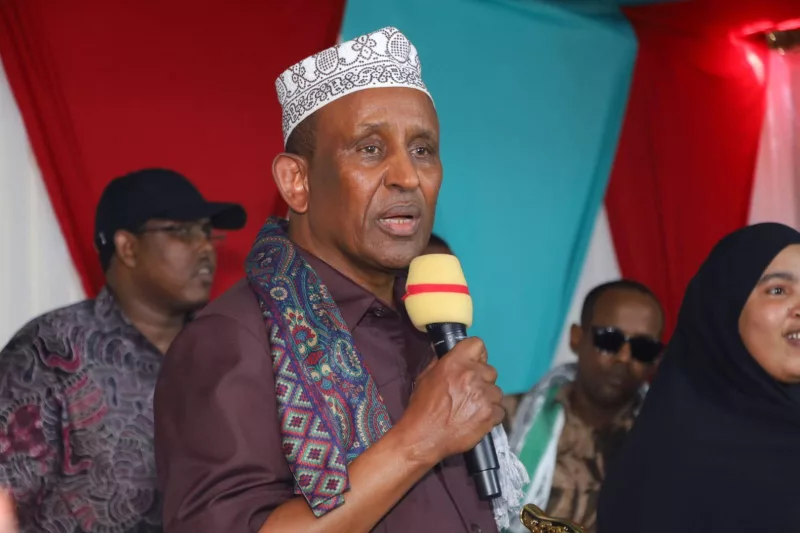
PWDs from Garissa at the meeting./STEPHEN ASTARIKO
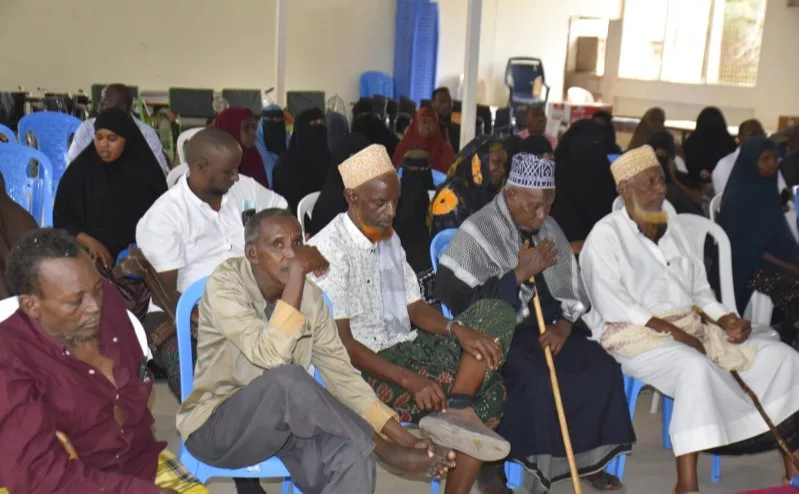
PWDs from Garissa at the meeting./STEPHEN ASTARIKO