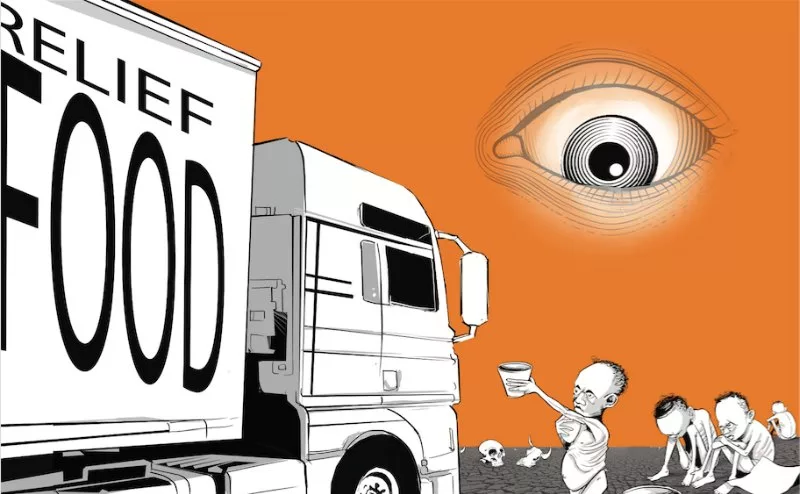
On December 23, 2023, a field hospital packed in Nairobi was cleared for Gaza. Customs officers who should have been on holiday came to work. The hospital travelled through Amman into a war the world could not enter. It opened, treating 200 patients a day, and in that structure, folded flat in a Nairobi warehouse days earlier, a child was born.
I have been thinking about that child since visiting the ICRC Logistics Support Centre on Enterprise Road. I went as a matter of diplomatic courtesy and came away with an argument our region has been slow to state plainly.
Humanitarian action is not what happens when foreign policy fails. It is foreign policy, and our 50-year partnership with the International Committee of the Red Cross is among the more consequential instruments of statecraft Kenya holds.
Nairobi is one of three global logistics hubs from which the ICRC supplies its worldwide operations. Not one of three African hubs; one of three. It manages some 28,000 square metres of warehousing and last year dispatched 30 million Swiss francs (Sh4.8 billion) of relief goods to more than 30 countries, from Sudan and Somalia to Haiti, Ukraine and Gaza. Kenyan specialists deployed from here logged over 5,000 mission days abroad in four years.
That standing is a policy achievement, not an accident of latitude: our time zone, our links to conflict zones, and institutions that can be relied on when the clock matters. Somebody in Gaza is alive because a Kenyan public servant worked on a holiday.
Foreign ministries everywhere treat humanitarian affairs as a soft annex to real diplomacy. That is wrong in three respects. The first is geography and consequence. Africa accounts for 51 of some 130 active armed conflicts.
None of it stays where it starts; it arrives as displacement and as pressure on our northern counties. Kenya hosts more than 830,000 refugees. Regional humanitarian capacity is not generosity performed on behalf of others; it is a direct instrument of our own stability.
The second is standing. The Geneva Conventions confer on the ICRC a mandate to act as a neutral intermediary: facilitating releases in Goma, keeping channels open between parties who otherwise speak to no one. That is not relief work. It is pre-diplomacy, and a state that hosts it gains proximity to the architecture through which conflicts are de-escalated.
The third is what the partnership has become. The ICRC work with the Kenya Defence Forces and the International Peace Support Training Centre has strengthened troops deploying to AUSSOM, and its work with the Kenya Prisons Service shaped our first penitentiary infrastructure strategy.
Kenya's co-chairing of the prevention workstream, under the ICRC-led global initiative on international humanitarian law, follows from that record, and we will discharge it visibly in Amman on December 7. Helping write and defend the rules of war is foreign policy at the highest register available to a middle power.
That system is under strain. The ICRC has appealed for 1.8 billion Swiss francs this year while implementing a 17 per cent budget reduction for 2026, as donor resources are redirected to defence. Rations for refugees hosted in Kenya have fallen to 28 per cent of the minimum requirement, and missing-persons caseloads have risen 70 per cent in a single year, to some 284,000 families who do not know whether to grieve or to wait.
Demand is rising as supply falls, so the model must change, and Kenya is one of the few places where the alternative already works. It means co-owning the infrastructure rather than hosting a presence, treating warehousing, cold chain and customs as national assets planned rather than improvised in crisis.
It means moving from encampment to inclusion, the ambition of our Shirika Plan, which requires predictable, flexible, multi-year financing. And it means treating humanitarian action as law rather than relief: the Geneva Conventions are binding rules, and when they erode no quantity of blankets compensates.
The ICRC speaks to all parties, including armed groups governments regard as illegitimate, because an intermediary that speaks to one side only is not an intermediary.
Kenya encourages that engagement in the confident belief that it advances confidence-building and durable peace. Neutrality is not indifference; it is the operating condition of access, and access is the only thing that saves anyone.
Every link in the chain that carried that hospital to Gaza was a policy choice: a warehouse, a customs desk staffed on a holiday, and a foreign policy that decided, over five decades, that this work belonged here. Each link can be strengthened or allowed to corrode.
Our partnership with the ICRC shows that an African state can be a producer of humanitarian action rather than a venue for it, an exporter of expertise rather than a recipient, and a co-author of the rules of war rather than a bystander to them.
Principal Secretary in the State Department for Foreign Affairs