
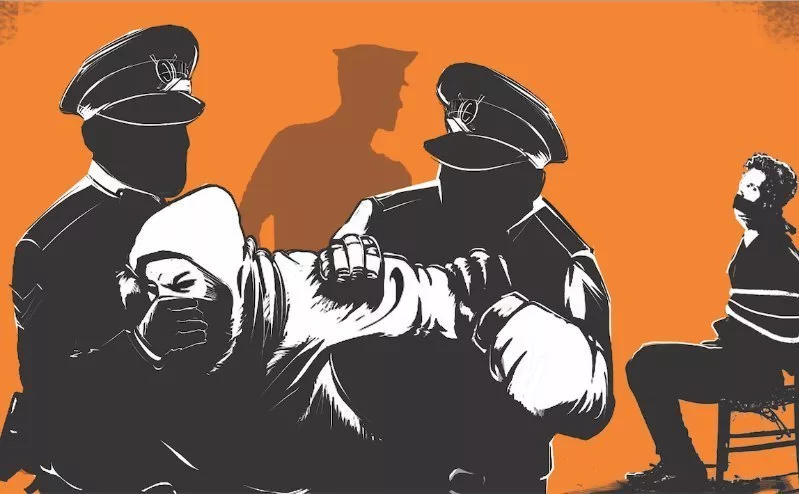
 Enforced disappearances /FILE
In Mathare, Nairobi, three men vanished in broad
daylight. Masked assailants with guns bundled them into unmarked vehicles and
drove away.
When the crowd tried to intervene, they shot in the air. Nobody has heard from the three since.
There
has been no news, no arrests and no answers.
Edward
Mbanya, Civil Liberties Manager at Amnesty International, described the shift
in the abduction crisis.
"When the members of the public tried to come near, they shot in the air," he said. "We still haven't heard from these people."
The targets have broadened from protest organisers and political leaders to include journalists, human rights defenders and ordinary citizens.
"The patterns we identified: all the people who were being abducted initially were protest organisers or leaders of the protests," Mbanya added. "Those were the ones who were being initially targeted."
The police maintain they do not know who is behind the abductions.
"They have responded that they say they do not know who these people are. They're saying it's not policemen," Mbanya said.
Yet the modus operandi—the vehicles, the masks, the coordination—tells a different story.
Between 2023 and 2026, the Missing Voices Coalition documented 86 cases of enforced disappearance. While abductions can be carried out by individuals or groups, enforced disappearances are described as those conducted by state actors.
The Kenya National Commission on Human Rights says that dozens of people linked to previous abductions and disappearances remain unaccounted for.
Bob Njagi was ‘hidden’ for one month following his abduction before public pressure and court cases secured his release.
His story offers a precedent for the families of the 18 people still listed as missing by the government.
Interior Cabinet Secretary Kipchumba Murkomen told senators that 24 people had been found alive and eight found dead.
For the families of the remaining 18, every day is a waiting game with no end in sight.
The
High Court has taken notice. On July 14, the court ordered Inspector General of
Police Douglas Kanja and Director of Criminal Investigations Mohamed Amin to
appear in person to explain the whereabouts of three men allegedly abducted in
Mathare.
On August 21, the court allowed three investigative agencies to carry out parallel and independent investigations into the disappearance of the Mathare men allegedly abducted by police two months earlier.
Justice Lawrence Mugambi affirmed that only the Independent Policing Oversight Authority has the mandate to investigate police conduct.
Ipoa launched investigations into incidents arising from the second anniversary of the Gen Z protests held on June 25.
Yet accountability remains elusive. Families lament being left in the dark, some saying once the cases got to court, Ipoa could no longer investigate. Communication went silent.
As the 2027 general election approaches, legal experts are wary that the trend is likely to continue, with dire consequences – public confidence in security agencies has dropped significantly.
A
Tifa national survey conducted between May 2 and 11, with a sample of 2,013
respondents across all 47 counties, found that only eight per cent of Kenyans
express high trust in the police.
The police recorded a net trust score of negative 40 per cent—a steep drop from the 43 per cent trust rating recorded before the 2022 election.
Speaking at a forum bringing media and human rights actors together, Cyprian Nyamwamu, a governance researcher who has tracked institutional trust for nearly two decades, warned that while there are some bad apples, the police are being positioned as scapegoats.
Nyamwamusaid that when security plans succeed, all institutions take credit; when they fail, "the National Police Service is thrown under the bus".
"This mistrust in the police... is because political players want to use the police for political objectives," he said. "That is the real problem that the police suffer in our country."
He drew a stark contrast with established democracies.
"If you go to democracies like Germany, on election day, people are at work," he said.
"The levels of trust are 100 per cent. Nobody doubts you can't steal, because the consequences of rigging an election are so dire, nobody tries it."
Kenya, he insisted, is not yet a democracy.
"We got a good constitution, a very beautiful baby, and we gave it to child traffickers. That's the problem we have."
Nyamwamu highlighted the weight of dependency in the country.
"One employed person carries a minimum of 21 dependants on average."
These demographics, the governance researcher said, explain why public mobilisations can occur often and on any day of the week, unlike in the past.
Security agencies have identified 34 out of 47 counties as vulnerable zones heading into the 2027 general election.
The NPS is mapping areas with moderate, high and very high concentrations of political goons ahead of the polls.
Five main threats have been identified: youth-led protests mobilised through digital platforms; economic grievances; digital misinformation; institutional mistrust of the police; and the proliferation of plain-clothed officers that makes attribution of violence difficult.
Mbanya pointed out the realities many citizens are faced with.
"Ideally you are allowed to resist anybody who does not identify themselves as a police officer," he said. "The question is, how many Kenyans have the power?"
In Mathare, citizens tried to defend their neighbours and were met with gunfire.
Those contradictions remain lived realities for families waiting for answers, for neighbours deciding whether to intervene or hide and for citizens facing an environment where accountability remains uncertain.
Instant analysis
With high court interventions yielding little accountability, desperate families wait endlessly for answers while mounting demographic pressures and security threats loom over the nation's democratic future.







