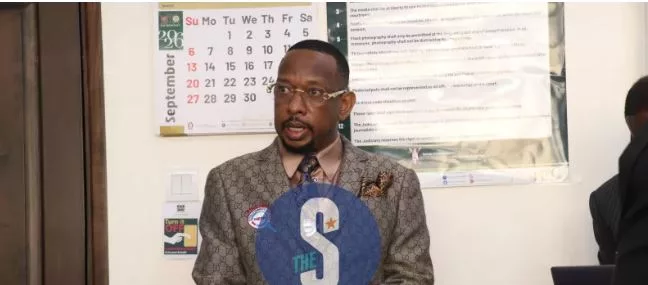
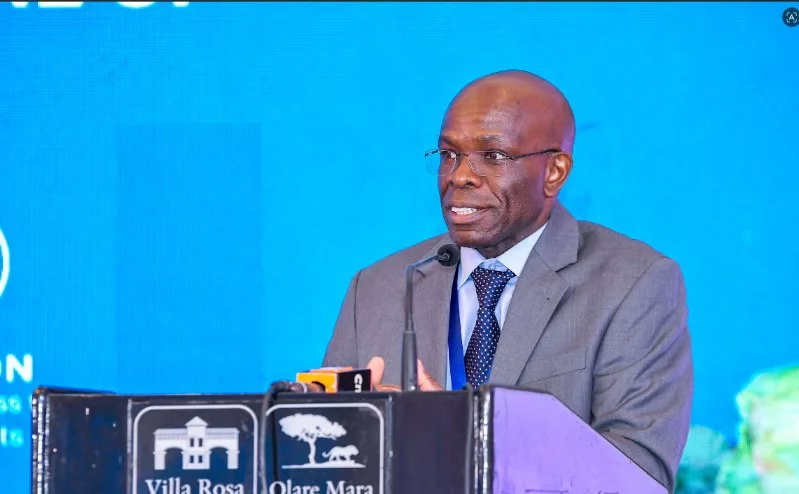
 Sebastian Oggema, Acting Country Director, TechnoServe.
Kenya loses millions of tonnes of food every year, even as millions of people struggle to afford enough nutritious food, experts have warned, calling for better storage, stronger markets, and new ways to get surplus produce to consumers.
About 40 per cent of food produced in Kenya, or nearly nine million tonnes, is lost or wasted each year at a cost estimated at Sh72 billion, according to a 2025 World Resources Institute Africa report.
The losses include fresh fruits, vegetables, maize, potatoes and fish, with fresh fruits among the worst affected. Mango losses, for example, can reach 56 per cent along the value chain.
The problem was highlighted on Tuesday in Nairobi as TechnoServe brought together researchers, government officials, donors and private-sector players to discuss lessons from its three-year NutriSave programme.
The programme, funded by the Gates Foundation and the UK’s Foreign, Commonwealth and Development Office, has been working to reduce food loss while improving access to affordable fruits and vegetables for low-income households.
“Informal food vendors were central to achieving NutriSave’s dual objectives: reducing food loss and waste while improving access to nutritious food for low-income consumers. We need to invest more in their agency if we are to achieve meaningful food system transformation in Kenya,” said Sebastian Oggema, Acting Country Director at TechnoServe.
New research by NutriSave and the International Food Policy Research Institute tracked tomatoes, mangoes and dark leafy vegetables through Nairobi's wholesale markets to establish where food is being lost and which traders could help reduce the losses.
The findings challenge the common belief that transport is the main cause of losses.
Instead, researchers found that losses were more often linked to storage during market hours or overnight. They also found that larger vendors were more likely to have unsold produce at the end of the day because they handle bigger volumes.
This means that better matching of supply and demand could save large amounts of food.
TechnoServe said surplus produce could also be connected to businesses that can process it, while cold storage could be expanded where the investment makes commercial sense.
“Reducing food loss and waste is one of the clearest indicators that a food system is truly regenerative,” said Richard Pluke, Director of Regenerative Agriculture at TechnoServe.
Francis Murumbi, TechnoServe's horticulture and digital supply chain manager, said food loss should not only be viewed as an agricultural or economic problem.
He said it also affects nutrition because resources such as land, water, fertiliser, energy and labour are used to produce food that eventually does not reach consumers.
Murumbi said Kenya should therefore move from talking mainly about food security to also talking about “nutrition security”.
He said food that is currently being lost could help improve diets, particularly for children, if it can be preserved, processed and sold in forms that families can afford.
“We need to start talking about nutrition security,” Murumbi said, arguing that producing enough food is not enough if people cannot access healthy and nutritious diets.
He said the country should encourage the production and distribution of nutrient-dense foods while making them affordable, accessible, safe, attractive and trusted by consumers.
Murumbi also called for greater attention to the businesses in the middle of the supply chain that are often too small for large commercial firms but too big to be treated as small informal businesses.
He described these as a “missing middle” that needs better access to markets and quality products.
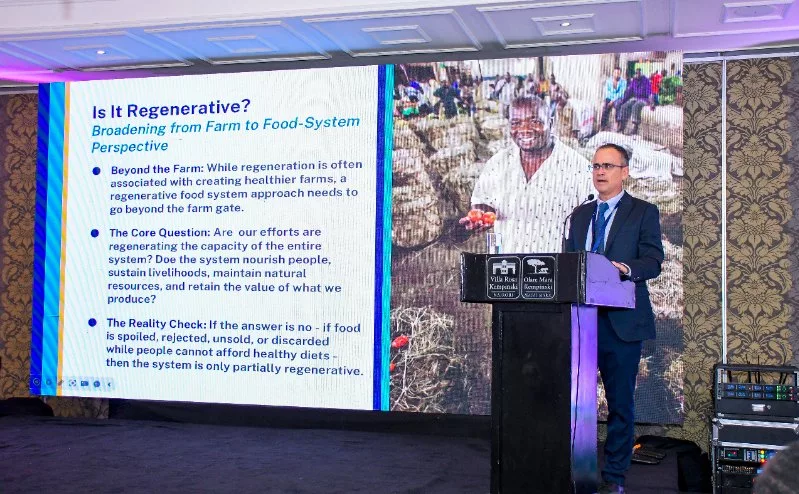 Richard Pluke, Director of
Regenerative Agriculture at TechnoServe.
The NutriSave programme has documented its experience in a new publication, Waste Less, Nourish More: A Practitioners’ Playbook for Reducing Food Loss and Waste while Increasing Access to Nutrition.
The playbook says Kenya faces food losses of between 30 and 40 per cent while only a small share of the population consumes recommended amounts of fruits and vegetables.
It says reducing food loss and improving nutrition should not be treated as separate problems. Food that is still safe to eat can be redirected into products that meet the needs and purchasing power of low-income consumers.
The playbook recommends that programmes first gather evidence on where losses happen, then test solutions in real markets before investing heavily in them.
It also stresses the importance of involving private companies early, testing whether solutions can make money and adapting them when evidence shows that an idea is not working.
NutriSave focused its work on tomatoes, mangoes and indigenous leafy vegetables. It tested more than 300 ideas before narrowing these down to promising solutions.
Among the approaches tested were small sachets of tomato paste, dried indigenous vegetables for porridge, processing surplus produce into ready-to-cook products and a digital platform to connect food suppliers with buyers.
The programme also worked with informal vendors and private companies to redirect surplus and cosmetically imperfect produce instead of allowing it to go to waste.
One digital market pilot mapped nearly 150 markets and redirected about 25 tonnes of fruits and vegetables through more than 70 traders, according to the playbook.
TechnoServe said the lessons are intended to help policymakers, businesses and development partners design food systems that waste less while improving nutrition.