
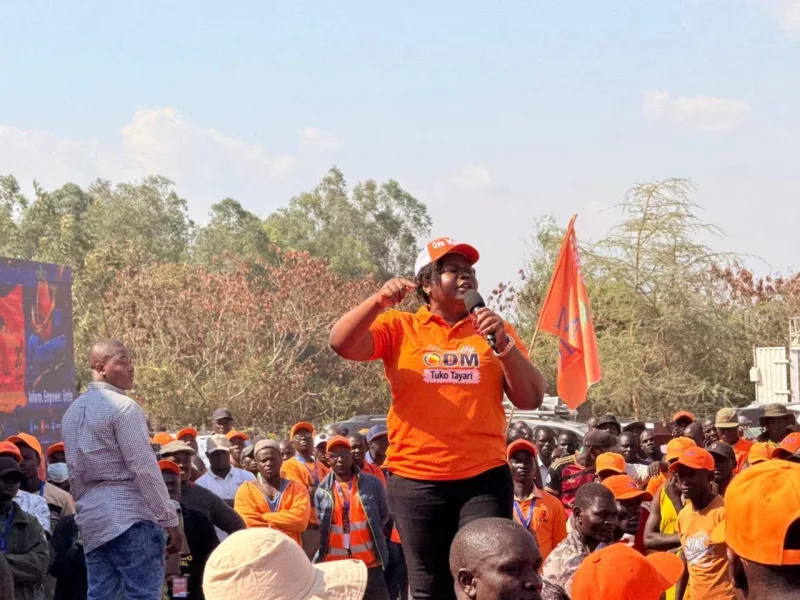
 Homa Bay Governor Gladys Wanga./HANDOUT
Homa Bay Governor Gladys Wanga has lodged a formal complaint with the Media Council of Kenya over what she described as defamatory and unverified reporting on violence witnessed in the county on August 16, 2026.
In the complaint dated September 7, Wanga accused a television station and a newspaper of airing and publishing allegations that she said were fabricated, unverified and prejudicial to her character and the office she holds.
Wanga said her objection was not to media scrutiny, which she said she welcomed, but to what she described as a failure to meet basic journalistic standards.
“My concern is not with legitimate media scrutiny: I welcome accountability and open public discourse,” she said.
The governor said the reports created what she termed a “false and deliberate impression” about the events in Homa Bay.
She singled out a front-page photograph showing an armed individual wielding a machete. According to her complaint, the man was identified as an employee of a different county, not Homa Bay.
Wanga argued that the presence of the officer from a different county at the scene demonstrated, in her view, that external agents were involved in the violence.
“The presence of a weapon-wielding officer from a neighbouring county at the scene of the conflict in Homa Bay clearly demonstrates that these acts were perpetrated by external agents,” she said.
She accused the media outlets of using the incident to implicate her administration, describing the coverage as “a grave distortion of the facts and a total failure of editorial oversight.”
Wanga also complained that her office had provided a response to the allegations but that the television station did not adequately or fairly include it in its broadcast.
She said this denied her what she described as her “right of reply”.
The governor said her position on the August 16 events had remained consistent.
She said she “unreservedly condemn violence and intimidation in all forms” and affirmed that every Kenyan had a constitutional right to visit Homa Bay and participate in peaceful assembly.
Wanga also called for the truth to be established through an impartial and evidence-based investigation.
In her complaint, she cited Sections 6 and 45 of the Media Council Act, 2013, arguing that the media had breached ethical standards on accuracy and fairness, the right of reply and accountability in reporting.
She asked the council to review the broadcast against the Code of Conduct for the Practice of Journalism.
She further requested an immediate and prominent retraction, an unconditional apology and appropriate disciplinary action against the media outlets.
“Public discourse on sensitive matters must be anchored in truth and evidence, not speculative character assassination,” Wanga said.







