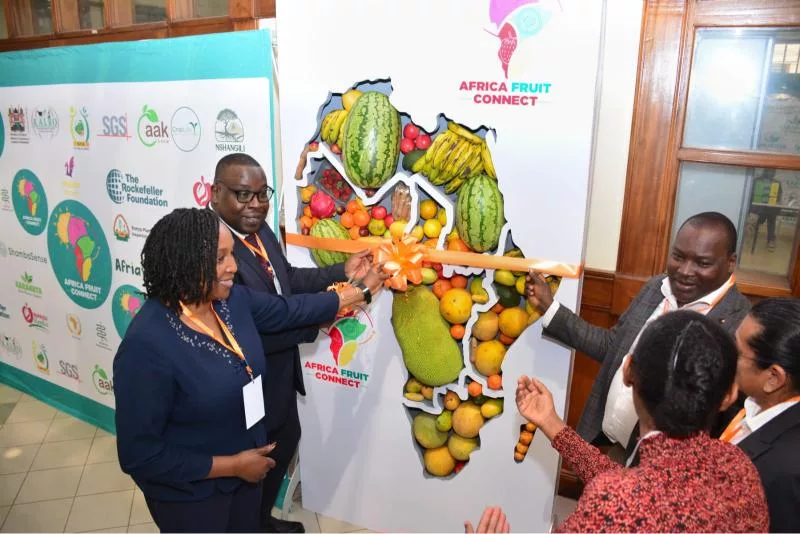
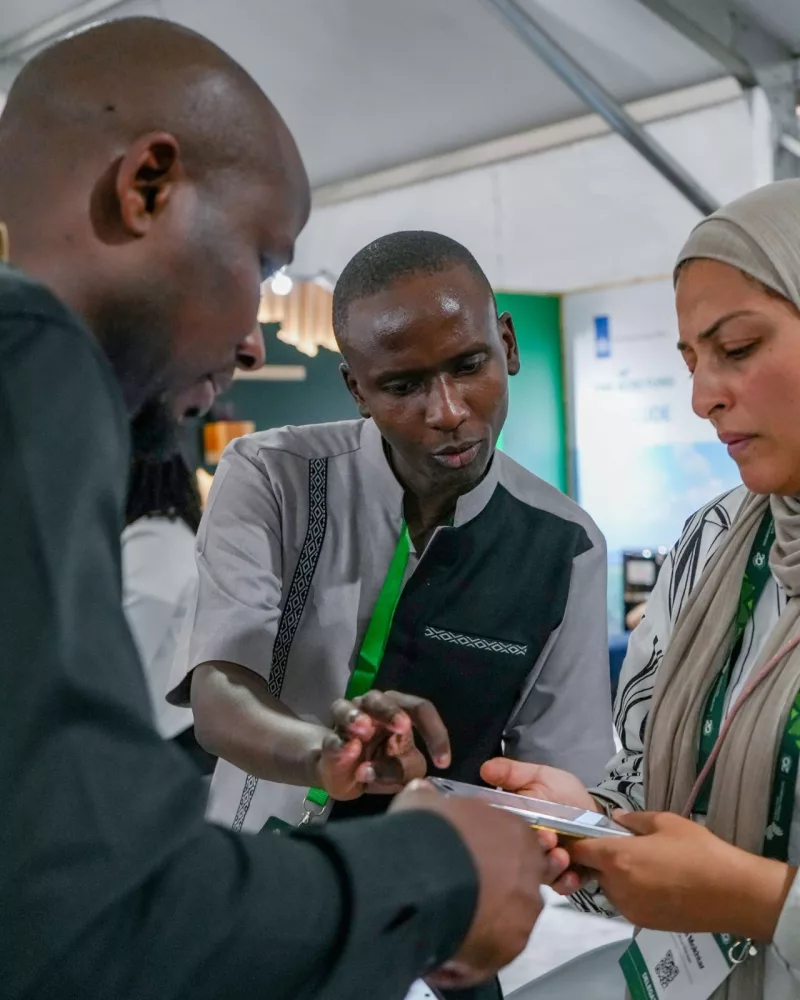
 Participants engaging in discussions at the AFSF Pavilion in Kigali./HANDOUT
Africa’s youth employment challenge in the food and agriculture sector is not primarily a lack of skills, ambition or innovation among young people, but structural barriers that prevent them from turning their capabilities into sustainable livelihoods, a new study has found.
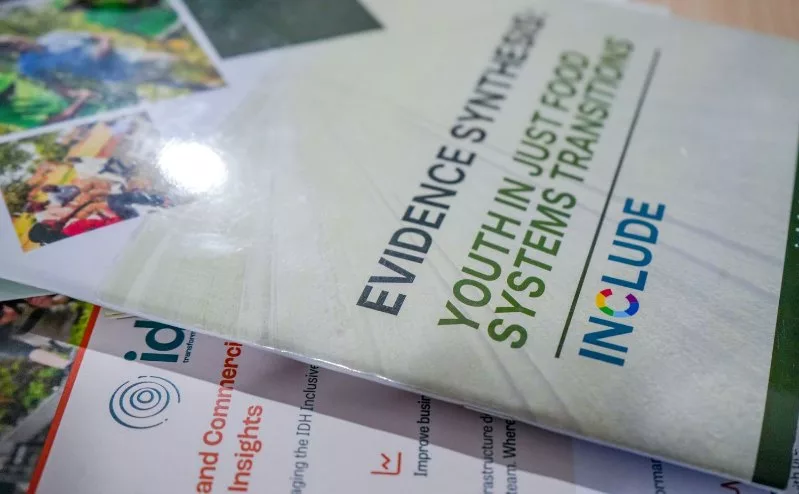
An evidence synthesis by the INCLUDE Knowledge Platform, drawing on research from Benin, Ghana, Rwanda, Somalia and South Africa, found that young people across the five countries have the ambition and capacity to participate in greener and more productive food systems.
However, many continue to struggle to access the resources needed to convert that potential into decent and sustainable employment.
The study identifies access to land, finance, markets, infrastructure, digital technology and decision-making spaces as some of the biggest constraints facing young people seeking opportunities in agrifood systems.
“The central constraint on youth employment in Africa's food systems is not a deficit of skill, ambition or innovation among young people – it is the persistence of political and economic structures that determine who can convert capability into opportunity,” the researchers said.
They argue that a just transition must therefore go beyond training young people for emerging jobs and instead address the political and economic structures that determine who gets access to those opportunities.
For years, youth employment initiatives across Africa have placed significant emphasis on skills development, entrepreneurship and digital training.
But the evidence from the five countries suggests that training alone cannot guarantee employment when young people lack land, affordable capital, reliable markets or infrastructure to establish and sustain enterprises.
Land remains one of the most significant barriers, particularly for young people seeking to enter agriculture and related businesses.
The study found that young people who already have access to assets such as land, capital, education, social networks and digital connectivity are better positioned to benefit from emerging opportunities.
Brian Kithinji, Research Consultant with the INCLUDE Platform, also said focus for African governments must now be on rapidly increasing access to capital for young farmers by offering zero interest loans, subsidising farm inputs such as fertilisers, and increasing access to extension services which would mean recruiting more extension officers to serve more farms in the rural areas.
"Regulatory reforms on licensing and certifications can help, and we have seen some countries like Kenya, Zambia, and Rwanda take steps to register farmers to create a national database of farmers. Also, we need to have a candid discussion about the land question. In all our studies we found out that access to land is a major barrier limiting youth in agrifood systems, and governments should look to reform the existing land tenure system, addressing the historical land injustices that have limited certain communities from owning land, and making buying land cheaper and more accessible for youth without capital.," Kithinji said.
Those without these advantages risk being excluded from the transition towards greener food systems.
Opportunities are emerging in food processing, storage, transport, logistics, digital agriculture, waste management and renewable energy, among other areas of the food value chain.
Some of these activities can provide better economic returns than primary production. However, young entrepreneurs still require financing, infrastructure, technical support and access to markets to participate effectively.
The researchers recommend greater investment in roads, processing facilities and cold-chain systems to reduce barriers to production and market access.
They also call for improved digital connectivity, which can help young people access information, financial services, customers and new technologies.
Young women face additional challenges within food systems.
Across the five countries, women remain heavily concentrated in lower-value and more precarious activities. Social norms, unpaid care responsibilities, restrictions on mobility and unequal access to productive resources limit their ability to enter higher-value segments of the food economy.
The study argues that policies targeting youth employment must therefore take gender-specific barriers into account rather than treating young people as a homogenous group.
It also calls for young people and women to have a meaningful role in shaping policies and programmes affecting their livelihoods.
The researchers found that youth, women and small-scale farmers are frequently consulted or registered as beneficiaries of food-system initiatives but have limited influence over decisions on how programmes are designed and implemented.
Given that young women face additional barriers in agrifood systems, some interventions have the strongest evidence of helping them move from low-value activities into better-paying and higher-value green jobs.
"Investing more in young women through offering grants and zero interest loans working with commercial banks and cooperatives. Also, we need to include more young women in policy discussions on agrifood systems, as many times their voices are left out," Kithinji said.
The findings suggest that young people should be treated not simply as beneficiaries but as active participants in transforming Africa’s food systems.
In Benin, for example, data cited by the study shows that 84 per cent of young people aspire to entrepreneurship. Once informed about emerging opportunities, an overwhelming majority also viewed green jobs as a viable avenue for employment.
The researchers say the challenge is therefore not convincing young Africans to participate in the future of agriculture and food systems.
Instead, governments and other stakeholders must create conditions that allow them to participate meaningfully.
The study recommends combining support for land, finance and markets with investments in infrastructure and digital access, while ensuring that youth and women have a stronger voice in policymaking.
“Africa does not simply need to make its young people ready for the future of agriculture. It needs to make the agrifood system ready for its young people,” the researchers said.
The study warns that without such reforms, new green jobs and economic opportunities could continue to flow disproportionately to those who already have access to land, capital, networks and technology.