There is no doubt that, as a country, we have had countless false starts and missed several one turn we got right, and that generations will be proud of, is devolution.
Given our overstated ambition to become a First World country within a few decades, devolution, in my view, will play an outsized role in catalysing local economies, shepherding a mindset shift from the grassroots and creating a microcosm of change that ordinary people can relate to.
The conversation about Kenya Vision 2063 must not just focus on bricks and mortar, but also aim for an even greater diffusion of power from the centre so that no single office can wield direct and indirect power that cannot be contained.
In the West, and even down in South Africa, power has been greatly dispersed away from central national administrations, with local and devolved units becoming engines of growth and anchors of advancement.
For example, in the United States, while the president occupies the White House and is widely regarded as the most powerful political figure, executive power is greatly dispersed across the 50 states, where elected governors preside.
At those levels, authority is further distributed across counties and various officials, including department heads, mayors, police chiefs and judges; the way they are selected varies from state to state.
The point is that power is deliberately dispersed across multiple levels of government rather than concentrated in Washington.
In the United Kingdom, devolution is anchored in statutes, transferring powers from the UK Parliament in Westminster to the devolved administrations in Scotland, Wales and Northern Ireland and to local and combined authorities across England.
Britain is still working to move power closer to the people so ordinary citizens have a greater say in issues affecting their lives.
The First World, which we hope to catch up with, understood long ago that a lot changes when power is moved from a few hands to many hands.
In our current context of devolution across 47 counties, while governors receive most of the attention, officials such as CECs are crucial. They should be empowered to assume greater protected authority and have the wiggle room to execute their mandates.
In my interactions with some of them, people such as Nairobi’s Ibrahim Nyangoya come across as steady-handed, thoughtful and vital. Nyangoya serves as the capital’s finance and economic affairsexecutive.
While mostly quiet and media-shy, Nyangoya has established a record of steady service that focuses on results without drama. His success, in my observation, lies in being agile in building and surrounding himself with competent teams that he routinely taps.
He started out in 2023 as the executive in charge of environment and green nairobi and later moved to the mobility and public works sector.
His fingerprints are visible in some of the changes we appreciate in the city right now. From well-done pavements and lighting to beautified streets and expanded road works, Nyangoya is an example of what empowered local officials can do in our journey to becoming a First World country.
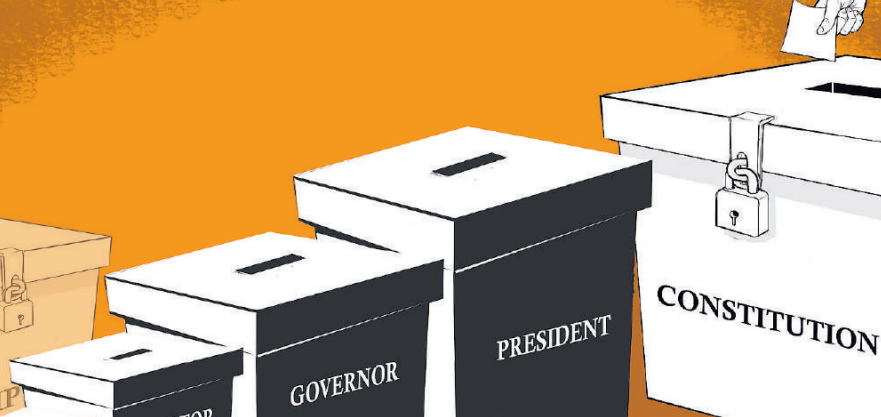
For the avoidance of doubt, the greater devolution that I advocate is not about giving more power into the hands of governors as we currently know them, but about creating further units beneath counties with a measure of protected constitutional authority to effectively execute their mandates.
For example, if our cities were to have elected mayors beneath governors, with their own budgets and a measure of defined power, they could create pockets of growth while making people feel closer not just to the benefits of government, but also to those they are meant to hold accountable.
No wonder the former Prime Minister Raila Odinga always advocated for multiple layers of devolution, not just as a catalyst for local growth but also as a checks-and-balances mechanism to check and contain an overly powerful president or a compliant Parliament.
Besides technological innovation, better road networks, modern markets, ports, housing, efficient education and health systems, a wider reach of devolved executive authority is an indispensable cog in the road to Singapore.
The answer to imperfect devolution should be better devolution: stronger institutions, clearer accountability, better-equipped county officials and more resources matched with greater responsibility.