 Wajir
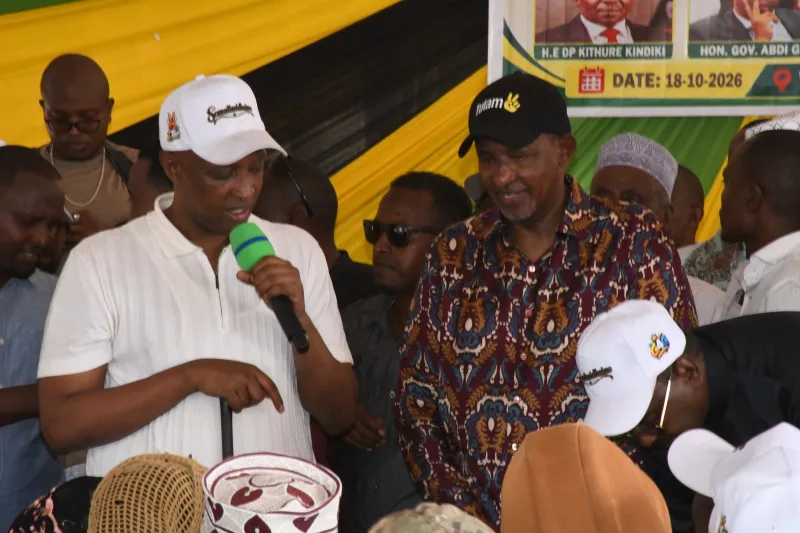
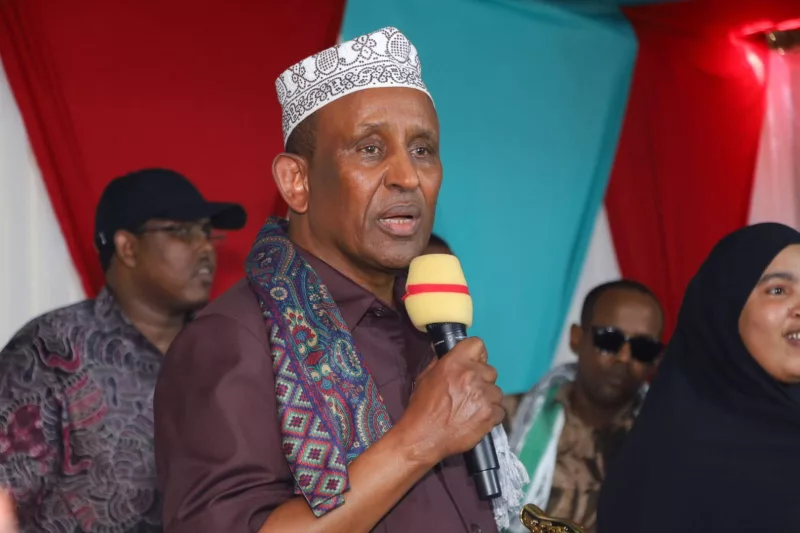
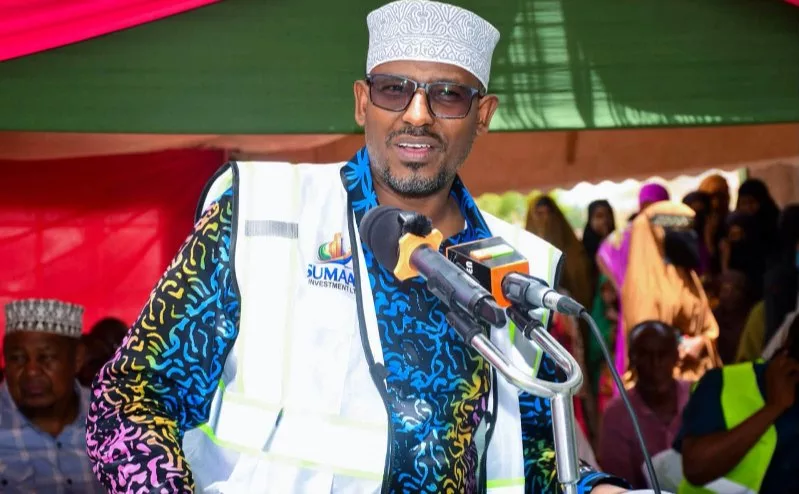
Governor Ahmed Abdullahi speaking during the launch of the Wajir Girls–Hadado
Yarey Road upgrading project to bitumen standard. /STEPHEN ASTARIKO
Wajir
Governor Ahmed Abdullahi speaking during the launch of the Wajir Girls–Hadado
Yarey Road upgrading project to bitumen standard. /STEPHEN ASTARIKOA political battle has erupted between Eldas MP Adan Keynan and Wajir Governor Ahmed Abdullahi over the implementation and impact of the Equalisation Fund.
The two have traded sharp words over whether billions of shillings allocated under the programme have made a meaningful difference in historically marginalised communities.
The dispute began last week when Keynan questioned the manner in which the fund was being implemented, saying it had failed to achieve its constitutional purpose.
Speaking on the floor of the National Assembly, the fifth-term legislator challenged anyone to point to a project undertaken in the county through the fund.
He argued that billions of shillings were being spent without adequately addressing the inequalities the programme was established to tackle.
“There is no iota, not even a single project, under the Equalisation Fund, and I want to be challenged on this. To that extent, I want to declare the Equalisation Fund dead—completely dead,” Keynan said.
Keynan, who chairs the Northern Kenya Parliamentary Group, also expressed concern the fund could become a source of political patronage rather than an instrument for transforming historically marginalised communities.
“Don’t waste your money. It has become a cash cow for governors. Let us call a spade a spade. We cannot spend billions of shillings simply to cover up for the ills of a government,” he said.
The legislator also questioned changes made to the programme, arguing they had departed from the letter and spirit of Article 204 of the constitution.
Keynan said the policy framework had undermined the original objective of the fund, particularly after the number of counties targeted for support was expanded from 14 to 34.
He further questioned changes to the criteria for determining beneficiaries, saying they were unfair to counties identified under the constitutional framework as requiring special intervention.
“Consider also that the number of counties meant to benefit from the fund was increased from 14 to 34. Consider that all this was done maliciously, arbitrarily and in a very offensive manner, both to those who are developing and to the provisions and spirit of the current constitution,” he said.
Abdullahi has since rejected the criticism, pointing to projects in Wajir that he said had been undertaken through the Equalisation Fund.
The governor said it was unnecessary to engage in a prolonged political argument over Keynan’s remarks because residents had shared images of projects they said had been implemented through the fund.
He spoke in Wajir town when he launched the Wajir Girls–Hadado Yarey Road upgrading project to bitumen standard.
“Recently you have seen someone speaking in Parliament claiming the Equalisation Fund has not done anything,” Abdullahi said, referring to Keynan.
“I don’t have to address that because almost immediately during the night people of Tarbaj shared images of what the Equalisation Fund has done; the South also shared, the North shared, all constituencies shared what the Equalisation Fund has done,” he said.
Abdullahi, who is also chairman of the Council of Governors, sought to clarify the role of county governments in implementing the fund, saying decisions on projects were not made solely by governors.
The governor said the process involves various government representatives, including the county commissioner and management of the National Government Constituencies Development Fund (NG-CDF), with the county government implementing decisions reached through the established process.
“When implementing the Equalisation Fund, the decision is made when there is a representative of the county commissioner and the management of CDF. The county only implements the decisions arrived at,” Abdullahi said.
The governor also rejected what he described as attempts to portray his administration as ineffective, saying Wajir residents were better placed to judge his performance.
“Whatever is being said is to show Kenyans that the Wajir governor is not working, but the people of Wajir know the governor is working,” he said.
Turning to Keynan’s long parliamentary career, Abdullahi delivered his sharpest response.
“I am telling those who are making noise in Parliament that if 30 years in Parliament did not satisfy you, the Equalisation Fund won’t satisfy you,” he said.
The Equalisation Fund is a constitutional mechanism established under Article 204 of the Constitution of Kenya, 2010, to address historical disparities in the provision of basic services in marginalised areas.
The Constitution requires the fund to receive an amount equivalent to 0.5 per cent of the national government’s shareable revenue.
The money is intended to finance programmes aimed at bringing basic services in marginalised areas to a level reasonably comparable to services enjoyed elsewhere in the country.
The services identified in the constitution include water, roads, health facilities and electricity.
The fund was conceived as a targeted intervention for communities and areas that had historically lagged in national development.
Its implementation has, however, been accompanied by political and administrative debates over how beneficiaries should be identified, projects selected and implemented, and which level of government should exercise control over the funds.
The original framework identified 14 marginalised counties as beneficiaries.
Subsequent policy changes expanded the scope of areas eligible for support, triggering debate among leaders from northern Kenya and other historically marginalised regions.
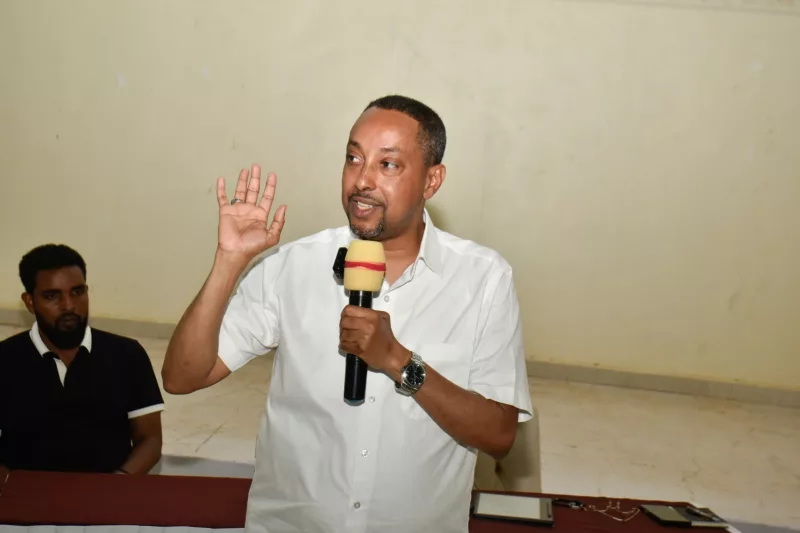
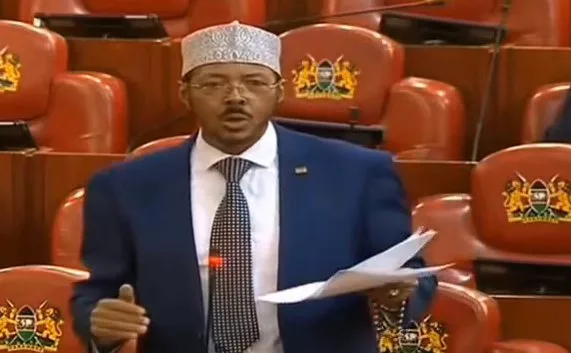 Eldas
MP Adan Keynan speaking in parliament last week./Screengrab.
Eldas
MP Adan Keynan speaking in parliament last week./Screengrab.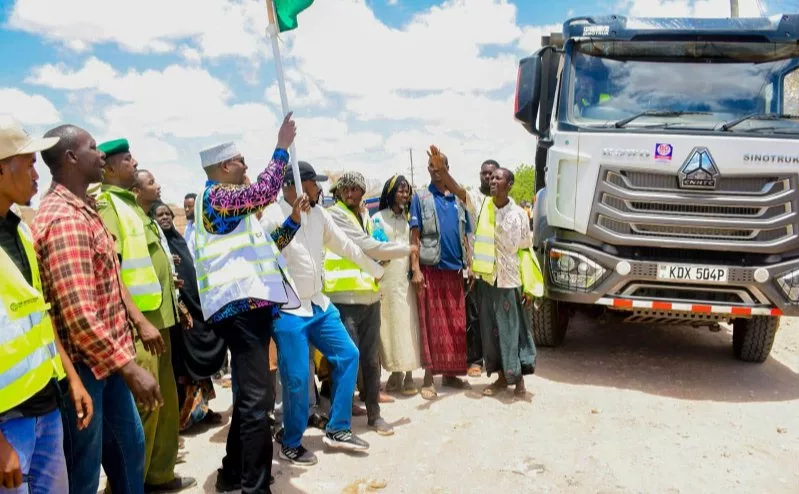 Wajir
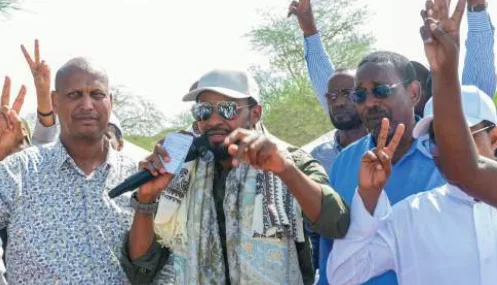
Governor Ahmed Abdullahi flagging off the launch of the Wajir Girls–Hadado
Yarey Road upgrading project to bitumen standard./STEPHEN ASTARIKO
Wajir
Governor Ahmed Abdullahi flagging off the launch of the Wajir Girls–Hadado
Yarey Road upgrading project to bitumen standard./STEPHEN ASTARIKO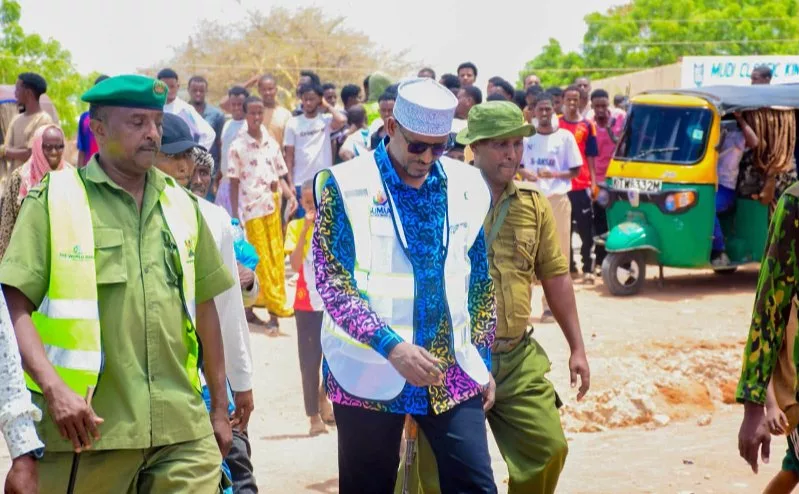 Wajir
Governor Ahmed Abdullahi during the launch of the Wajir Girls–Hadado Yarey Road
upgrading project to bitumen standard. /STEPHEN ASTARIKO
Wajir
Governor Ahmed Abdullahi during the launch of the Wajir Girls–Hadado Yarey Road
upgrading project to bitumen standard. /STEPHEN ASTARIKO