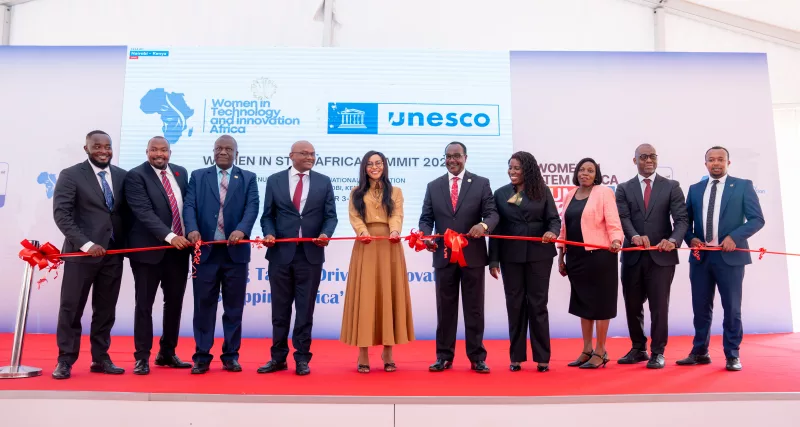
The Women in STEM Africa Summit 2026 has called for increased investment in women, education and innovation to unlock Africa’s potential and drive the continent’s economic transformation.
The two day summit, held on September 3 and 4 at the Kenyatta International Convention Centre (KICC) in Nairobi, brought together policymakers, educators, technology leaders, entrepreneurs, innovators, investors, researchers, students and development partners.
Organised by Women in Technology and Innovation Africa (WITIA) in partnership with UNESCO, the summit was held under the theme, “Discovering Talent. Driving Innovation. Shaping Africa’s Future.”
The discussions focused on leadership, policy, innovation, artificial intelligence, digital transformation, entrepreneurship, research and opportunities for women and girls in science, technology, engineering and mathematics.
The summit was presided over by Cabinet Secretary for Cooperatives and MSMEs Development Wycliffe Oparanya as Chief Guest. Education Cabinet Secretary Julius Migos Ogamba and Principal Secretary for Higher Education and Research Beatrice Muganda Inyangala also attended.
Oparanya said Africa must create pathways for women and young innovators to transform ideas into sustainable businesses.
“Africa cannot build a competitive economy by producing ideas without creating pathways for those ideas to become enterprises,” Oparanya said.
He called for increased access to skills, finance, markets and professional networks for women innovators and young entrepreneurs.
“When we invest in women in STEM, we are investing directly in Africa’s economic future,” he said.
Oparanya also stressed the need to link the growth of the continent’s micro, small and medium enterprises with technology, innovation and digital transformation, with women entrepreneurs playing a central role.
Ogamba said education would be critical in identifying and developing the next generation of STEM talent.
“The Africa we want to build will require a generation that is confident in science, technology, engineering and mathematics,” he said.
He said girls should be given equal opportunities to learn, experiment, innovate and lead.
“We must create education systems that do not only prepare young people to look for jobs, but also empower them to become creators of knowledge, technology and solutions,” Ogamba added.
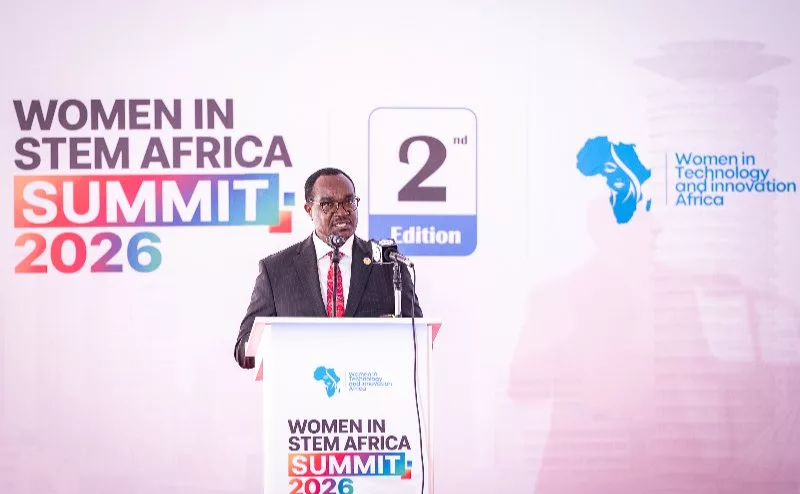
Inyangala called for stronger links between universities, research institutions, industry and the wider innovation ecosystem.
“Our universities must become more than places where knowledge is transferred. They must become engines of research, innovation, entrepreneurship and problem-solving,” she said.
She said women researchers, scientists, engineers and innovators needed stronger pathways to take ideas developed in laboratories and classrooms into the marketplace and communities.
A key session at the summit examined how Africa can build an inclusive innovation ecosystem. Participants discussed responsible artificial intelligence, data governance, digital transformation, technology policy and inclusion.
The summit also featured an Investor Pitch Arena, where startups and innovators presented their solutions to investors, industry leaders and potential partners.
WITIA awarded the winning startup Sh500,000 to support the growth and scaling of its innovation. The initiative was also aimed at connecting the founder with potential investors and venture capital partners.
WITIA Founder and Chair Eunice Pohlmann said the organisation wanted women to play a leading role in shaping Africa’s technology economy.
“We do not want to build an Africa where women are simply participants in the technology economy,” Pohlmann said.
“We want an Africa where women are designing the technologies, leading companies, conducting the research, shaping policy and building the solutions that will define our future.”
WITIA Fundraising and Partnerships Lead Gracie Wamwandu said sustained collaboration would be necessary to build an inclusive innovation ecosystem.
“The conversations at this Summit demonstrate that no single organisation can build Africa’s innovation ecosystem alone,” Wamwandu said.
The summit concluded with a call for deliberate investment in education, research, digital skills, mentorship, infrastructure, financing and inclusive innovation policies.
WITIA said it would continue using technical training, mentorship, internships, scholarships and Smart Libraries to bridge the gender and digital divide and expand opportunities for underserved communities.