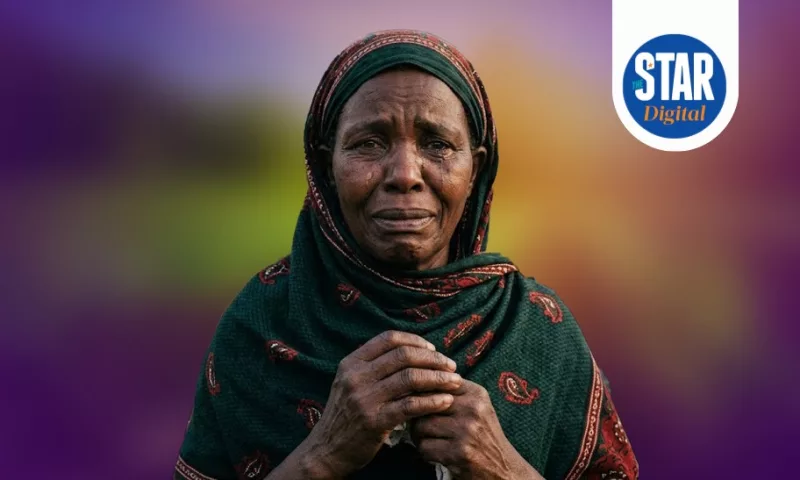
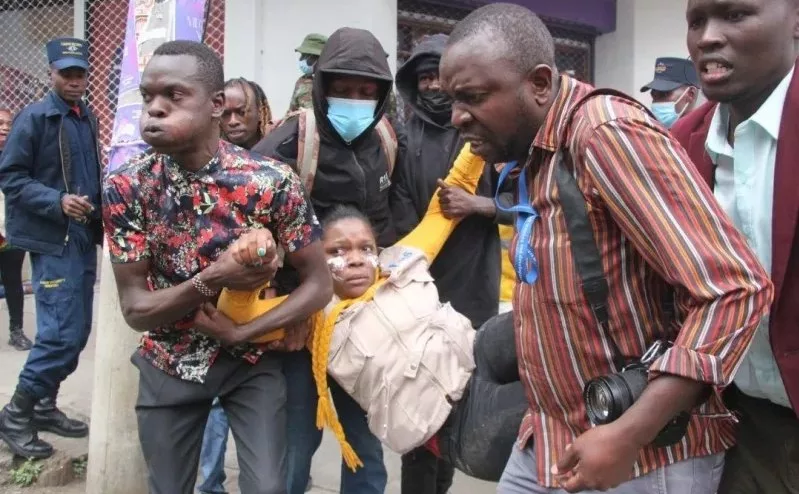
 K24 journalist Catherine Wanjeri is assisted by Good Samaritans after he was shot by police during Gen Z-led demos in June 2024 /FILE
Increasing attacks, threats and intimidation targeting journalists and media houses have raised fresh concerns over press freedom and the safety of media workers in Kenya.
The incidents have intensified scrutiny of the government’s relationship with the press as journalists face increasing hostility while carrying out their duty to question, investigate and report on matters of public interest that may displease and embarrass.
The abduction of Standard Group associate editor Alex Kiprotich on Tuesday night has added urgency to the concerns.
Kiprotich said he wasseized by armed, masked men who blocked his car as he drove along the Gilgil-Nakuru road while travelling towards Nakuru. He was later found safe near Masinga Dam.
Dashcam footage showed the attackers forcibly removing him from his vehicle. The incident occurred just over two months after Kiprotich said he escaped another abduction attempt.
The Media Owners Association has called for a swift, independent and transparent investigation into the circumstances surrounding the incident.
MOA chairperson Agnes Kalekye said the association was relieved that Kiprotich had been found safe but remained concerned about the circumstances of his disappearance.
“The Media Owners Association notes with concern the reported abduction of Standard Group Associate Editor, Alex Kiprotich, on the night of 1st September 2026. We are relieved that he has been found and is safe,” Kalekye said.
She stressed that journalists must be allowed to carry out their professional duties without fear of intimidation, threats or interference.
“No journalist should be abducted, threatened or interfered with for doing their work,” she said.
Kalekye called for authorities to establish what happened and hold accountable anyone found responsible.
The concerns facing Kenyan journalists and media houses are part of a wider East African pattern of threats and physical dangers facing journalists.
Across the region, journalists covering politics, elections, protests and government accountability have increasingly found themselves exposed to intimidation, assault, arrests and restrictions.
In Uganda, at least 18 journalists were reportedly assaulted by security personnel while covering the Kawempe North parliamentary by-election in Kampala on March 13 last year.
Journalists were beaten, arrested and their equipment was confiscated, according to reports by the International Institute for Democracy and Electoral Assistance and the International Federation of Journalists.
The journalists included reporters and cameramen from the Daily Monitor, NTV, NBS Television and other media outlets. Some were detained for several hours and released with visible injuries.
In Tanzania, the October last year election was accompanied by an internet shutdown and severe restrictions on information flow in a wider security crackdown. The post-election period was marked by deadly unrest, further raising concerns about the shrinking space for independent reporting.
The recent attacks on journalists and media houses are not unique to the current administration in Kenya.
Kenya's post-independence history has been marked by repeated confrontations between political power and the media. From the administrations of Jomo Kenyatta and Daniel Moi to Mwai Kibaki, Uhuru Kenyatta and William Ruto, journalists have at various times faced intimidation, arrests, physical attacks, and even death in attempts to influence editorial coverage.
The nature and intensity of those confrontations have differed from one administration to another, but the underlying tension between political power and an independent press persists.
Under Mzee Kenyatta, the government exerted considerable political influence over information and broadcasting. In 1964, the Kenya Broadcasting Corporation was nationalised and became the Voice of Kenya, strengthening the state's control over broadcasting.
The government's increasingly strained relationship with political opponents also contributed to a more restrictive information environment.
Historians generally distinguish this period from the more systematic repression that followed under Moi, but it established important precedents for executive influence over the media.
It was under Moi, however, that state pressure on critical journalism became clearly institutionalised.
The government established the Kenya Times as a ruling-party newspaper after Kanu acquired Hillary Ng'weno's Nairobi Times. Government offices were encouraged, and in some instances required, to buy copies.
At the same time, alternative publications faced increasing pressure. Journalists were detained, publications banned and editors faced intimidation and prosecution.
Between 1988 and 1990, nearly 20 publications were banned, while editors were jailed, fined or forced into exile.
The restrictions helped fuel the emergence of alternative forms of communication, including clandestine newsletters and publications that circulated outside the mainstream media. Churches, civil society organisations, theatre and music also became important spaces for political expression.
The return of multiparty politics in the early 1990s and the liberalisation of the economy subsequently opened up greater space for private media.
Political influence did not disappear.
One example was the People, a newspaper associated with then opposition leader Kenneth Matiba. It became popular for its aggressive coverage of the government and ruling-party politicians. Lawsuits, fines and political pressure, however, eventually weakened the publication.
The Kibaki administration provided another stark reminder of how quickly relations between government and the press could deteriorate.
On March 2, 2006, armed, masked police officers raided the Standard Group's offices, KTN studios and printing plant. Computers and other equipment were seized, KTN was taken off air and copies of the Standard were set ablaze.
The raid followed the publication of stories concerning an alleged secret meeting involving President Kibaki and opposition politician Kalonzo Musyoka.
The incident remains one of the most serious attacks on a major Kenyan media organisation since Independence.
Subsequent parliamentary investigations examined the role of the controversial Armenian nationals Artur Margaryan and Artur Sargasyan, commonly known as the Artur brothers.
The Standard reported that a parliamentary report linked the brothers to the raid and suggested that the operation had been sanctioned at the highest levels of government. Those allegations remain part of the historical controversy surrounding the incident.
The following year, another confrontation involved First Lady Lucy Kibaki.
In May 2005, she went to the Daily Nation newsroom to protest reports concerning her conduct.She confronted journalists and assaulted cameraman Clifford Derrick after he attempted to photograph her.
The relationship between the government and the media remained contentious during Uhuru Kenyatta's presidency.
Human Rights Watch documented attacks, threats and intimidation against journalists during the period, particularly around the 2017 elections and the political crisis that followed.
In January 2018, the Communications Authority of Kenya switched off KTN, NTV, Citizen and Inooro radio and television stations after they planned to broadcast Raila Odinga's symbolic swearing-in ceremony as the “people's president”. Human Rights Watch said authorities had arbitrarily shut down the stations and restricted media coverage of a major political event.
The incident followed a meeting between Uhuru and senior editors at State House. Editors later said the President had warned media organisations against broadcasting the event.
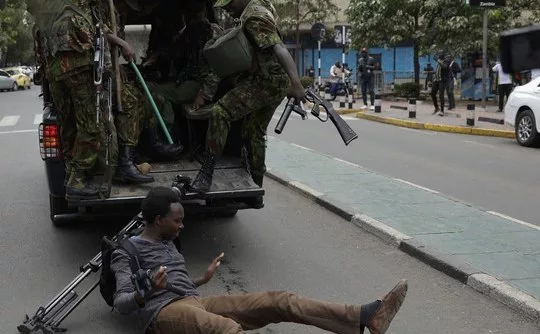
Under President William Ruto, the relationship with the media has again become increasingly strained.
Reporters Without Borders has documented a rise in attacks on journalists since Ruto came to power, particularly during opposition demonstrations. In 2023, more than 20 journalists were reportedly arrested or injured during the first wave of protests, with security forces responsible for many of the injuries.
The organisation has also documented cases of journalists being targeted with tear gas, beaten and arrested while covering demonstrations.
In July 2024, RSF reported further cases of journalists being attacked by police while covering anti-government protests, including the shooting of journalist Catherine Wanjeri Kariuki with a rubber bullet in Nakuru.
The pressure has not been limited to security operations. Government officials have also publicly criticised media organisations over their reporting.
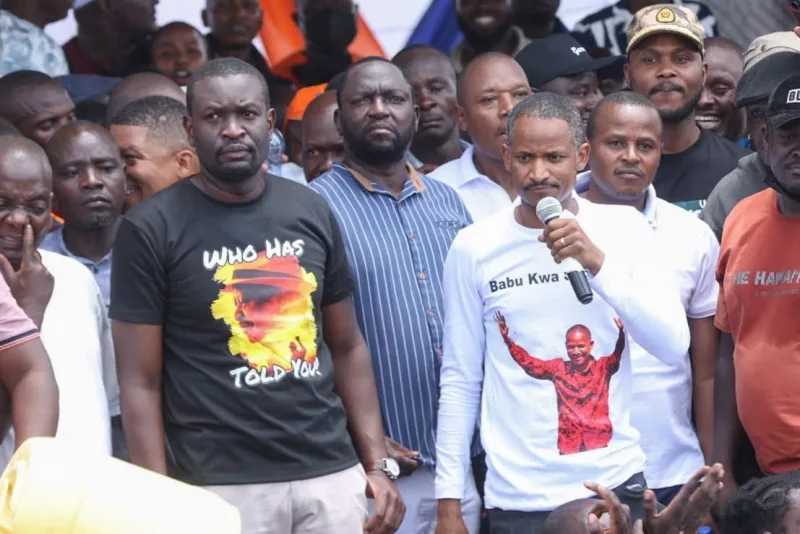
More recently, at least eight journalists were assaulted and media vehicles vandalised while covering an opposition rally in Homa Bay last month on August 16.
The journalists were beaten, threatened and their equipment was stolen, while one media vehicle was set on fire.
It is against this backdrop that the reported abduction of Kiprotich has generated renewed concern.
The Kenya Editors Guild has demanded that State agencies identify and prosecute those behind the reported abduction, saying attacks on journalists threaten media freedom and the public's right to information.
Guild President Zubeidah Kananu said the government must demonstrate its commitment to media freedom through action.
“The government must ensure Kenya’s constitutional commitment to media freedom is upheld not merely in words, but in action,” Kananu said.
Amnesty International Kenya has also called for an independent, impartial, thorough and transparent investigation, while the Kenya Human Rights Commission has demanded the arrest and prosecution of those responsible if the allegations are substantiated.
Former Law Society of Kenya president Faith Odhiambo described the incident as a grave assault on press freedom, human dignity and the rule of law.