

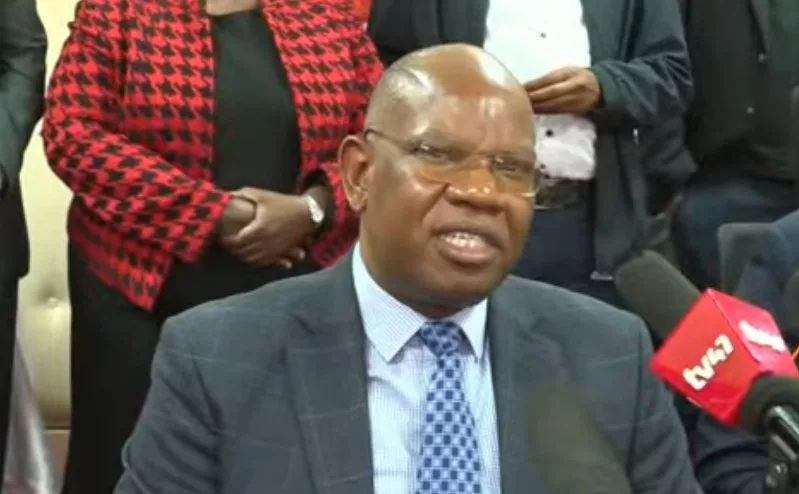
 Kenya Dairy Board Chairperson Genesio Mugo/SCREENGRAB
Kenya Dairy Board chairperson Genesio Mugo has reassured consumers that the country’s milk shortage is minimal, urging them to avoid panic buying that has contributed to stock-outs on some shelves.
Speaking during a press conference on Thursday, Mugo said the shortage was about 3 per cent. He attributed some shortages on shelves to panic buying.
“We want to send a message that the shortage is not big at all; it is minimal, and therefore there is no cause for alarm and no need for panic buying,” Mugo said.
Mugo urged consumers to buy only the amount they normally require, assuring them that supplies would continue.
“Let us just buy the normal amount that you require, because there will be milk tomorrow,” he said.
He also cautioned consumers against buying unpasteurised milk from hawkers or outlets that are not authorised to sell processed milk.
Mugo warned that such milk could contain substances that are harmful to consumers.
He further warned traders who buy milk from farmers and add water, chemicals or other substances before selling it.
“We are sending a warning to you that please, that is not right, don’t do that, and if you are caught by the law, then the law will take its course,” Mugo said.
The warning comes as the government also moves to address the factors affecting milk production.
Principal Secretary for Livestock Development Jonathan Mueke said inadequate rainfall had left dairy farmers struggling to feed their cows, affecting production.
“The real issue is fodder pressure due to lack of rains, and we need to ensure that our cows do not go hungry,” Mueke said.
Mueke said the government was working on measures. Speaking in Nairobi on Thursday, he said the government was implementing immediate and long-term measures to restore milk supplies.
He said a drought mitigation meeting chaired by President William Ruto had agreed on measures to ease pressure on animal feed, including allowing yellow maize to supplement maize used in animal feeds.
Mueke also said the government wanted farmers to receive better returns for their milk.
“We will ensure the farmers get the right pricing for their milk so that they do not send it informally,” he said.
He said the Kenya Dairy Board would lead efforts to monitor milk movement and ensure more milk reaches consumers through formal markets.







