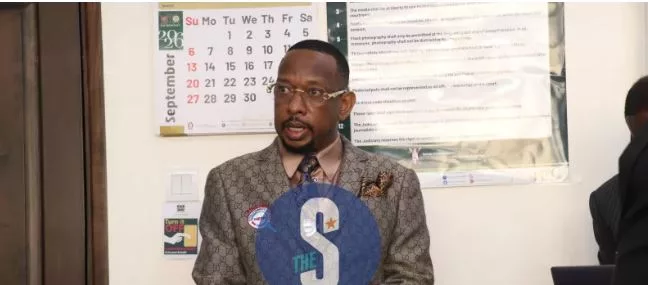
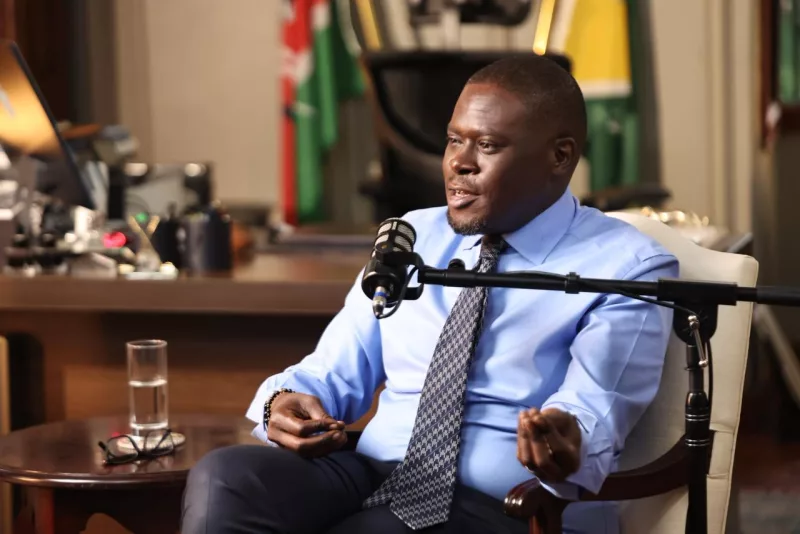
 Nairobi Governor Sakaja Johnson speaks during the podcast. /HANDOUT
Nairobi Governor Sakaja Johnson has taken his engagement with city residents to a new level with the launch of a podcast through which he is addressing Nairobi’s challenges, his administration’s record and his vision for the capital.
Sakaja described the podcast as a modern-day digital baraza, saying it would provide an avenue for direct conversations with Nairobians on development, service delivery and issues affecting their daily lives.
“Kitambo, the Chief used to call people for a baraza. I want to do a digital baraza. Welcome to Discussion with Nairobi—on issues affecting you, development, everything. Welcome to the baraza,” Sakaja said.
The governor used the first episode to reflect on his experience in office, highlighting both the rewards and frustrations of leading Kenya’s capital.
 Nairobi Governor Johnson Sakaja Johnson speaks during the podcast. /HANDOUT
“The best thing about being Governor is creating impact, people enjoying what you have been able to provide, like a child having food or a mother delivering in a better hospital,” he said.
But he acknowledged that one of the biggest challenges was being misunderstood, as residents often expected government projects and services to be delivered instantly.
“The worst is being misunderstood, and people wanting things done and everything quickly done. However, it is the best job,” Sakaja said.
He said his administration’s overarching vision had been to transform Nairobi into “a city of order, dignity, hope and opportunity.”
Asked to name three things his administration had delivered, Sakaja pointed to changes in the Central Business District, the Dishi na County school feeding programme and improvements in healthcare.
“Go to CBD. It is different—order and dignity, pavements and so on,” he said.
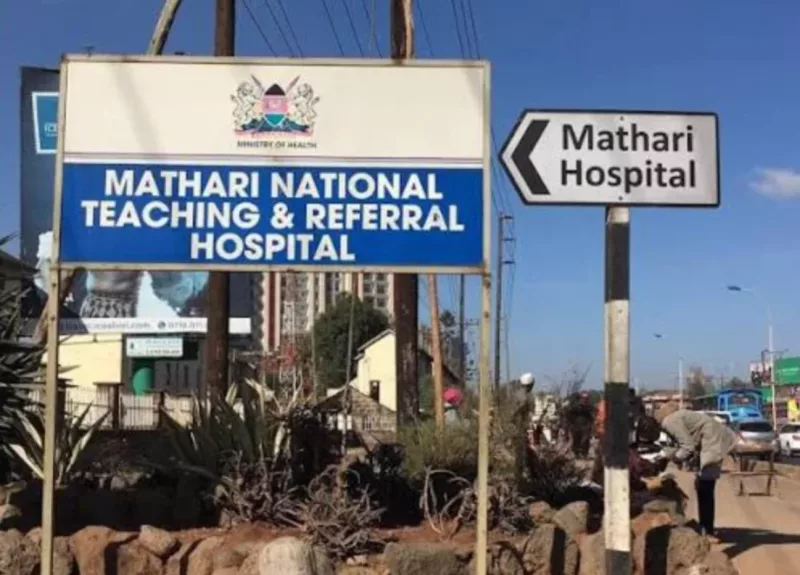
He said the Dishi na County programme was now providing meals to more than 324,000 children daily, while Mbagathi Hospital had acquired a neonatal intensive care unit, addressing a critical gap in the county health system.
“Mbagathi has a neonatal ICU. We did not have ICU in the county; we now do have them,” he said, adding: “I can give you more than 10 examples of things we have done, but you have asked for three.”
Sakaja also pointed to political cooperation as one of the factors that had enabled his administration to advance its agenda.
He recalled that he was elected on a minority party ticket and had to make a deliberate decision to work with leaders across the political divide to ensure the city government functioned effectively.
“I got elected in a minority party and I had to make a decision to work with all the majority for the city to work,” he said.
The Governor said the cooperation had enabled the county to implement several programmes, including the Green Army initiative, which he said had employed more than 4,500 people on permanent and pensionable terms to help keep the city clean.
He also cited an increase in Nairobi’s own-source revenue from Sh8 billion to Sh15.4 billion as another achievement.
However, Sakaja admitted that not every part of his agenda had moved at the pace he wanted, singling out the proposed waste-to-energy project.
“One thing that is waste-to-energy. Eventually, we shall get waste-to-energy, but the process has not been as quick as I wanted,” he said.
Looking ahead, Sakaja said the implementation of the Urban Areas and Cities Act of 2011 would be central to transforming Nairobi’s governance and development.
He said the legislation, which had remained largely unimplemented for more than a decade, was now being put into effect under his administration.
“The implementation of the Urban Areas and Cities Act is the one that will change this city. Over a decade later, we have implemented it, and I am happy that it is being done when I am the Governor,” he said.
Sakaja said the reforms would also strengthen the case for increased funding for Nairobi as a major urban centre.
He further pointed to the county’s cooperation agreements as part of a broader effort to reposition Nairobi as a globally competitive city.
“Through this cooperation agreement, Nairobi will not be the same again. It is on the path to the First World,” he said.
The podcast is expected to continue tackling development, service delivery, infrastructure, waste management, healthcare, education, urban planning and other issues raised by residents.
Sakaja said questions and reactions generated by the first episode would form part of the conversation in subsequent episodes, effectively turning the podcast into an ongoing digital engagement with Nairobians.